

• HOME
  • NEWS
  • EXPLORE
    • CAREER
      • Companies
      • Jobs
    • EVENTS
    • iGEM
      • News
      • Team
    • PHOTOS
    • VIDEO
    • WIKI
  • BLOG
  • COMMUNITY
    • FACEBOOK
    • INSTAGRAM
    • TWITTER
Monday, July 6, 2026
BIOENGINEER.ORG
No Result
View All Result
  • Login
  • HOME
  • NEWS
  • EXPLORE
    • CAREER
      • Companies
      • Jobs
        • Lecturer
        • PhD Studentship
        • Postdoc
        • Research Assistant
    • EVENTS
    • iGEM
      • News
      • Team
    • PHOTOS
    • VIDEO
    • WIKI
  • BLOG
  • COMMUNITY
    • FACEBOOK
    • INSTAGRAM
    • TWITTER
  • HOME
  • NEWS
  • EXPLORE
    • CAREER
      • Companies
      • Jobs
        • Lecturer
        • PhD Studentship
        • Postdoc
        • Research Assistant
    • EVENTS
    • iGEM
      • News
      • Team
    • PHOTOS
    • VIDEO
    • WIKI
  • BLOG
  • COMMUNITY
    • FACEBOOK
    • INSTAGRAM
    • TWITTER
No Result
View All Result
Bioengineer.org
No Result
View All Result
Home NEWS Science News Biology

A simple software error corrected: bittersweet chloroplast genome becomes the model

Bioengineer by Bioengineer
May 16, 2018
in Biology
Reading Time: 2 mins read
0
Share on FacebookShare on TwitterShare on LinkedinShare on RedditShare on Telegram
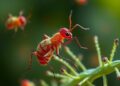
IMAGE

Credit: Péter Poczai

The first complete plastome nucleotide sequence was published in 1986 for tobacco (Nicotiana tabacum L.) of the nightshade family (Solanaceae). This economically important mega-diverse plant family contains well-known crops and ornamentals such as potato, tomato, eggplants and petunias. In the study published in PLoS ONE researchers of the Finnish Museum of Natural History (LUOMUS) of the University of Helsinki sequenced the plastid genome of bittersweet (Solanum dulcamara L.) to provide genomic resources for chloroplast engineering. It is a diploid weed commonly found also in Finland, and has resistance to most important potato disease late blight caused by a water mold (oomycete) Phytophthora infestans.

The research turned out to be more important than initially thought:

"When we tried to compare the bittersweet plastome to other nightshade species we realized it cannot be done properly since genome annotations seem to contain so many errors," says the leader of the research Péter Poczai.

The study showed for the first time that these errors are due to one simple outdated software used worldwide. As a consequence, these errors are copied and propagated from one sequence to another in genetic databases.

"With hard work and manual editing we have corrected these errors for all solanaceous genomes, which place the bittersweet as a model for nightshade chloroplast comparative genomics. The wake of the errors in annotation is alive in plastid genomics in general since most of the sequencing projects are using this outdated software, which we are convinced needs to be replaced with a more advanced tool already planned as our next cutting-edge project," Ali Amiryousefi, PhD student in LUOMUS and first author of the study adds.

A new hypothesis of the ancestral genome presented

Only after these improvements, the LUOMUS group was finally able to make the comparative analysis of all nightshade plastid genomes, where they present hypothesis of the ancestral genome. With this they were able to show that structural re-arrangements are coinciding with bigger evolutionary changes of this family. The plastid genome sequence of the common weed bittersweet will help in benchmarking nightshade plastid genome annotations and could be used as a reliable reference in further studies.

"The present study is part of our research using the living greenhouse and herbarium collections of LUOMUS for sequencing chloroplast genomes and investigating the diversity of flowering plants. So far, we have sequenced 30 plastid genomes from our collections and first results are now starting to be published" summarizes Poczai.

###

Media Contact

Peter Poczai
[email protected]
358-504-487-193
@helsinkiuni

http://www.helsinki.fi/university/

Original Source

https://www.helsinki.fi/en/news/life-science/a-simple-software-error-corrected-bittersweet-chloroplast-genome-will-become-the-model-for-annotations-and-nightshade-comparative-genomics http://dx.doi.org/10.1371/journal.pone.0196069
Share12Tweet8Share2ShareShareShare2

Related Posts

Here are a few rewritten headlines for a science magazine post, each with a slightly different tone: Intriguing & poetic: How do organs sculpt themselves? Sea stars hold the secret Direct & research-focused: Sea stars reveal the hidden rules of organ formation Metaphorical & inviting: Tiny architects beneath the waves: What sea stars teach us about building organs Short & punchy: Star-shaped clues to how our organs take shape Question-led: Could a sea star show us how organs form? Elegant & feature-style: The body’s blueprint, glimpsed in a sea star’s arm

July 6, 2026
Bacteria evolve faster with unconventional gene copies — Biology

Bacteria evolve faster with unconventional gene copies

July 6, 2026

Neighbours rewire soil feedback via root microbiome shifts

July 6, 2026

Evolution-Inspired Biosensors Revolutionize Lipid Tracking in Real Time

July 2, 2026
Please login to join discussion

POPULAR NEWS

  • Detection of EDCs in Breast Milk and Infant Urine Up to Six Months Highlights Early Exposure Risks

    77 shares
    Share 31 Tweet 19
  • New Drug Candidate Developed at McMaster Shows Potential for Treating Brain Cancer

    58 shares
    Share 23 Tweet 15
  • Saying Goodbye to PGY-6: Pediatric Fellowship Realities

    103 shares
    Share 41 Tweet 26
  • KTU Researchers Explore Ultrasound’s Role in Enhancing Blood Flow Beyond Diagnostics

    53 shares
    Share 21 Tweet 13

About

We bring you the latest biotechnology news from best research centers and universities around the world. Check our website.

Follow us

Recent News

Flame retardant BDE-209 targets molecularly linked to ulcerative colitis

Ultra-high frequency particle impacts mimic rockbursts to shatter hard rock

Kidney transplant outcomes in older adults studied by German researchers

Subscribe to Blog via Email

Enter your email address to subscribe to this blog and receive notifications of new posts by email.

Join 83 other subscribers
  • Contact Us

Bioengineer.org © Copyright 2023 All Rights Reserved.

Welcome Back!

Login to your account below

Forgotten Password?

Retrieve your password

Please enter your username or email address to reset your password.

Log In
No Result
View All Result
  • Homepages
    • Home Page 1
    • Home Page 2
  • News
  • National
  • Business
  • Health
  • Lifestyle
  • Science

Bioengineer.org © Copyright 2023 All Rights Reserved.