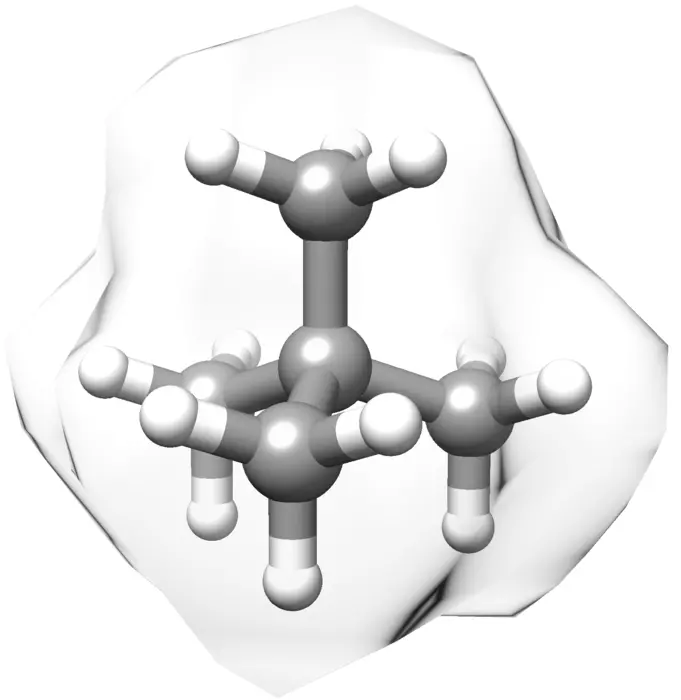
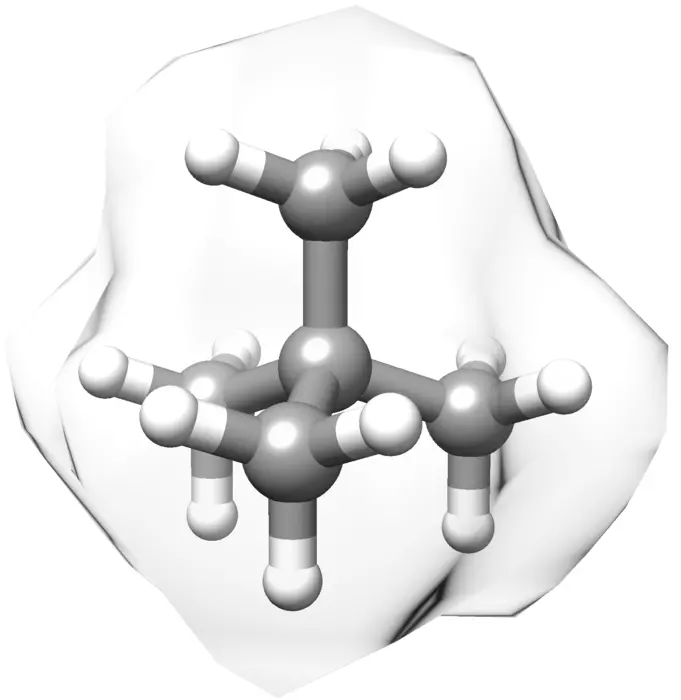
LA JOLLA, CA—The active ingredient in many drugs is what’s known as a small molecule: bigger than water, much smaller than an antibody and mainly made of carbon. It’s tough, however, to make these molecules if they require a quaternary carbon—a carbon atom bonded to four other carbon atoms. But now, Scripps Research scientists have uncovered a potential cost-effective way to produce these tricky motifs.
Credit: Scripps Research
LA JOLLA, CA—The active ingredient in many drugs is what’s known as a small molecule: bigger than water, much smaller than an antibody and mainly made of carbon. It’s tough, however, to make these molecules if they require a quaternary carbon—a carbon atom bonded to four other carbon atoms. But now, Scripps Research scientists have uncovered a potential cost-effective way to produce these tricky motifs.
In the new findings, which were published in Science on April 5, 2024, Scripps Research chemists show that it’s possible to convert feedstock chemicals into quaternary carbons using a single, inexpensive iron catalyst. This method could benefit drug developers by making molecules cheaper and easier to produce at small and large scales.
“Quaternary carbons are ubiquitous across various areas of research—from drug discovery to material science,” says co-first author Nathan Dao, a PhD candidate at Scripps Research. “The synthesis of quaternary carbons, however, is a long-standing challenge in the field of organic chemistry, typically requiring numerous steps and relying on harsh conditions or less accessible starting materials.”
In addition to Dao, the study’s co-first authors included Xu-Cheng Gan and Benxiang Zhang.
Catalysts are substances used to speed up the rate of a chemical reaction. Sometimes, several different catalysts are necessary to promote a certain reaction and obtain the desired result: a veritable ‘reaction soup’. But catalysts can be very expensive, and they don’t always react as intended—and the more catalysts used, the more waste that’s produced. But the Scripps Research scientists determined that a single catalyst could perform multiple crucial rolls.
“A difficult chemical reaction often requires many interacting components,” according to co-senior author, Ryan Shenvi, PhD, a professor in the Department of Chemistry at Scripps Research. “A benefit of this work is it’s incredibly simple.”
The team identified simple conditions to convert carboxylic acids and olefins, two major classes of chemical feedstocks—or raw materials that fuel a machine or industrial process—into quaternary carbons by using an inexpensive iron-based catalyst. In addition, these chemical feedstocks aren’t only abundant, but they’re also low cost.
“Similar reactions have been gaining traction lately, so this discovery was inevitable,” Shenvi explains. “The pieces were already in the literature, but no one had put them together before.”
Overall, the study, which was done in collaboration with the lab of senior co-author Phil Baran, PhD, the Dr. Richard A. Lerner Endowed Chair in the Department of Chemistry at Scripps Research, highlights the ongoing role of chemistry in the development of modern technology and pharmaceuticals.
“This work is yet another striking demonstration of the power of the collaborative atmosphere at Scripps Research to unearth new transformations that can have a dramatic impact on simplifying the practice of organic synthesis,” Baran adds.
This work and the researchers involved were supported by funding from the National Institutes of Health (grants GM122606 and GM118176), the National Science Foundation (CHE1955922), Nanjing King-Pharm Co., Ltd), Pfizer and Biogen.
In addition to Gan, Zhang, Dao, Baran and Shenvi, authors of the study, “Carbon quaternization of redox active esters and olefins by decarboxylative coupling” are Cheng Bi, Maithili Pokle, Liyan Kan and Yu Kawamata of Scripps Research; Michael R. Collins of Pfizer Pharmaceuticals; Chet C. Tyrol of Pfizer Medicine Design; and Philippe N. Bolduc and Michael Nicastri of Biogen Inc.
Journal
Science
DOI
10.1126/science.adn5619
Article Title
Carbon quaternization of redox active esters and olefins by decarboxylative coupling
Article Publication Date
5-Apr-2024