• HOME
  • NEWS
  • EXPLORE
    • CAREER
      • Companies
      • Jobs
    • EVENTS
    • iGEM
      • News
      • Team
    • PHOTOS
    • VIDEO
    • WIKI
  • BLOG
  • COMMUNITY
    • FACEBOOK
    • INSTAGRAM
    • TWITTER
Saturday, February 7, 2026
BIOENGINEER.ORG
No Result
View All Result
  • Login
  • HOME
  • NEWS
  • EXPLORE
    • CAREER
      • Companies
      • Jobs
        • Lecturer
        • PhD Studentship
        • Postdoc
        • Research Assistant
    • EVENTS
    • iGEM
      • News
      • Team
    • PHOTOS
    • VIDEO
    • WIKI
  • BLOG
  • COMMUNITY
    • FACEBOOK
    • INSTAGRAM
    • TWITTER
  • HOME
  • NEWS
  • EXPLORE
    • CAREER
      • Companies
      • Jobs
        • Lecturer
        • PhD Studentship
        • Postdoc
        • Research Assistant
    • EVENTS
    • iGEM
      • News
      • Team
    • PHOTOS
    • VIDEO
    • WIKI
  • BLOG
  • COMMUNITY
    • FACEBOOK
    • INSTAGRAM
    • TWITTER
No Result
View All Result
Bioengineer.org
No Result
View All Result
Home NEWS Science News Biology

A potential drug target against a large family of parasites is identified

Bioengineer by Bioengineer
March 21, 2018
in Biology
Reading Time: 2 mins read
0
Share on FacebookShare on TwitterShare on LinkedinShare on RedditShare on Telegram
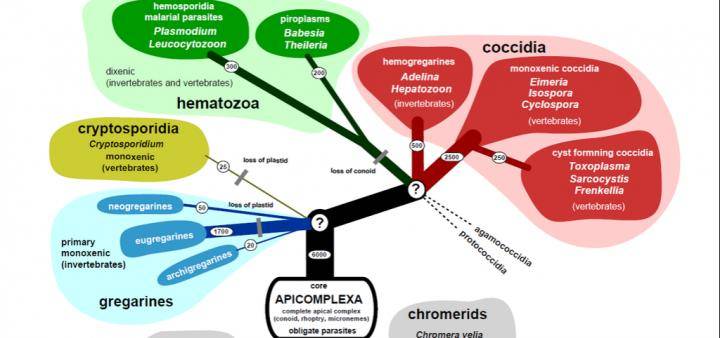
IMAGE

Credit: Jan Slapeta

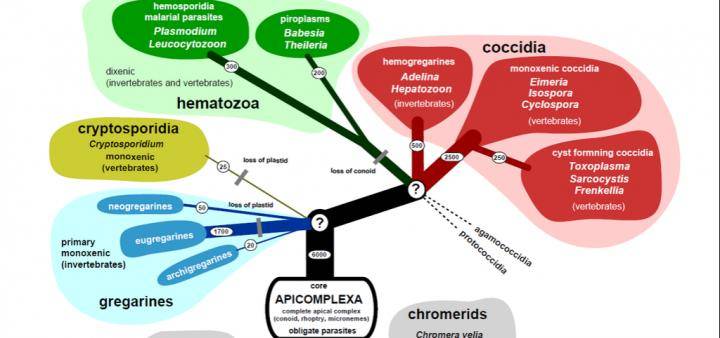
Apicomplexa form one of the largest and most diverse groups of obligate intracellular parasites, capable of infecting almost every kind of animal. It is estimated that between 1.2 and 10 million species exist, but only about 5,000-6,000 have been identified to date. These include Plasmodium (that causes malaria and about 440,000 deaths every year), Toxoplasma (that causes congenital disease and opportunistic infections in immunocompromised people), Babesia (that infects cattle), etc. Despite the global economic and health impact of these parasites, much of their biology is still unknown. For example, their surface is covered by glycoconjugates that are essential for their survival and infectivity, but little is known of the processes that lead to the synthesis of such molecules. In particular, one of the enzymes needed for the synthesis of important glycoconjugates had not yet been identified: the apicomplexan organisms do not have the GNA1 enzyme that fulfils this function in animals, plants and other eukaryotes.

In this study, the research team scanned the genome of P. falciparum and six other representative species of the phylum with the aim of identifying genes with GNA1-like activity. They identified and isolated a gene family with GNA1 function, which was confirmed by enzyme activity assays in vitro and by its capacity to restore growth in yeasts lacking GNA1. Furthermore, gene disruption by gene editing techniques such as CRISPR-CAS resulted in the absence of growth of parasites carrying the mutated gene, indicating that the protein is required for parasite viability. Sequence analyses indicate that the gene family has a single origin and evolved independently and parallel to its GNA1 counterpart (present in all other eukaryote organisms).

"Our results indicate that this enzyme is common to all members of the Apicomplexa phllyum and is likely essential for parasite growth. We are now analysing in detail its differences with human GNA1", explains lead author Marta Cova. "Because of its different origin, this enzyme could represent a good therapeutic target with selective action against all apicomplexans" adds Luis Izquierdo, ISGlobal researcher and coordinator of the study.

###

Media Contact

Adelaida Sarukhan
[email protected]
34-932-271-816

http://www.isglobal.org/en/

Original Source

https://www.isglobal.org/en/new/-/asset_publisher/JZ9fGljXnWpI/content/-identifican-una-posible-diana-terapeutica-contra-un-extenso-grupo-de-parasitos http://dx.doi.org/10.1038/s41598-018-22441-3

Share14Tweet8Share2ShareShareShare2

Related Posts

New Study Uncovers Mechanism Behind Burn Pit Particulate Matter–Induced Lung Inflammation

New Study Uncovers Mechanism Behind Burn Pit Particulate Matter–Induced Lung Inflammation

February 6, 2026

DeepBlastoid: Advancing Automated and Efficient Evaluation of Human Blastoids with Deep Learning

February 6, 2026

Navigating the Gut: The Role of Formic Acid in the Microbiome

February 6, 2026

AI-Enhanced Optical Coherence Photoacoustic Microscopy Revolutionizes 3D Cancer Model Imaging

February 6, 2026
Please login to join discussion

POPULAR NEWS

  • Robotic Ureteral Reconstruction: A Novel Approach

    Robotic Ureteral Reconstruction: A Novel Approach

    82 shares
    Share 33 Tweet 21
  • Digital Privacy: Health Data Control in Incarceration

    63 shares
    Share 25 Tweet 16
  • Study Reveals Lipid Accumulation in ME/CFS Cells

    57 shares
    Share 23 Tweet 14
  • Breakthrough in RNA Research Accelerates Medical Innovations Timeline

    53 shares
    Share 21 Tweet 13

About

We bring you the latest biotechnology news from best research centers and universities around the world. Check our website.

Follow us

Recent News

Scientists Identify SARS-CoV-2 PLpro and RIPK1 Inhibitors Showing Potent Synergistic Antiviral Effects in Mouse COVID-19 Model

Neg-Entropy: The Key Therapeutic Target for Chronic Diseases

Multidisciplinary Evidence-Based Guidelines for Therapeutic Drug Monitoring of Biologics in Inflammatory Bowel Disease

Subscribe to Blog via Email

Enter your email address to subscribe to this blog and receive notifications of new posts by email.

Join 73 other subscribers
  • Contact Us

Bioengineer.org © Copyright 2023 All Rights Reserved.

Welcome Back!

Login to your account below

Forgotten Password?

Retrieve your password

Please enter your username or email address to reset your password.

Log In
No Result
View All Result
  • Homepages
    • Home Page 1
    • Home Page 2
  • News
  • National
  • Business
  • Health
  • Lifestyle
  • Science

Bioengineer.org © Copyright 2023 All Rights Reserved.