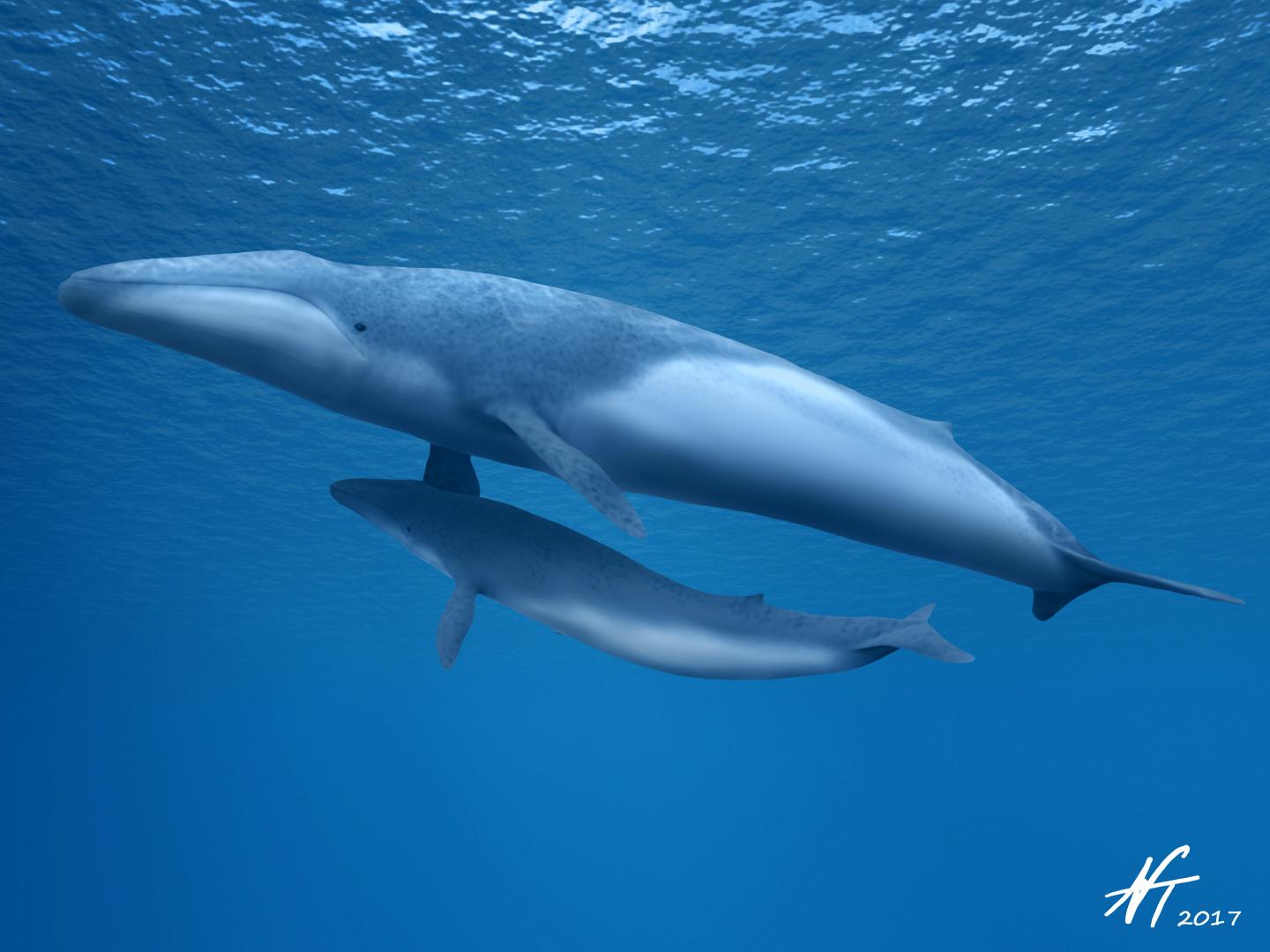
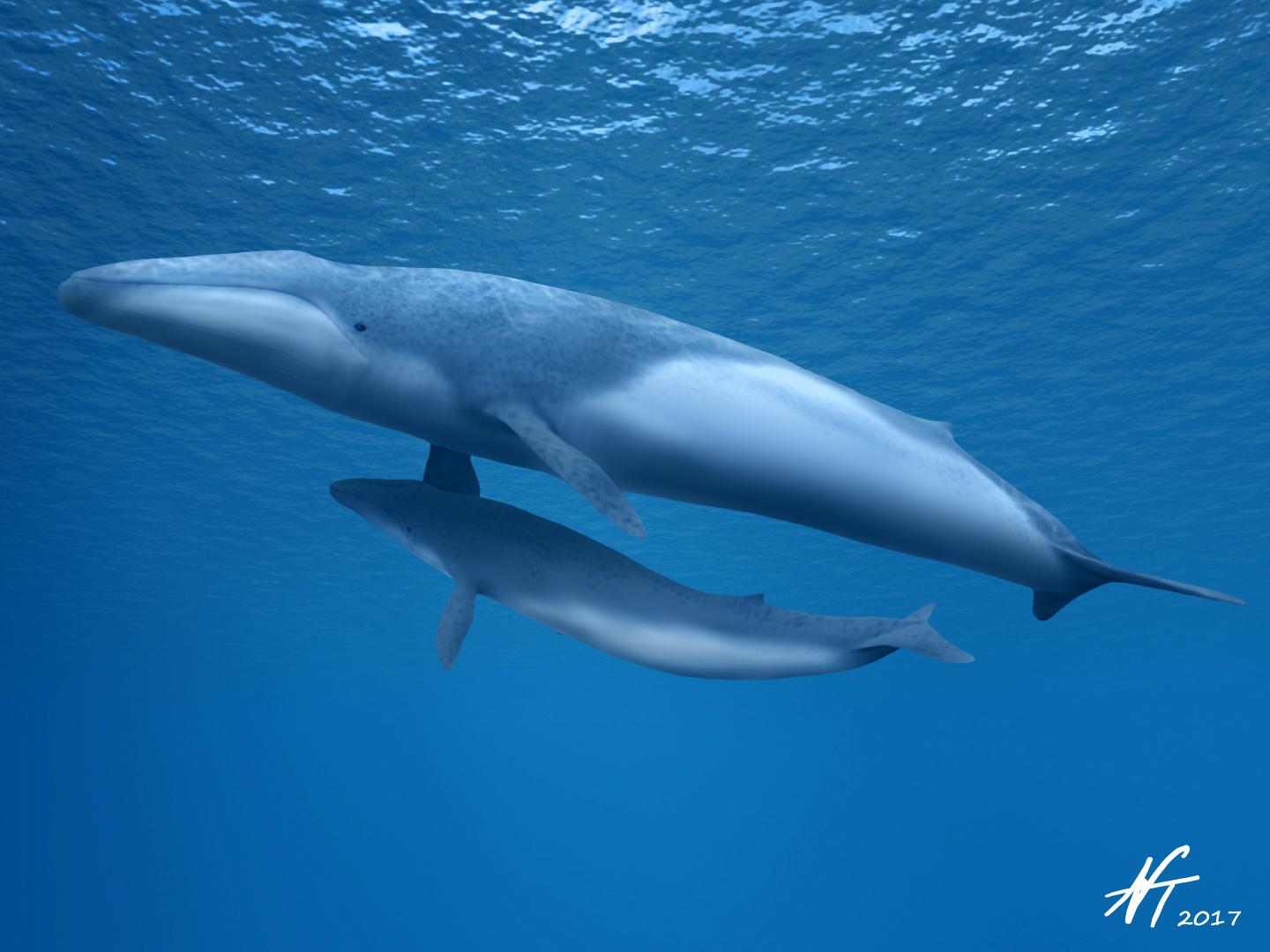
Credit: Nobumichi Tamura
Baleen whales are amongst the largest animals to have ever lived and yet very little is known about their breeding habits. One researcher's second look at previously found baleen whale fossils from Japan provides new evidence of a now long-gone breeding ground of the extinct baleen whale Parietobalaena yamaokai dating back over 15 million years.
The research published in the open-access journal PeerJ elaborates on the evidence of the presence of a very young individual of an extinct baleen whale, along with the occurrence of several fossil specimens of the same whale species. This study claims to have discovered a very uncommon case — a breeding ground for a long extinct large whale.
Researcher Cheng-Hsiu Tsai noticed the open suture in the skull of one fossil specimen, which indicates the preservation of a very young whale — under six months old, perhaps even close to a new-born calf. The fossil specimens investigated were originally found in the 20th century and are currently held at the Hiwa Museum for Natural History, Shobara, Hiroshima, Japan.
Identifying breeding grounds of living species of whales are incredibly rare, let alone for extinct Miocene species. For example, scientists are not certain where the endangered western gray whales reproduce, in turn leading to no concrete strategies to recover this critically endangered population of around 100 individuals.
The discovery of an ancient paleo-breeding site, which dates back to 15 million years ago, could provide new insights into the future of baleen whale survival. In a rapidly changing world, locating breeding sites and understanding why a breeding site disappeared may subsequently lead to information on how best to respond in order to conserve these living endangered populations.
###
Full Media Pack including image: https://drive.google.com/open?id=0BzGrFBtalE6wV3d6RmUtM0xsT2ZvY1d0SVR6bjJGY18tQlRj
PDF of this Press Release: http://static.peerj.com/pressReleases/2017/08/Press-Release-Tsai.pdf
Link to the Published Version of the article (quote this link in your story – the link will ONLY work after the embargo lifts): https://peerj.com/articles/3711 your readers will be able to freely access this article at this URL.
Citation to the article: Tsai (2017), A Miocene breeding ground of an extinct baleen whale (Cetacea: Mysticeti). PeerJ 5:e3711; DOI 10.7717/peerj.3711
About:
PeerJ is an Open Access publisher of two peer-reviewed journals and a preprint server. PeerJ is based in San Diego, CA and the UK and can be accessed at https://peerj.com/. PeerJ's mission is to help the world efficiently publish its knowledge.
All works published in PeerJ are Open Access and published using a Creative Commons license (CC-BY 4.0). Everything is immediately available — to read, download, redistribute, include in databases and otherwise use — without cost to anyone, anywhere, subject only to the condition that the original authors and source are properly attributed.
PeerJ has an Editorial Board of over 1,600 respected academics, including 5 Nobel Laureates. PeerJ was the recipient of the 2013 ALPSP Award for Publishing Innovation. PeerJ Media Resources (including logos) can be found at: https://peerj.com/about/press/
Media Contacts
For the authors:
Dr Cheng-Hsiu Tsai
[email protected]
For PeerJ: email: [email protected] , https://peerj.com/about/press/
Note: If you would like to join the PeerJ Press Release list, please register at: http://bit.ly/PressList
Media Contact
Dr Cheng-Hsiu Tsai
[email protected]
@ThePeerJ
http://https://peerj.com
Related Journal Article
http://dx.doi.org/10.7717/peerj.3711