As the world’s population increases, cultivated or lab-grown meat — animal muscle and fat cells grown in laboratory conditions — has emerged as a potential way to satisfy future protein needs. And edible, inexpensive plant proteins could be used to grow these cell cultures. Now, researchers in ACS Biomaterials Science & Engineering report that the non-allergenic wheat protein glutenin successfully grew striated muscle layers and flat fat layers, which could be combined to produce meat-like textures.
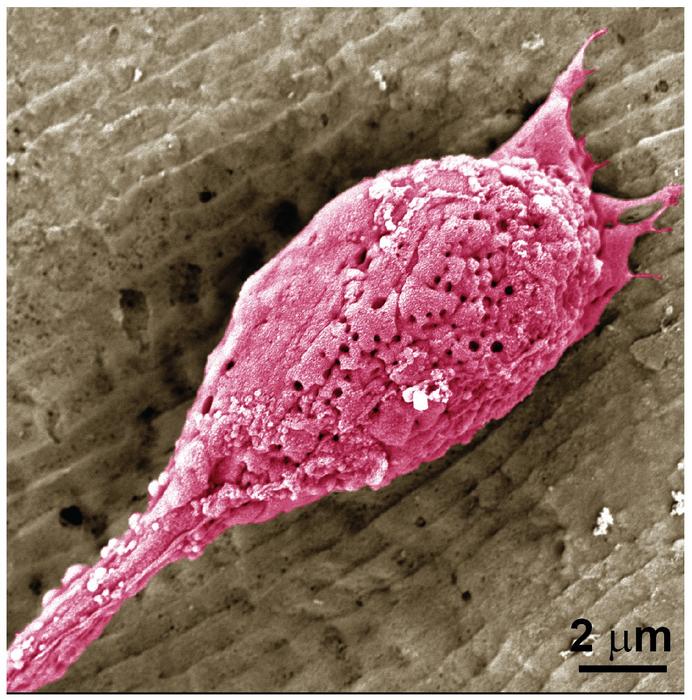
Credit: Adapted from ACS Biomaterials Science & Engineering 2024, DOI: 10.1021/acsbiomaterials.3c01500
As the world’s population increases, cultivated or lab-grown meat — animal muscle and fat cells grown in laboratory conditions — has emerged as a potential way to satisfy future protein needs. And edible, inexpensive plant proteins could be used to grow these cell cultures. Now, researchers in ACS Biomaterials Science & Engineering report that the non-allergenic wheat protein glutenin successfully grew striated muscle layers and flat fat layers, which could be combined to produce meat-like textures.
Cultured cells need a base or scaffold to adhere to produce lab-grown meat. Plant proteins are appealing candidates for the scaffolds because they are edible, abundant and inexpensive. Previous researchers showed that a plant-based film made of glutenin was a successful base to cultivate cow skeletal muscle cells. But for this technique to produce a promising meat-like alternative, the muscle cells need to form aligned fibers, similar to the texture in real tissues. Additionally, fat needs to be included in the 3D structure to replicate the composition of traditional meat products. To take advantage of using glutenin, a protein in gluten that people with celiac disease or a gluten sensitivity don’t typically react to, Ya Yao, John Yuen, Jr., Chunmei Li, David Kaplan and colleagues wanted to develop plant-based films with it to grow textured muscle cells and fatty layers.
The researchers isolated glutenin from wheat gluten and formed flat and ridge-patterned films. Then they deposited mouse cells that develop into skeletal muscle onto the protein bases and incubated the cell-covered films for two weeks. Cells grew and proliferated on both flat and ridged films. As expected, compared to cells grown on control films made of gelatin, the performance of the glutenin-based films was inferior but sufficient. The researchers say further work needs to be done to improve how cells attach to the plant-based film to get closer to the growth on the animal-derived biomaterial. During the second week of the culture, the cells on the patterned film formed long parallel bundles, recreating the fiber structure of animal muscles.
In another test, mouse cells that produce fat tissues were deposited onto flat glutenin films. During the incubation period, as cells proliferated and differentiated, they produced visible lipid and collagen deposits.
The cultured meat and fat layers attached to the edible glutenin films could be stacked to form a 3D meat-like alternative protein. Because the glutenin material base supported the growth of both textured animal muscle and fat layers, the researchers say it could be used in an approach for more realistic cultivated meat products.
The authors acknowledge funding from MilliporeSigma and the U.S. Department of Agriculture. Some authors are employees of MilliporeSigma, Inc.
###
The American Chemical Society (ACS) is a nonprofit organization chartered by the U.S. Congress. ACS’ mission is to advance the broader chemistry enterprise and its practitioners for the benefit of Earth and all its people. The Society is a global leader in promoting excellence in science education and providing access to chemistry-related information and research through its multiple research solutions, peer-reviewed journals, scientific conferences, eBooks and weekly news periodical Chemical & Engineering News. ACS journals are among the most cited, most trusted and most read within the scientific literature; however, ACS itself does not conduct chemical research. As a leader in scientific information solutions, its CAS division partners with global innovators to accelerate breakthroughs by curating, connecting and analyzing the world’s scientific knowledge. ACS’ main offices are in Washington, D.C., and Columbus, Ohio.
To automatically receive news releases from the American Chemical Society, contact [email protected].
Note: ACS does not conduct research, but publishes and publicizes peer-reviewed scientific studies.
Follow us: Twitter | Facebook | LinkedIn | Instagram
Journal
ACS Biomaterials Science & Engineering
DOI
10.1021/acsbiomaterials.3c01500
Article Title
“Cultivated Meat from Aligned Muscle Layers and Adipose Layers Formed from Glutenin Films”
Article Publication Date
16-Jan-2024