• HOME
  • NEWS
  • EXPLORE
    • CAREER
      • Companies
      • Jobs
    • EVENTS
    • iGEM
      • News
      • Team
    • PHOTOS
    • VIDEO
    • WIKI
  • BLOG
  • COMMUNITY
    • FACEBOOK
    • INSTAGRAM
    • TWITTER
Tuesday, December 30, 2025
BIOENGINEER.ORG
No Result
View All Result
  • Login
  • HOME
  • NEWS
  • EXPLORE
    • CAREER
      • Companies
      • Jobs
        • Lecturer
        • PhD Studentship
        • Postdoc
        • Research Assistant
    • EVENTS
    • iGEM
      • News
      • Team
    • PHOTOS
    • VIDEO
    • WIKI
  • BLOG
  • COMMUNITY
    • FACEBOOK
    • INSTAGRAM
    • TWITTER
  • HOME
  • NEWS
  • EXPLORE
    • CAREER
      • Companies
      • Jobs
        • Lecturer
        • PhD Studentship
        • Postdoc
        • Research Assistant
    • EVENTS
    • iGEM
      • News
      • Team
    • PHOTOS
    • VIDEO
    • WIKI
  • BLOG
  • COMMUNITY
    • FACEBOOK
    • INSTAGRAM
    • TWITTER
No Result
View All Result
Bioengineer.org
No Result
View All Result
Home NEWS Science News Chemistry

A new biotinylation enzyme for analyzing protein-protein interactions

Bioengineer by Bioengineer
July 6, 2020
in Chemistry
Reading Time: 2 mins read
0
IMAGE
Share on FacebookShare on TwitterShare on LinkedinShare on RedditShare on Telegram

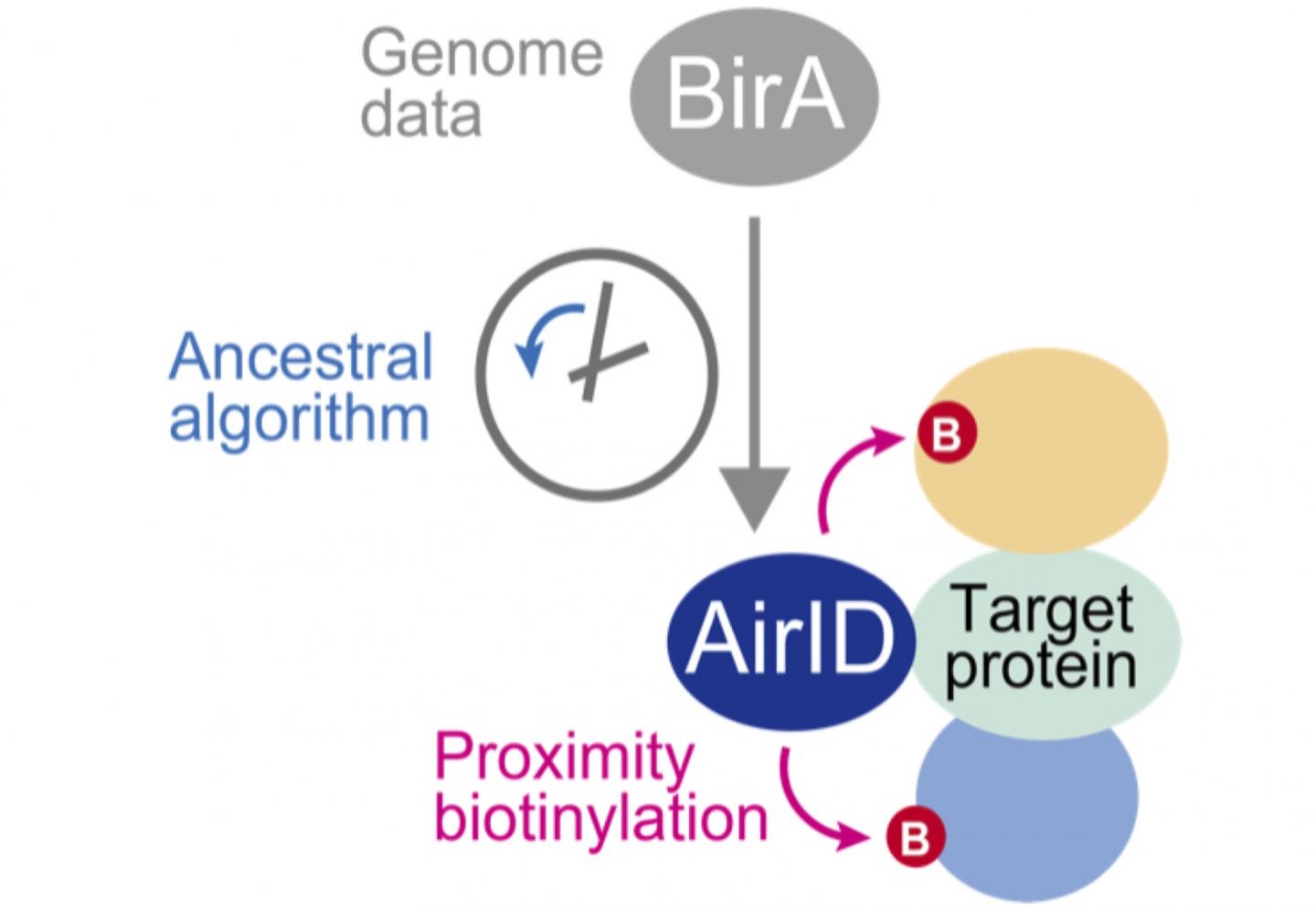
AirID enables comprehensive analysis of interaction partners of your target proteins in cells
IMAGE

Credit: Tatsuya Sawasaki (Ehime University)

Proteins control many physiological functions that are essential for living things in vivo. There are over 20,000 types of proteins in humans, and each protein plays a different role by interacting with other proteins. Proximity-dependent biotin identification (BioID) technology is a technique for finding these interacting partner proteins. BioID can be used by expressing the BioID-fusion protein and adding biotin. In cells expressing BioID-fusion bait protein, proteins with which the bait protein interacts are biotinylated and can be comprehensively analyzed using precipitation with streptavidin followed by mass spectrometry.

Three types of BioID enzymes (BioID, BioID2, TurboID) have been developed so far. However, BioID and BioID2 require a long reaction time and TurboID also biotinylates non-interacting proteins. Further improvement of biotinylation enzymes is an important goal for enhancing the convenience of proximity biotinylation in cells.

In this research, we designed ancestral biotinylation enzymes using an ancestral enzyme reconstruction algorithm and metagenome data. The new enzyme, AirID (ancestral BirA for proximity-dependent biotin identification) showed higher activity, higher specificity, and less toxicity than the previous three types. AirID was applied in the evaluation of protein interaction inhibitors, analyzing complexes formed by three or more types of proteins, and analyzing interactions through compounds called Molecular Glue. In addition, we have succeeded in the comprehensive identification of proteins that interact with a target protein by identifying biotinylated proteins using mass spectrometry analysis in cultured cells which express the target protein fused with AirID. These results indicate that AirID is a suitable enzyme for analyzing comprehensive protein-protein interactions in cells.

###

Media Contact
Public Relations Division
[email protected]

Related Journal Article

http://dx.doi.org/10.7554/eLife.54983

Tags: BiochemistryBiologyBiotechnologyCell BiologyMolecular BiologyPlant Sciences
Share12Tweet8Share2ShareShareShare2

Related Posts

Cutting Electrolyte Reduction Boosts High-Energy Battery Performance

Cutting Electrolyte Reduction Boosts High-Energy Battery Performance

December 19, 2025
Microenvironment Shapes Gold-Catalysed CO2 Electroreduction

Microenvironment Shapes Gold-Catalysed CO2 Electroreduction

December 11, 2025

Photoswitchable Olefins Enable Controlled Polymerization

December 11, 2025

Cation Hydration Entropy Controls Chloride Ion Diffusion

December 10, 2025
Please login to join discussion

POPULAR NEWS

  • blank

    PTSD, Depression, Anxiety in Childhood Cancer Survivors, Parents

    63 shares
    Share 25 Tweet 16
  • NSF funds machine-learning research at UNO and UNL to study energy requirements of walking in older adults

    71 shares
    Share 28 Tweet 18
  • Exploring Audiology Accessibility in Johannesburg, South Africa

    52 shares
    Share 21 Tweet 13
  • Nurses’ Views on Online Learning: Effects on Performance

    71 shares
    Share 28 Tweet 18

About

We bring you the latest biotechnology news from best research centers and universities around the world. Check our website.

Follow us

Recent News

Infinite Hidden Markov Models Decode Learning Complexities

UCHL1 Boosts Twist1 Stability, Fuels Lung Cancer Metastasis

Exploring SLC25A Carriers: Potential in Spaceflight Health

Subscribe to Blog via Email

Enter your email address to subscribe to this blog and receive notifications of new posts by email.

Join 71 other subscribers
  • Contact Us

Bioengineer.org © Copyright 2023 All Rights Reserved.

Welcome Back!

Login to your account below

Forgotten Password?

Retrieve your password

Please enter your username or email address to reset your password.

Log In
No Result
View All Result
  • Homepages
    • Home Page 1
    • Home Page 2
  • News
  • National
  • Business
  • Health
  • Lifestyle
  • Science

Bioengineer.org © Copyright 2023 All Rights Reserved.