• HOME
  • NEWS
  • EXPLORE
    • CAREER
      • Companies
      • Jobs
    • EVENTS
    • iGEM
      • News
      • Team
    • PHOTOS
    • VIDEO
    • WIKI
  • BLOG
  • COMMUNITY
    • FACEBOOK
    • INSTAGRAM
    • TWITTER
Monday, August 31, 2026
BIOENGINEER.ORG
No Result
View All Result
  • Login
  • HOME
  • NEWS
  • EXPLORE
    • CAREER
      • Companies
      • Jobs
        • Lecturer
        • PhD Studentship
        • Postdoc
        • Research Assistant
    • EVENTS
    • iGEM
      • News
      • Team
    • PHOTOS
    • VIDEO
    • WIKI
  • BLOG
  • COMMUNITY
    • FACEBOOK
    • INSTAGRAM
    • TWITTER
  • HOME
  • NEWS
  • EXPLORE
    • CAREER
      • Companies
      • Jobs
        • Lecturer
        • PhD Studentship
        • Postdoc
        • Research Assistant
    • EVENTS
    • iGEM
      • News
      • Team
    • PHOTOS
    • VIDEO
    • WIKI
  • BLOG
  • COMMUNITY
    • FACEBOOK
    • INSTAGRAM
    • TWITTER
No Result
View All Result
Bioengineer.org
No Result
View All Result
Home NEWS Science News Chemistry

A model will help to understand the solar dynamics

Bioengineer by Bioengineer
November 22, 2019
in Chemistry
Reading Time: 2 mins read
0
IMAGE
Share on FacebookShare on TwitterShare on LinkedinShare on RedditShare on Telegram

IMAGE

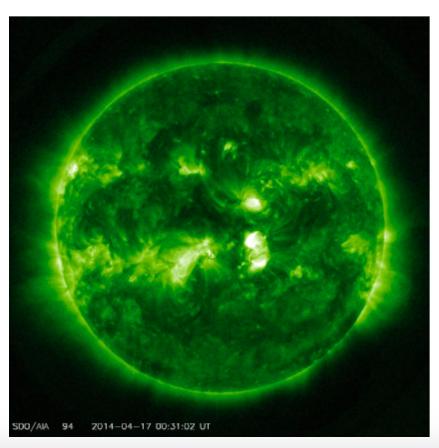
Credit: Solar Dynamic Observatory (SDO)


An international group of scientists, in cooperation with a research scientist from Skoltech, has developed a model to describe changes in solar plasma. This will help comprehend solar dynamics and gives some clues to understanding how to predict space weather events. The results have been published in the Astrophysical Journal.

Plasma β is an important quantity to investigate the interchanging roles of plasma and magnetic pressure in the solar atmosphere. It relates to both the solar magnetic field and driving solar phenomena such as solar wind, coronal mass ejections, and flares; these phenomena affect the Space Weather directly.

Dr. Jenny Rodriguez, a scientist from the Space Center of Skolkovo Institute of Science and Technology (Russia), her colleagues from Leibniz Institut für Sonnenphysik (Germany) and Instituto Nacional de Pesquisas Espaciais (Brazil) have developed a model to estimate how plasma β changes in the solar atmosphere. Specifically, they obtain a description of the plasma β in the solar corona during previous solar cycles (~22 years). They found the strongest influence during both solar cycles from faculae and the quiet Sun regions.

The faculae and QS regions drive variations in magnetic and kinetic pressure at coronal heights. It can directly affect space weather and the ability to predict it. These results give an interesting outlook on solar cycle dynamics.

“Plasma β is a very important quantity in the solar atmosphere. The solar atmosphere is a plasma physics laboratory near us; it allows us to know about its dynamics and to understand how many events are happening on the Sun. We believe that our findings will help comprehend the Sun’s dynamics and help to forecast the Space Weather,” said Dr. Jenny Rodriguez.

###

Media Contact
Alina Chernova
[email protected]
890-556-53633

Original Source

https://www.skoltech.ru/en/2019/11/a-new-model-will-help-predict-several-solar-phenomena/

Related Journal Article

http://dx.doi.org/10.3847/1538-4357/ab40af

Tags: AstrophysicsMeteorologySpace/Planetary Science
Share12Tweet8Share2ShareShareShare2

Related Posts

β-Sitosterol from Ipomoea carnea Jacq. As a promising anti-inflammatory agent: Evidence from in silico modeling and in vitro validation

β-Sitosterol from Ipomoea carnea Jacq. As a promising anti-inflammatory agent: Evidence from in silico modeling and in vitro validation

August 31, 2026
Graded membranes point to a sustainable route for refining complex petroleum

Graded membranes point to a sustainable route for refining complex petroleum

August 31, 2026

Round-robin tests quantify catalyst activity and deactivation in CO2 hydrogenation modelling

August 30, 2026

Researchers reveal guiding principles for electrochemical synthesis of multimetallic nanocrystals

August 30, 2026
Please login to join discussion

POPULAR NEWS

  • β-Sitosterol from Ipomoea carnea Jacq. As a promising anti-inflammatory agent: Evidence from in silico modeling and in vitro validation

    29 shares
    Share 12 Tweet 7
  • Design, fabrication and characterization of a wearable Fiber Bragg grating sensor for cardiorespiratory monitoring using finger plethysmography

    29 shares
    Share 12 Tweet 7
  • KAIST opens the era of industrial-scale microbial foods, proposing growth strategies for the next-generation protein market

    29 shares
    Share 12 Tweet 7
  • Virologist awarded $2 million NIH grant to investigate how virus-infected cells live and die

    29 shares
    Share 12 Tweet 7

About

We bring you the latest biotechnology news from best research centers and universities around the world. Check our website.

Follow us

Recent News

β-Sitosterol from Ipomoea carnea Jacq. As a promising anti-inflammatory agent: Evidence from in silico modeling and in vitro validation

Design, fabrication and characterization of a wearable Fiber Bragg grating sensor for cardiorespiratory monitoring using finger plethysmography

KAIST opens the era of industrial-scale microbial foods, proposing growth strategies for the next-generation protein market

Subscribe to Blog via Email

Enter your email address to subscribe to this blog and receive notifications of new posts by email.

Join 85 other subscribers
  • Contact Us

Bioengineer.org © Copyright 2023 All Rights Reserved.

Welcome Back!

Login to your account below

Forgotten Password?

Retrieve your password

Please enter your username or email address to reset your password.

Log In
No Result
View All Result
  • Homepages
    • Home Page 1
    • Home Page 2
  • News
  • National
  • Business
  • Health
  • Lifestyle
  • Science

Bioengineer.org © Copyright 2023 All Rights Reserved.