• HOME
  • NEWS
  • EXPLORE
    • CAREER
      • Companies
      • Jobs
    • EVENTS
    • iGEM
      • News
      • Team
    • PHOTOS
    • VIDEO
    • WIKI
  • BLOG
  • COMMUNITY
    • FACEBOOK
    • INSTAGRAM
    • TWITTER
Saturday, January 17, 2026
BIOENGINEER.ORG
No Result
View All Result
  • Login
  • HOME
  • NEWS
  • EXPLORE
    • CAREER
      • Companies
      • Jobs
        • Lecturer
        • PhD Studentship
        • Postdoc
        • Research Assistant
    • EVENTS
    • iGEM
      • News
      • Team
    • PHOTOS
    • VIDEO
    • WIKI
  • BLOG
  • COMMUNITY
    • FACEBOOK
    • INSTAGRAM
    • TWITTER
  • HOME
  • NEWS
  • EXPLORE
    • CAREER
      • Companies
      • Jobs
        • Lecturer
        • PhD Studentship
        • Postdoc
        • Research Assistant
    • EVENTS
    • iGEM
      • News
      • Team
    • PHOTOS
    • VIDEO
    • WIKI
  • BLOG
  • COMMUNITY
    • FACEBOOK
    • INSTAGRAM
    • TWITTER
No Result
View All Result
Bioengineer.org
No Result
View All Result
Home NEWS Science News

A fresh sense of possibility

Bioengineer by Bioengineer
September 22, 2020
in Science News
Reading Time: 2 mins read
0
IMAGE
Share on FacebookShare on TwitterShare on LinkedinShare on RedditShare on Telegram

IMAGE

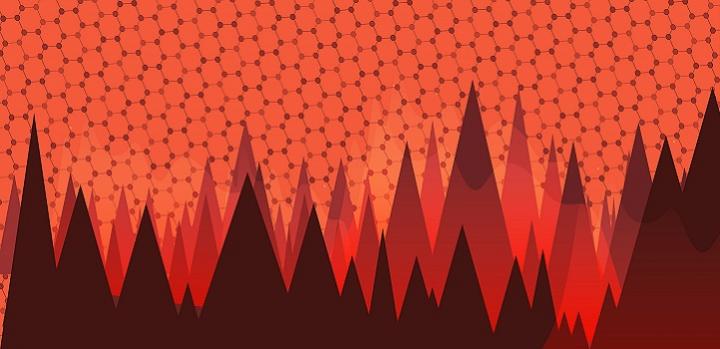
Credit: © 2020 KAUST

Harsh environments that are inhospitable to existing technologies could now be monitored using sensors based on graphene. An intriguing form of carbon, graphene comprises layers of interconnected hexagonal rings of carbon atoms, a structure that yields unique electronic and physical properties with possibilities for many applications.

“Graphene has been projected as a miracle material for years now, but its application in harsh environmental conditions was unexplored,” says Sohail Shaikh, who has developed the new sensors, together with KAUST’s Muhammad Hussain.

“Existing sensor technologies operate in a very limited range of environmental conditions, failing or becoming unreliable if there is much deviation,” Shaikh adds.

The new robust sensor relies on changes in the electrical resistance of graphene in response to varying temperature, salinity and the acidity of a solution measured as pH. The system has potential to monitor additional variables, including pressure and water flow rates.

The researchers point out that sensing for multiple variables can be incorporated into a single device, greatly increasing its usefulness.

The graphene is transferred onto a flexible sheet of polyimide polymer, and it can be connected to appropriate electronic systems to collect and transmit the signals for whichever environmental variable is being monitored. The data could be transmitted wirelessly using standard Bluetooth technology.

The greatest practical advance is in the resilience of the system that allows it to tolerate temperatures as high as 650 degrees Celsius, high salinity, varying pressure, intense radiation, reactive chemicals, high humidity or any combination of these conditions. The sensors can also offer advantages in sensitivity, for example, achieving a 260 percent sensitivity increase in temperature sensing relative to an existing alternative.

As Hussain explains: “Our study is the first to show decisively the prospects of graphene as a sensing material for a variety of harsh environmental conditions.”

Likely real-world applications include monitoring conditions in ocean water, body fluids, the oil and gas industry, space exploration, and many situations involving exposure to chemicals that would damage existing sensors.

The sensor’s thin structure and flexibility also makes it suitable for use in wearable technologies for divers and athletes, or in medical applications.

The researchers believe that continual developments linking electronic devices with Internet of Things (IoT) and Internet of Everything (IoE) technologies will bring many needs and opportunities for their robust and flexible sensors.

###

Media Contact
Carolyn Unck
[email protected]

Original Source

https://discovery.kaust.edu.sa/en/article/1022/a-fresh-sense-of-possibility

Related Journal Article

http://dx.doi.org/10.1063/5.0017769

Tags: Electrical Engineering/ElectronicsMaterialsTechnology/Engineering/Computer Science
Share12Tweet8Share2ShareShareShare2

Related Posts

Revolutionary Method Enhances Proteomic Profiling of EVs

January 17, 2026
blank

Optimizing Pulse Detonation Engines for Aerospace Progress

January 17, 2026

Dynamic LiDAR Mapping: Advancements in Odometry Technology

January 17, 2026

Endothelial FUNDC1 Controls Obesity-Diabetes via SIRT3 Pathway

January 17, 2026
Please login to join discussion

POPULAR NEWS

  • Enhancing Spiritual Care Education in Nursing Programs

    155 shares
    Share 62 Tweet 39
  • PTSD, Depression, Anxiety in Childhood Cancer Survivors, Parents

    147 shares
    Share 59 Tweet 37
  • Robotic Ureteral Reconstruction: A Novel Approach

    77 shares
    Share 31 Tweet 19
  • Study Reveals Lipid Accumulation in ME/CFS Cells

    54 shares
    Share 22 Tweet 14

About

We bring you the latest biotechnology news from best research centers and universities around the world. Check our website.

Follow us

Recent News

Revolutionary Method Enhances Proteomic Profiling of EVs

Optimizing Pulse Detonation Engines for Aerospace Progress

Dynamic LiDAR Mapping: Advancements in Odometry Technology

Subscribe to Blog via Email

Enter your email address to subscribe to this blog and receive notifications of new posts by email.

Join 71 other subscribers
  • Contact Us

Bioengineer.org © Copyright 2023 All Rights Reserved.

Welcome Back!

Login to your account below

Forgotten Password?

Retrieve your password

Please enter your username or email address to reset your password.

Log In
No Result
View All Result
  • Homepages
    • Home Page 1
    • Home Page 2
  • News
  • National
  • Business
  • Health
  • Lifestyle
  • Science

Bioengineer.org © Copyright 2023 All Rights Reserved.