• HOME
  • NEWS
  • EXPLORE
    • CAREER
      • Companies
      • Jobs
    • EVENTS
    • iGEM
      • News
      • Team
    • PHOTOS
    • VIDEO
    • WIKI
  • BLOG
  • COMMUNITY
    • FACEBOOK
    • INSTAGRAM
    • TWITTER
Monday, May 18, 2026
BIOENGINEER.ORG
No Result
View All Result
  • Login
  • HOME
  • NEWS
  • EXPLORE
    • CAREER
      • Companies
      • Jobs
        • Lecturer
        • PhD Studentship
        • Postdoc
        • Research Assistant
    • EVENTS
    • iGEM
      • News
      • Team
    • PHOTOS
    • VIDEO
    • WIKI
  • BLOG
  • COMMUNITY
    • FACEBOOK
    • INSTAGRAM
    • TWITTER
  • HOME
  • NEWS
  • EXPLORE
    • CAREER
      • Companies
      • Jobs
        • Lecturer
        • PhD Studentship
        • Postdoc
        • Research Assistant
    • EVENTS
    • iGEM
      • News
      • Team
    • PHOTOS
    • VIDEO
    • WIKI
  • BLOG
  • COMMUNITY
    • FACEBOOK
    • INSTAGRAM
    • TWITTER
No Result
View All Result
Bioengineer.org
No Result
View All Result
Home NEWS Science News Biology

A fresh look inside the protein nano-machines

Bioengineer by Bioengineer
May 24, 2017
in Biology
Reading Time: 2 mins read
0
Share on FacebookShare on TwitterShare on LinkedinShare on RedditShare on Telegram
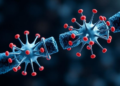
IMAGE

Credit: © UNIGE – Jean-Pierre Eckmann

Proteins perform vital functions of life, they digest food and fight infections and cancer. They are in fact nano-machines, each one of them designed to perform a specific task. But how did they evolve to match those needs, how did the genes encode the structure and function of proteins? Researchers from the University of Geneva (UNIGE), Switzerland, the Institute for Basic Science, Korea, and the Rockefeller University, United States, have conducted a study that tackles this yet unanswered question, and explains the basic geometry of the gene-to-protein code, by connecting proteins to properties of amorphous physical matter. The full article appears in Physical Review X.

A protein is a chain made of twenty different kinds of amino acids with elaborate interactions, and, unlike standard physical matter, it is selected by evolution. "The blueprint for protein synthesis is written in long DNA genes, but we show that only a small fraction of this huge information space is used to make the functional protein", explains Jean-Pierre Eckmann, Professor at the Department of Theoretical Physics from the Faculty of Science of UNIGE.

Together with Prof. Tsvi Tlusty from the Center for Soft and Living Matter, Institute for Basic Science (IBS) in Korea and Prof. Albert Libchaber from the Rockefeller University in New York, Prof. Eckmann shows that the only changes in the code that matter are those occurring in the segment of the gene coding the mechanically relevant hinges of the nano-machine. The changes in other regions of this highly redundant code have no impact. "We are now using this new approach to understand the relation between the function and dynamics of several important proteins."

###

Media Contact

Jean-Pierre Eckmann
[email protected]
41-223-797-717
@UNIGEnews

http://www.unige.ch

############

Story Source: Materials provided by Scienmag
Share12Tweet8Share2ShareShareShare2

Related Posts

Uncovering C. elegans Immunity via Genetic Screens — Biology

Uncovering C. elegans Immunity via Genetic Screens

May 16, 2026
Single mother must adapt swiftly — the survival of her colony depends on it — Biology

Single mother must adapt swiftly — the survival of her colony depends on it

May 15, 2026

Why Are Nearly Everyone Right-Handed? It Might Be Linked to How We Learned to Walk

May 15, 2026

Excessive Neuronal Activity Initiates Severe Autoimmune Brain Disorder

May 15, 2026
Please login to join discussion

POPULAR NEWS

  • Research Indicates Potential Connection Between Prenatal Medication Exposure and Elevated Autism Risk

    844 shares
    Share 338 Tweet 211
  • New Study Reveals Plants Can Detect the Sound of Rain

    731 shares
    Share 292 Tweet 182
  • Salmonella Haem Blocks Macrophages, Boosts Infection

    62 shares
    Share 25 Tweet 16
  • Breastmilk Balances E. coli and Beneficial Bacteria in Infant Gut Microbiomes

    58 shares
    Share 23 Tweet 15

About

We bring you the latest biotechnology news from best research centers and universities around the world. Check our website.

Follow us

Recent News

Compression Spurs Tumor Spread via Malate-Microtubule Pathway

Exosomal S100A9 Fuels Breast Cancer Spread

Unraveling Nanoscale Chirality via Momentum Polarimetry

Subscribe to Blog via Email

Enter your email address to subscribe to this blog and receive notifications of new posts by email.

Join 82 other subscribers
  • Contact Us

Bioengineer.org © Copyright 2023 All Rights Reserved.

Welcome Back!

Login to your account below

Forgotten Password?

Retrieve your password

Please enter your username or email address to reset your password.

Log In
No Result
View All Result
  • Homepages
    • Home Page 1
    • Home Page 2
  • News
  • National
  • Business
  • Health
  • Lifestyle
  • Science

Bioengineer.org © Copyright 2023 All Rights Reserved.