• HOME
  • NEWS
  • EXPLORE
    • CAREER
      • Companies
      • Jobs
    • EVENTS
    • iGEM
      • News
      • Team
    • PHOTOS
    • VIDEO
    • WIKI
  • BLOG
  • COMMUNITY
    • FACEBOOK
    • INSTAGRAM
    • TWITTER
Sunday, September 13, 2026
BIOENGINEER.ORG
No Result
View All Result
  • Login
  • HOME
  • NEWS
  • EXPLORE
    • CAREER
      • Companies
      • Jobs
        • Lecturer
        • PhD Studentship
        • Postdoc
        • Research Assistant
    • EVENTS
    • iGEM
      • News
      • Team
    • PHOTOS
    • VIDEO
    • WIKI
  • BLOG
  • COMMUNITY
    • FACEBOOK
    • INSTAGRAM
    • TWITTER
  • HOME
  • NEWS
  • EXPLORE
    • CAREER
      • Companies
      • Jobs
        • Lecturer
        • PhD Studentship
        • Postdoc
        • Research Assistant
    • EVENTS
    • iGEM
      • News
      • Team
    • PHOTOS
    • VIDEO
    • WIKI
  • BLOG
  • COMMUNITY
    • FACEBOOK
    • INSTAGRAM
    • TWITTER
No Result
View All Result
Bioengineer.org
No Result
View All Result
Home NEWS Science News Biology

A fat-regulating enzyme could hold the key to obesity, diabetes, cancer, other diseases

Bioengineer by Bioengineer
September 18, 2017
in Biology
Reading Time: 2 mins read
0
Share on FacebookShare on TwitterShare on LinkedinShare on RedditShare on Telegram
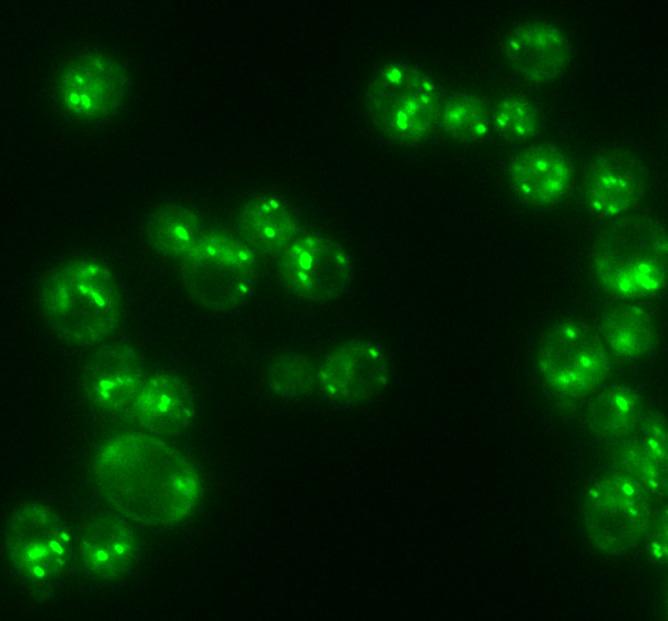
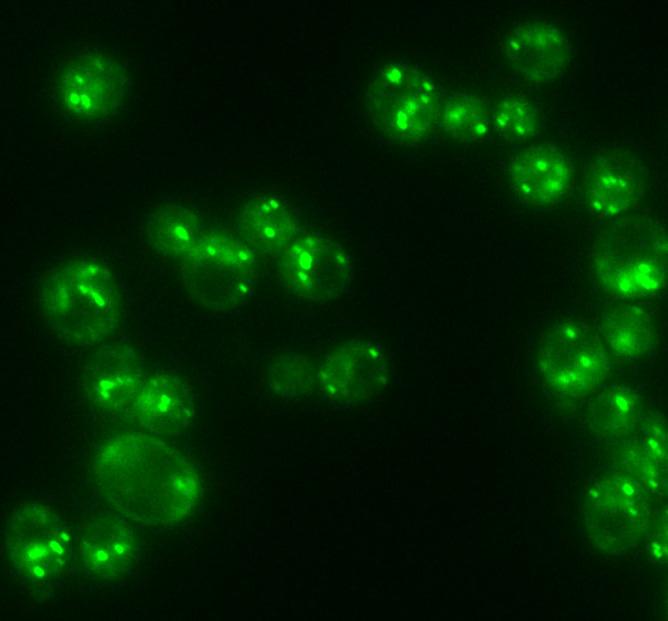
IMAGE

Credit: Gil-Soo Han/Rutgers University-New Brunswick

It had already been known that the enzyme known as phosphatidic acid phosphatase plays a crucial role in regulating the amount of fat in the human body. Controlling it is therefore of interest in the fight against obesity.

But scientists at Rutgers University-New Brunswick have now found that getting rid of the enzyme entirely can increase the risk of cancer, inflammation and other ills. Their findings were published online in the Journal of Biological Chemistry last month.

"The goal of our lab is to understand how we can tweak and control this enzyme," said George M. Carman, Board of Governors professor in the Department of Food Science in the School of Environmental and Biological Sciences. "For years, we have been trying to find out how to fine-tune the enzyme's activity so it's not too active, and creating too much fat, but it's active enough to keep the body healthy."

Video

The enzyme was discovered in 1957 and Gil-Soo Han, research assistant professor in the Rutgers Center for Lipid Research, discovered the gene encoding the enzyme in 2006. The enzyme determines whether the body's phosphatidic acid will be used to create fat, or create the lipids in cell membranes.

The study used baker's yeast as a model organism, since it also contains the key enzyme. Han, study lead author, deleted a gene in yeast to eliminate the enzyme. That led to accumulations of phosphatidic acid, with cells making far more membrane lipids than necessary, said Carman, who founded the center in Rutgers' New Jersey Institute for Food, Nutrition, and Health a decade ago.

"We have found that maybe a more critical role for the enzyme is to make sure that cells are not making too much membrane lipid," Carman said. "If you make too much membrane lipid, you make too much membrane and the cells are permitted to grow uncontrollably, a condition characteristic of cancer."

Since the discovery of the gene encoding the enzyme, people worldwide have studied the enzyme because of its relation to obesity, lipodystrophy, inflammation, diabetes and other conditions, Carman said.

Lately, the Rutgers scientists have been trying to understand the enzyme's structure and function. The next step is to figure out how to control it, Carman said.

"The key take-home message is that things have to be balanced," he said. "To keep the balance between making storage fat and membrane lipid, you have to have balanced diet."

###

Media Contact

Todd B. Bates
[email protected]
848-932-0550
@RutgersU

http://www.rutgers.edu

Related Journal Article

http://dx.doi.org/10.1074/jbc.M117.801720

Share12Tweet8Share2ShareShareShare2

Related Posts

Engineered E. coli swarms record chemical and light inputs in visible patterns

Engineered E. coli swarms record chemical and light inputs in visible patterns

September 13, 2026
Hidden RNA Circles Help Rice Survive Heat and Drought Together

Hidden RNA Circles Help Rice Survive Heat and Drought Together

September 13, 2026

Not All TCBS Agar Is Equal: Study Reveals Hidden Variability in Cholera and Vibrio Detection

September 13, 2026

Natural Killer Cell Education Leaves Lasting Imprints on the Persistent HIV Reservoir

September 13, 2026
Please login to join discussion

POPULAR NEWS

  • Therapeutic Family Camps Bring Healing and Hope to Aboriginal Children in Remote Australia

    29 shares
    Share 12 Tweet 7
  • AI Assistant That Reads Your Voice Makes Virtual Lab Work Feel More Human

    29 shares
    Share 12 Tweet 7
  • Your Jawbone Could Reveal Your Sex With Over 90 Percent Accuracy, New Study Shows

    29 shares
    Share 12 Tweet 7
  • Carbon Fibers and Graphite Particles Supercharge Dissolving Magnesium Composites

    29 shares
    Share 12 Tweet 7

About

We bring you the latest biotechnology news from best research centers and universities around the world. Check our website.

Follow us

Recent News

Therapeutic Family Camps Bring Healing and Hope to Aboriginal Children in Remote Australia

AI Assistant That Reads Your Voice Makes Virtual Lab Work Feel More Human

Your Jawbone Could Reveal Your Sex With Over 90 Percent Accuracy, New Study Shows

Subscribe to Blog via Email

Success! An email was just sent to confirm your subscription. Please find the email now and click 'Confirm' to start subscribing.

Join 85 other subscribers
  • Contact Us

Bioengineer.org © Copyright 2023 All Rights Reserved.

Welcome Back!

Login to your account below

Forgotten Password?

Retrieve your password

Please enter your username or email address to reset your password.

Log In
No Result
View All Result
  • Homepages
    • Home Page 1
    • Home Page 2
  • News
  • National
  • Business
  • Health
  • Lifestyle
  • Science

Bioengineer.org © Copyright 2023 All Rights Reserved.