

• HOME
  • NEWS
  • EXPLORE
    • CAREER
      • Companies
      • Jobs
    • EVENTS
    • iGEM
      • News
      • Team
    • PHOTOS
    • VIDEO
    • WIKI
  • BLOG
  • COMMUNITY
    • FACEBOOK
    • INSTAGRAM
    • TWITTER
Monday, May 11, 2026
BIOENGINEER.ORG
No Result
View All Result
  • Login
  • HOME
  • NEWS
  • EXPLORE
    • CAREER
      • Companies
      • Jobs
        • Lecturer
        • PhD Studentship
        • Postdoc
        • Research Assistant
    • EVENTS
    • iGEM
      • News
      • Team
    • PHOTOS
    • VIDEO
    • WIKI
  • BLOG
  • COMMUNITY
    • FACEBOOK
    • INSTAGRAM
    • TWITTER
  • HOME
  • NEWS
  • EXPLORE
    • CAREER
      • Companies
      • Jobs
        • Lecturer
        • PhD Studentship
        • Postdoc
        • Research Assistant
    • EVENTS
    • iGEM
      • News
      • Team
    • PHOTOS
    • VIDEO
    • WIKI
  • BLOG
  • COMMUNITY
    • FACEBOOK
    • INSTAGRAM
    • TWITTER
No Result
View All Result
Bioengineer.org
No Result
View All Result
Home Headlines

A ‘CRISPR’ view of Sturge-Weber syndrome is coming into focus

Bioengineer.org by Bioengineer.org
January 31, 2018
in Headlines, Health, Science News
Reading Time: 2 mins read
0
Share on FacebookShare on TwitterShare on LinkedinShare on RedditShare on Telegram
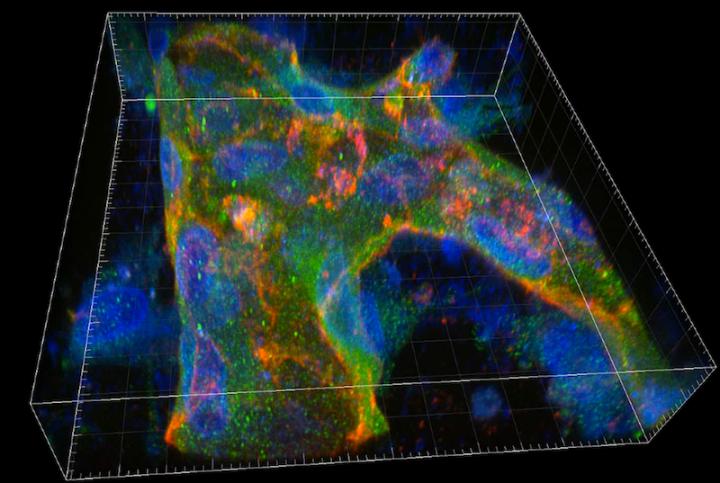
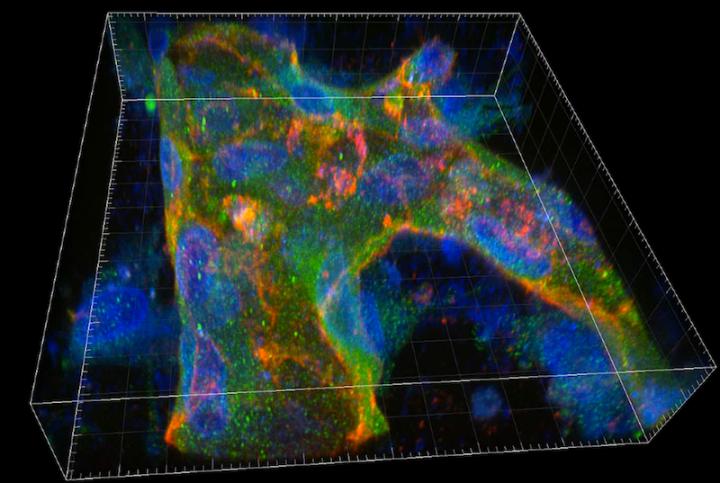
IMAGE

Credit: Bischoff lab/Boston Children's Hospital

Three-dimensional modeling and CRISPR-Cas9 gene editing technology are giving scientists a new view into Sturge-Weber syndrome, a rare congenital disorder that causes small blood vessels, called capillaries, to be malformed. These capillary malformations can cause port wine birthmarks on the face and neck, and in some cases, abnormal vasculature in the brain that can spark seizures.

Last year, a Boston Children's Hospital research team — led by Joyce Bischoff, PhD, of the Vascular Biology Program — discovered that the genetic mutation responsible for Sturge-Weber syndrome dwells in endothelial cells lining the affected capillaries in the brain. The team had previously found the same mutation present in the endothelial cells of skin capillaries of patients' port wine birthmarks.

Together, their studies suggest that mutated endothelial cells could be causing surrounding cells to behave abnormally.

To explore this emerging hypothesis, Bischoff's team is seeking lifelike ways of mimicking these hallmark capillary malformations in the laboratory. Their goal is to use microfluidic chip technology to grow 3D, physiologically-relevant vascular networks containing the syndrome's genetic mutation, called GNAQ R183Q.

With fellowship support from the Sturge-Weber Foundation, Colette Bichsel, PhD, a Boston Children's research fellow in Bischoff's lab, is using her expertise in microvasculature modeling to build the 3D models of capillary malformations inside microfluidic chips made of silicone.

Bischoff's team is also looking for better ways to create the mutant cells that seed the 3D models.

"One strategy we are investigating is the use of the CRISPR-Cas9 gene editing system to replicate the GNAQ R183Q mutation in human cell lines," says Bichsel.

So far, these studies have revealed some surprising results about the way endothelial cells develop with the GNAQ R183Q mutation.

"We have much more work to do, but it seems as though mutated cells grow slower than normal ones," says Bichsel. "Perhaps this helps explain why we see disorganized vasculature in the capillary malformations of people with Sturge-Weber syndrome."

Although their data are too preliminary to draw any conclusions, Bischoff's team is hopeful that an improved platform for modeling capillary malformations will unlock new insights into the syndrome's underlying mechanisms.

"We're thrilled to continue our lab's partnership with the Sturge-Weber Foundation on this research," says Bischoff. "Our ultimate hope is that this research lays the groundwork for new therapies that can prevent these capillary malformations from developing to a point where they are detrimental to patients' quality of life."

###

Media Contact

Keri Stedman
[email protected]u
617-919-3110
@BostonChildrens

http://www.childrenshospital.org/newsroom

Original Source

https://vector.childrenshospital.org/2017/11/crispr-3d-sturge-weber-syndrome/

Share15Tweet8Share2ShareShareShare2

Related Posts

New Post-Hoc Analysis Explores Daily Oral Orforglipron Use in Adults Over 65 with Obesity, Regardless of Diabetes Status

May 11, 2026

Evaluating Digoxin Use in Patients with Symptomatic Rheumatic Heart Disease

May 10, 2026

Evaluating the Effectiveness and Safety of Digitalis Glycosides in Treating Heart Failure

May 10, 2026

Urdu Fall Risk Questionnaire Adapted for Elderly

May 10, 2026
Please login to join discussion

POPULAR NEWS

  • Research Indicates Potential Connection Between Prenatal Medication Exposure and Elevated Autism Risk

    840 shares
    Share 336 Tweet 210
  • New Study Reveals Plants Can Detect the Sound of Rain

    727 shares
    Share 290 Tweet 181
  • Salmonella Haem Blocks Macrophages, Boosts Infection

    61 shares
    Share 24 Tweet 15
  • Breastmilk Balances E. coli and Beneficial Bacteria in Infant Gut Microbiomes

    57 shares
    Share 23 Tweet 14

About

We bring you the latest biotechnology news from best research centers and universities around the world. Check our website.

Follow us

Recent News

New Post-Hoc Analysis Explores Daily Oral Orforglipron Use in Adults Over 65 with Obesity, Regardless of Diabetes Status

Evaluating Digoxin Use in Patients with Symptomatic Rheumatic Heart Disease

Evaluating the Effectiveness and Safety of Digitalis Glycosides in Treating Heart Failure

Subscribe to Blog via Email

Enter your email address to subscribe to this blog and receive notifications of new posts by email.

Join 82 other subscribers
  • Contact Us

Bioengineer.org © Copyright 2023 All Rights Reserved.

Welcome Back!

Login to your account below

Forgotten Password?

Retrieve your password

Please enter your username or email address to reset your password.

Log In
No Result
View All Result
  • Homepages
    • Home Page 1
    • Home Page 2
  • News
  • National
  • Business
  • Health
  • Lifestyle
  • Science

Bioengineer.org © Copyright 2023 All Rights Reserved.