Allergies and many other types of immune system-related diseases originate from an interplay of complex chemical pathways that affect cell behavior, distribution, and development. One prominent example is the CCL17/TARC chemokine, a protein that contributes to allergy by attracting certain types of white blood cells, such as T cells and eosinophils. Despite the important and proven roles of CCL17/TARC in allergic diseases like contact dermatitis, not much is known about the transcription factors (proteins that regulate gene expression) involved in regulating the expression of the CCL17 gene.
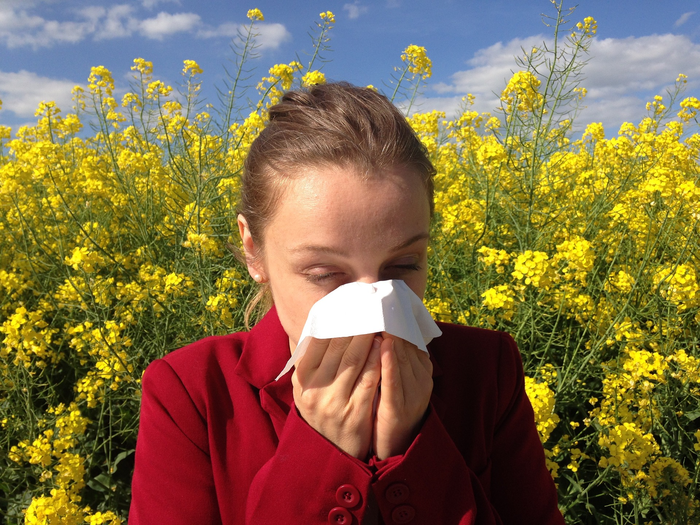
Credit: https://pixabay.com/users/cenczi-1854246/
Allergies and many other types of immune system-related diseases originate from an interplay of complex chemical pathways that affect cell behavior, distribution, and development. One prominent example is the CCL17/TARC chemokine, a protein that contributes to allergy by attracting certain types of white blood cells, such as T cells and eosinophils. Despite the important and proven roles of CCL17/TARC in allergic diseases like contact dermatitis, not much is known about the transcription factors (proteins that regulate gene expression) involved in regulating the expression of the CCL17 gene.
To address this knowledge gap, a team of scientists from Japan conducted a detailed study, the results of which were published in Allergy, focusing on PU.1, a transcription factor known to regulate gene expression in various types of immune cells. Prof. Chiharu Nishiyama from Tokyo University of Science (TUS), who headed the study, explains why they targeted this specific protein: “A long time ago, we discovered that forced expression of PU.1 in certain types of blood cell lineages causes them to change into dendritic cells. Since then, I have developed a deep interest in the fact that PU.1 is a master transcription factor that regulates dendritic cell differentiation and gene expression.”
The team conducted a series of detailed experiments to clarify, at the molecular level, the relationship that exists between CCL17, PU.1, and other associated transcription factors and promoters. They relied on small interfering RNAs (siRNAs), or short chains of nucleotides that interrupt the translation process (making proteins from a copied DNA segment into RNA) of a target protein with great precision, for their study.
After targeting PU.1 with siRNAs in dendritic cell cultures, they observed a decrease in expression not only for PU.1 and CCL17 but also IRF4 and IRF8, two partner molecules of PU.1.
Through further experiments in cell cultures followed by computational analysis, the team found that IRF4 and PU.1 work together synergistically to activate the transcription (copying of a DNA segment into RNA) of TARC in dendritic cells through the regulatory region of the CCL17 gene. Although this regulatory mechanism appears to be preserved across mammals, the scientists also discovered that the human CCL17 gene contains an additional promoter that is activated in keratinocytes, the most common type of cell found in the outermost layer of our skin.
Finally, the scientists tested the effects of PU.1 suppression in vivo using an asthmatic mouse as a model. They found that a simple intranasal administration of PU.1 siRNA helped reduce TARC secretion and the associated infiltration of white blood cells into the bronchioles, effectively reducing the extent of inflammation in the lungs.
These results highlight the importance of PU.1 in inflammatory processes and immune diseases and could pave the way to novel treatments. “I find it encouraging that we were able to report both basic research on genes as well as an applied approach that could lead to treatment for hyperimmune responses, such as contact hypersensitivity and asthma,” comments Prof. Nishiyama.
Hopefully, further research would help clarify the regulatory and transcriptional pathways of CCL17 even more, leading to a more comprehensive understanding of the complex panorama of immune diseases.
***
Reference
Authors: Naoto Ito (1), Fumiya Sakata (1), Masakazu Hachisu (1), Kazuki Nagata (1), Tomoka Ito (1), Kurumi Nomura (1), Masanori Nagaoka (1), Keito Inaba (1), Mutsuko Hara (2), Nobuhiro Nakano (2), Tadaaki Nakajima (1), Takuya Yashiro (1), and Chiharu Nishiyama (1).
DOI: https://doi.org/10.1111/all.15184
Affiliations:
(1) Department of Biological Science and Technology, Faculty of Advanced Engineering, Tokyo University of Science.
(2) Atopy (Allergy) Research Center, Juntendo University Graduate School of Medicine.
About The Tokyo University of Science
Tokyo University of Science (TUS) is a well-known and respected university, and the largest science-specialized private research university in Japan, with four campuses in central Tokyo and its suburbs and in Hokkaido. Established in 1881, the university has continually contributed to Japan’s development in science through inculcating the love for science in researchers, technicians, and educators.
With a mission of “Creating science and technology for the harmonious development of nature, human beings, and society”, TUS has undertaken a wide range of research from basic to applied science. TUS has embraced a multidisciplinary approach to research and undertaken intensive study in some of today’s most vital fields. TUS is a meritocracy where the best in science is recognized and nurtured. It is the only private university in Japan that has produced a Nobel Prize winner and the only private university in Asia to produce Nobel Prize winners within the natural sciences field.
Website: https://www.tus.ac.jp/en/mediarelations/
About Professor Chiharu Nishiyama from Tokyo University of Science
Professor Chiharu Nishiyama is affiliated with Faculty of Advanced Engineering, Department of Biological Science and Technology. She received her postgraduate degree in 1990 from the Department of Agricultural Chemistry at University of Tokyo Graduate School, followed by a PhD from the University of Tokyo. Her areas of research interest include applied biochemistry including immunology, allergy, molecular biology, transcription factors, and cell development. She has published around 130 research papers in international journals. She also received the prestigious JSBBA Award for Young Scientists in 2005, JSA Award for Young Scientists in 2005, and JAFI Award in 2019.
Journal
Allergy
DOI
10.1111/all.15184
Method of Research
Experimental study
Subject of Research
Animals
Article Title
The Ccl17 gene encoding TARC is synergistically transactivated by PU.1 and IRF4 driven by the mammalian common promoter in dendritic cells
Article Publication Date
22-Nov-2021
COI Statement
None.