• HOME
  • NEWS
  • EXPLORE
    • CAREER
      • Companies
      • Jobs
    • EVENTS
    • iGEM
      • News
      • Team
    • PHOTOS
    • VIDEO
    • WIKI
  • BLOG
  • COMMUNITY
    • FACEBOOK
    • INSTAGRAM
    • TWITTER
Tuesday, April 14, 2026
BIOENGINEER.ORG
No Result
View All Result
  • Login
  • HOME
  • NEWS
  • EXPLORE
    • CAREER
      • Companies
      • Jobs
        • Lecturer
        • PhD Studentship
        • Postdoc
        • Research Assistant
    • EVENTS
    • iGEM
      • News
      • Team
    • PHOTOS
    • VIDEO
    • WIKI
  • BLOG
  • COMMUNITY
    • FACEBOOK
    • INSTAGRAM
    • TWITTER
  • HOME
  • NEWS
  • EXPLORE
    • CAREER
      • Companies
      • Jobs
        • Lecturer
        • PhD Studentship
        • Postdoc
        • Research Assistant
    • EVENTS
    • iGEM
      • News
      • Team
    • PHOTOS
    • VIDEO
    • WIKI
  • BLOG
  • COMMUNITY
    • FACEBOOK
    • INSTAGRAM
    • TWITTER
No Result
View All Result
Bioengineer.org
No Result
View All Result
Home Headlines

A bridge to breathing

Bioengineer.org by Bioengineer.org
January 18, 2018
in Headlines, Health, Science News
Reading Time: 2 mins read
0
Share on FacebookShare on TwitterShare on LinkedinShare on RedditShare on Telegram
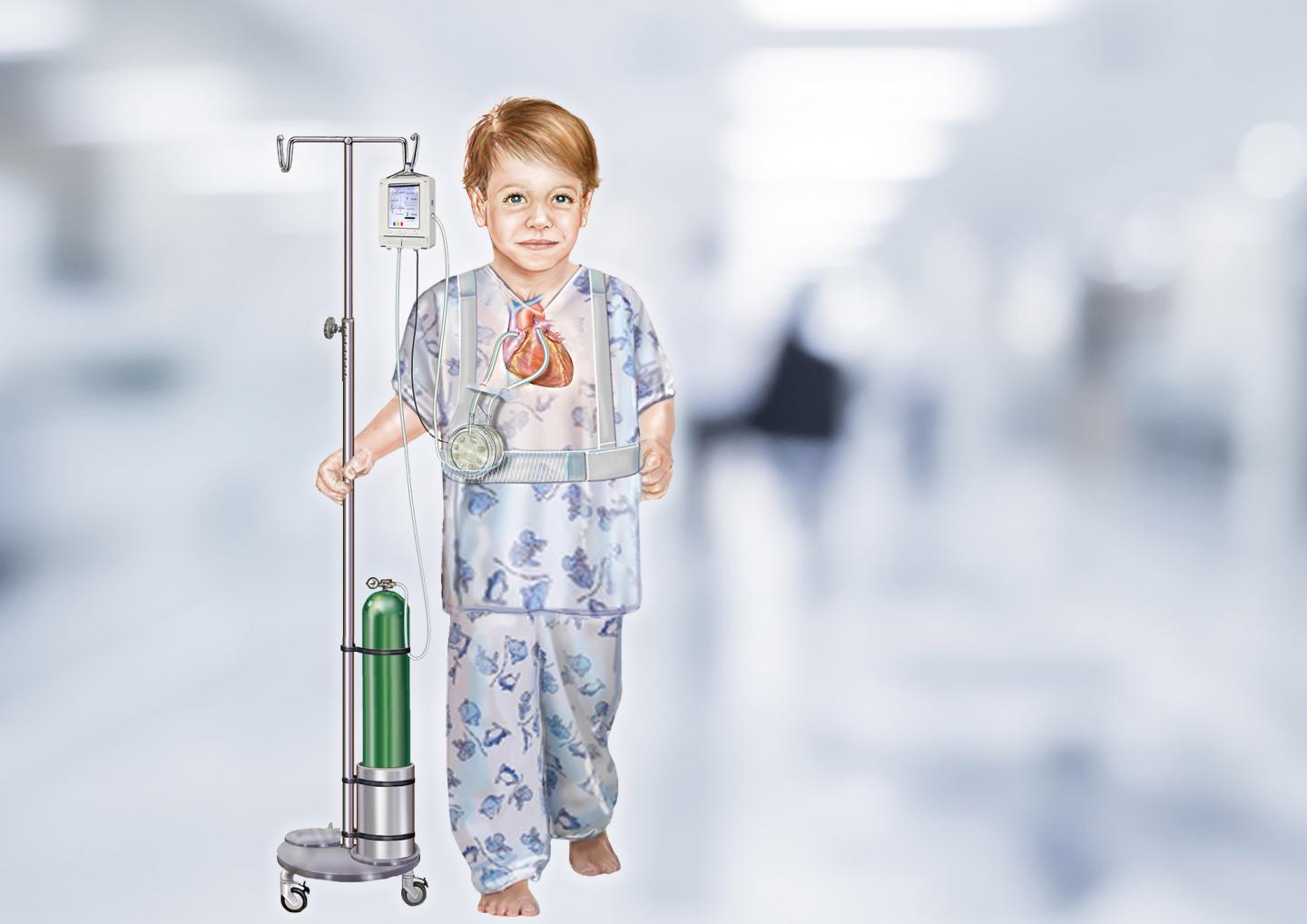
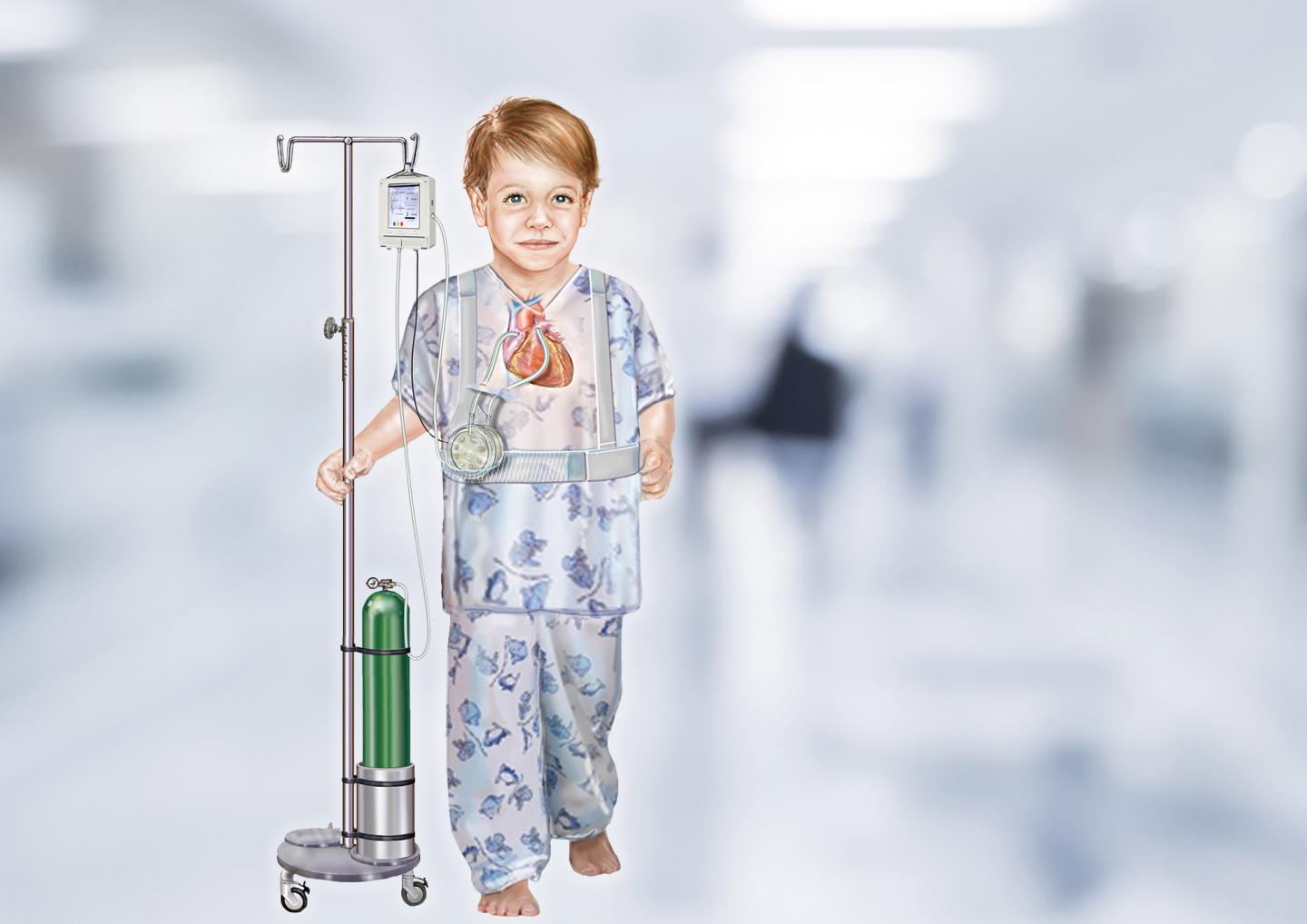
IMAGE

Credit: Randal McKenzie Illustrations

PITTSBURGH (February 6, 2017) … Acute and chronic lung diseases are the most life-threatening causes of hospitalization and death among young children. This is especially true for children suffering from cystic fibrosis. The path to recovery often leads to a lung transplant, but the wait list for pediatric patients can last for months and require lengthy hospital stays anchored to large mechanical ventilators.

To safely bridge the time between diagnosis and transplant while allowing patient mobility, a research team led by the University of Pittsburgh's Swanson School of Engineering, working with the McGowan Institute for Regenerative Medicine, is developing a compact respiratory assist device for children. The Pittsburgh Pediatric Ambulatory Lung (P-PAL) would replace traditional oxygenation methods as a bridge to transplant or recovery in children with lung failure.

The proposal, "Ambulatory Assist Lung for Children," was the recipient of a four-year, $2,357,508 R01 award from the National Institute of Health's National Heart, Lung, And Blood Institute. Program Director/Principal Investigator is William J. Federspiel, Professor in the Swanson School's Department of Bioengineering. Co-PIs are William R. Wagner, Director of the McGowan Institute for Regenerative Medicine and Professor of Surgery, Bioengineering and Chemical Engineering at Pitt; and Peter D. Wearden, congenital cardiothoracic surgeon and Department Chair, Division of Cardiovascular Surgery, Department of Cardiovascular Services at the Nemours Children's Health System, Orlando, Florida.

"Standard existing therapy not only restricts children's mobility in the hospital but can also cause lung damage and/or worsening of the child's health," Dr. Federspiel explains. "Our new approach allows the patient's lungs to rest and heal, and if the child is a candidate for lung transplantation, the mobility afforded by the P-PAL will lead to better post-transplant outcomes."

One of P-PAL's most innovative features is that it will allow young patients to remain mobile in the hospital while under treatment or awaiting transplant. "Pediatric patients can still be active children, and at young ages you don't want to restrict them to a hospital bed," Dr. Wagner said. "The P-PAL is a self-contained, minimally-invasive device that can provide children with mobility even while awaiting a transplant."

Co-investigators on the award include Jonathan D'Cunha, Associate Professor of Surgery in the Department of Cardiothoracic Surgery at Pitt, and Greg W. Burgreen, Associate Research Professor at the Mississippi State University Bagley College of Engineering.

###

Media Contact

Paul Kovach, Director of Marketing and Communications
[email protected]
412-624-0265

http://www.pitt.edu

Share12Tweet8Share2ShareShareShare2

Related Posts

Fast, Precise Large-Scale Protein Alignment: FAMSA2

April 14, 2026
Nanoscale Light Trapping: Pioneering the Future of Optoelectronic Power

Nanoscale Light Trapping: Pioneering the Future of Optoelectronic Power

April 14, 2026

The Protein Society Reveals 2026 Award Recipients

April 14, 2026

New Biomarker Identified to Predict Immunotherapy Success in Colon and Rectal Cancer Patients

April 14, 2026
Please login to join discussion

POPULAR NEWS

  • Scientists Investigate Possible Connection Between COVID-19 and Increased Lung Cancer Risk

    60 shares
    Share 24 Tweet 15
  • Boosting Breast Cancer Risk Prediction with Genetics

    47 shares
    Share 19 Tweet 12
  • Popular Anti-Aging Compound Linked to Damage in Corpus Callosum, Study Finds

    45 shares
    Share 18 Tweet 11
  • Revolutionary Theory Transforms Quantum Perspective on the Big Bang

    41 shares
    Share 16 Tweet 10

About

We bring you the latest biotechnology news from best research centers and universities around the world. Check our website.

Follow us

Recent News

Fast, Precise Large-Scale Protein Alignment: FAMSA2

Nanoscale Light Trapping: Pioneering the Future of Optoelectronic Power

New Biomarker Identified to Predict Immunotherapy Success in Colon and Rectal Cancer Patients

iv>

Subscribe to Blog via Email

Enter your email address to subscribe to this blog and receive notifications of new posts by email.

Join 79 other subscribers
  • Contact Us

Bioengineer.org © Copyright 2023 All Rights Reserved.

Welcome Back!

Login to your account below

Forgotten Password?

Retrieve your password

Please enter your username or email address to reset your password.

Log In
No Result
View All Result
  • Homepages
    • Home Page 1
    • Home Page 2
  • News
  • National
  • Business
  • Health
  • Lifestyle
  • Science

Bioengineer.org © Copyright 2023 All Rights Reserved.