• HOME
  • NEWS
  • EXPLORE
    • CAREER
      • Companies
      • Jobs
    • EVENTS
    • iGEM
      • News
      • Team
    • PHOTOS
    • VIDEO
    • WIKI
  • BLOG
  • COMMUNITY
    • FACEBOOK
    • INSTAGRAM
    • TWITTER
Sunday, June 21, 2026
BIOENGINEER.ORG
No Result
View All Result
  • Login
  • HOME
  • NEWS
  • EXPLORE
    • CAREER
      • Companies
      • Jobs
        • Lecturer
        • PhD Studentship
        • Postdoc
        • Research Assistant
    • EVENTS
    • iGEM
      • News
      • Team
    • PHOTOS
    • VIDEO
    • WIKI
  • BLOG
  • COMMUNITY
    • FACEBOOK
    • INSTAGRAM
    • TWITTER
  • HOME
  • NEWS
  • EXPLORE
    • CAREER
      • Companies
      • Jobs
        • Lecturer
        • PhD Studentship
        • Postdoc
        • Research Assistant
    • EVENTS
    • iGEM
      • News
      • Team
    • PHOTOS
    • VIDEO
    • WIKI
  • BLOG
  • COMMUNITY
    • FACEBOOK
    • INSTAGRAM
    • TWITTER
No Result
View All Result
Bioengineer.org
No Result
View All Result
Home NEWS Science News Biology

A bionic mushroom that generates electricity

Bioengineer by Bioengineer
November 7, 2018
in Biology
Reading Time: 2 mins read
0
Share on FacebookShare on TwitterShare on LinkedinShare on RedditShare on Telegram
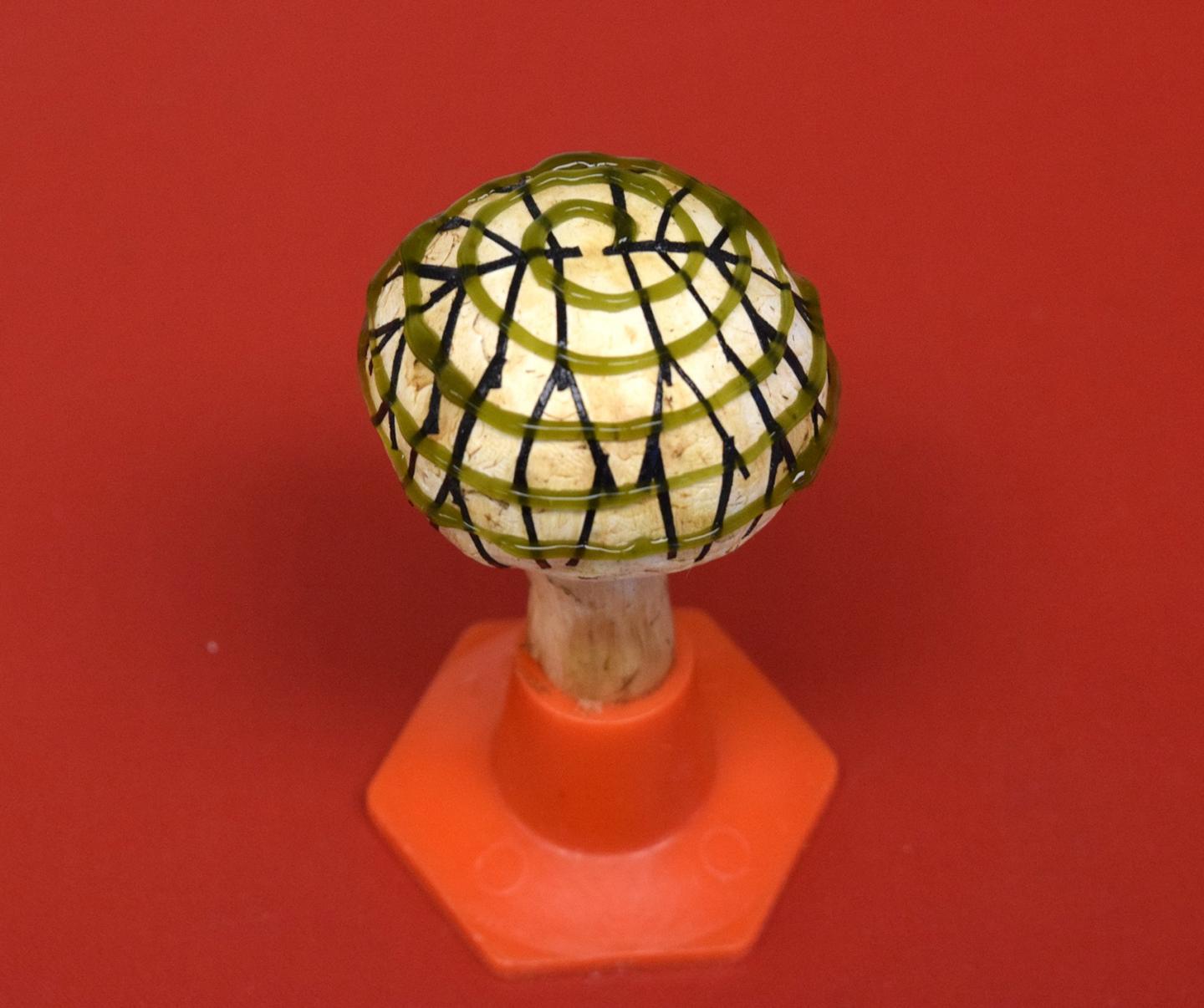
IMAGE

Credit: American Chemical Society

In the quest to replace fossil fuels, scientists are always on the lookout for alternative, environmentally friendly sources of energy. But who could have imagined a bionic mushroom that produces electricity? It sounds like something straight out of Alice in Wonderland, but researchers have now generated mushrooms patterned with energy-producing bacteria and an electrode network. They report their results in the ACS journal Nano Letters.

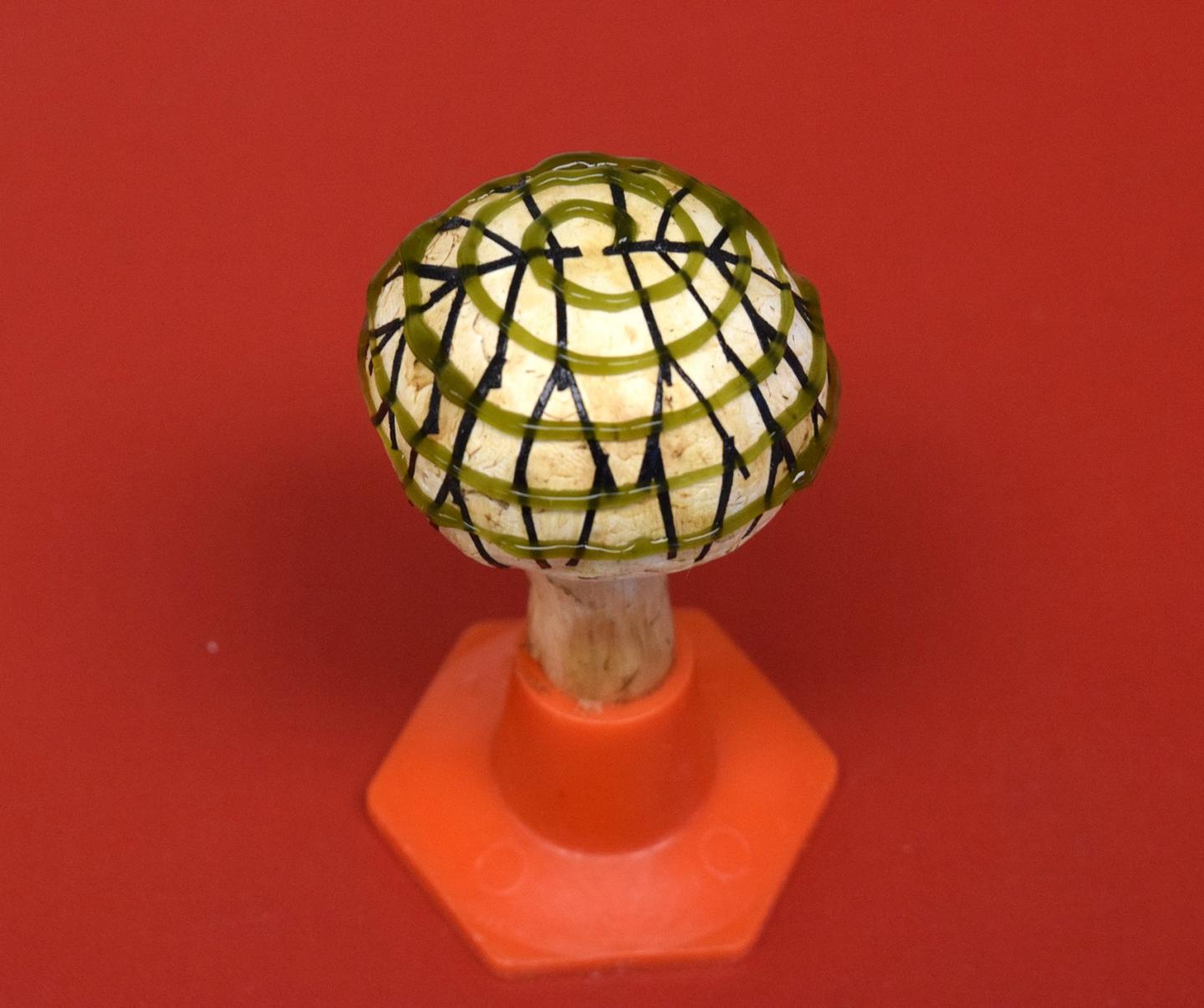
Many examples of organisms that live closely together and interact with each other exist in nature. In some cases, this symbiotic relationship is mutually beneficial. A team of researchers led by Manu Mannoor and Sudeep Joshi from Stevens Institute of Technology wanted to engineer an artificial symbiosis between button mushrooms and cyanobacteria. In their scenario, the mushroom would provide shelter, moisture and nutrients, while bacteria 3D-printed on the mushroom's cap would supply energy by photosynthesis. Graphene nanoribbons printed alongside the bacteria could capture electrons released by the microbes during photosynthesis, producing bio-electricity.

To make their bionic mushroom a reality, the researchers first 3D printed an electronic ink containing graphene nanoribbons onto the cap of a living mushroom in a branched pattern. They then printed a bio-ink containing cyanobacteria onto the cap in a spiral pattern, which intersected with the electronic ink at multiple points. At these sites, electrons could transfer through the outer membranes of the bacteria to the conductive network of graphene nanoribbons. Shining a light on the mushroom activated cyanobacterial photosynthesis, generating a current of about 65 nanoAmps. Although this current is insufficient to power an electronic device, the researchers say that an array of bionic mushrooms could generate enough current to light up an LED. The researchers are now working on ways to generate higher currents using this system. They say that this 3D-printing approach could be used to organize other bacterial species in complex arrangements to perform useful functions, such as bioluminescence.

###

The authors do not acknowledge any funding sources.

The paper's abstract will be available on November 7 at 8 a.m. Eastern time here: http://pubs.acs.org/doi/abs/10.1021/acs.nanolett.8b02642

The American Chemical Society, the world's largest scientific society, is a not-for-profit organization chartered by the U.S. Congress. ACS is a global leader in providing access to chemistry-related information and research through its multiple databases, peer-reviewed journals and scientific conferences. ACS does not conduct research, but publishes and publicizes peer-reviewed scientific studies. Its main offices are in Washington, D.C., and Columbus, Ohio.

To automatically receive news releases from the American Chemical Society, contact [email protected].

Follow us: Twitter | Facebook

Media Contact

Katie Cottingham
[email protected]
301-775-8455
@ACSpressroom

http://www.acs.org
Share12Tweet8Share2ShareShareShare2

Related Posts

From Paleogene to Anthropocene: Evolution of Northeast Asian Frogs — Biology

From Paleogene to Anthropocene: Evolution of Northeast Asian Frogs

June 21, 2026
Inbreeding Hits Small Males in Threatened Songbird — Biology

Inbreeding Hits Small Males in Threatened Songbird

June 21, 2026

Tiny Genetic Fragments Crucial for Signaling Brain Rest Identified

June 19, 2026

How H5N1 Bird Flu Went Undetected for Weeks in Dairy Cattle

June 19, 2026
Please login to join discussion

POPULAR NEWS

  • Saying Goodbye to PGY-6: Pediatric Fellowship Realities

    103 shares
    Share 41 Tweet 26
  • Multi-Hospital Study Reveals Long Covid Burden Is Twice as High as Current Estimates

    92 shares
    Share 36 Tweet 23
  • Detection of EDCs in Breast Milk and Infant Urine Up to Six Months Highlights Early Exposure Risks

    77 shares
    Share 31 Tweet 19
  • New Drug Candidate Developed at McMaster Shows Potential for Treating Brain Cancer

    58 shares
    Share 23 Tweet 15

About

We bring you the latest biotechnology news from best research centers and universities around the world. Check our website.

Follow us

Recent News

7-Year Review of Elderly Judicial Patient Cases

From Paleogene to Anthropocene: Evolution of Northeast Asian Frogs

Inbreeding Hits Small Males in Threatened Songbird

Subscribe to Blog via Email

Enter your email address to subscribe to this blog and receive notifications of new posts by email.

Join 82 other subscribers
  • Contact Us

Bioengineer.org © Copyright 2023 All Rights Reserved.

Welcome Back!

Login to your account below

Forgotten Password?

Retrieve your password

Please enter your username or email address to reset your password.

Log In
No Result
View All Result
  • Homepages
    • Home Page 1
    • Home Page 2
  • News
  • National
  • Business
  • Health
  • Lifestyle
  • Science

Bioengineer.org © Copyright 2023 All Rights Reserved.