• HOME
  • NEWS
  • EXPLORE
    • CAREER
      • Companies
      • Jobs
    • EVENTS
    • iGEM
      • News
      • Team
    • PHOTOS
    • VIDEO
    • WIKI
  • BLOG
  • COMMUNITY
    • FACEBOOK
    • INSTAGRAM
    • TWITTER
Sunday, May 10, 2026
BIOENGINEER.ORG
No Result
View All Result
  • Login
  • HOME
  • NEWS
  • EXPLORE
    • CAREER
      • Companies
      • Jobs
        • Lecturer
        • PhD Studentship
        • Postdoc
        • Research Assistant
    • EVENTS
    • iGEM
      • News
      • Team
    • PHOTOS
    • VIDEO
    • WIKI
  • BLOG
  • COMMUNITY
    • FACEBOOK
    • INSTAGRAM
    • TWITTER
  • HOME
  • NEWS
  • EXPLORE
    • CAREER
      • Companies
      • Jobs
        • Lecturer
        • PhD Studentship
        • Postdoc
        • Research Assistant
    • EVENTS
    • iGEM
      • News
      • Team
    • PHOTOS
    • VIDEO
    • WIKI
  • BLOG
  • COMMUNITY
    • FACEBOOK
    • INSTAGRAM
    • TWITTER
No Result
View All Result
Bioengineer.org
No Result
View All Result
Home NEWS Science News Biology

Fewer monarch butterflies are reaching their overwintering destination

Bioengineer by Bioengineer
January 2, 2019
in Biology
Reading Time: 3 mins read
0
IMAGE
Share on FacebookShare on TwitterShare on LinkedinShare on RedditShare on Telegram

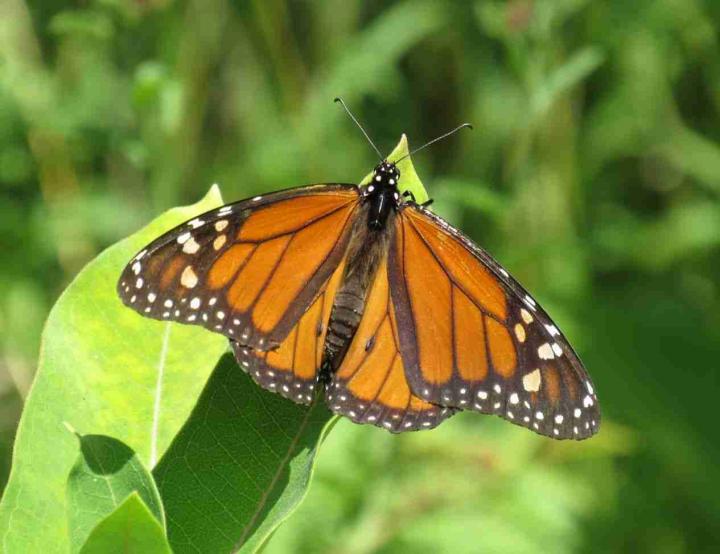
New research on monarch butterfly migration in North America leads to questions about where they overwinter
IMAGE

Credit: Pat Davis


Arguably, one of the world’s most famous insects, the monarch butterfly, is currently experiencing dire problems with its migration in eastern North America. Fewer and fewer monarchs are successfully reaching their overwintering destinations, and scientists aren’t sure why. Because of this, the need for research on the migration has never been more urgent. New research published in De Gruyter’s Open Access journal Animal Migration, aims to help with this effort.

The dwindling numbers of overwintering monarchs in the mountains of central Mexico have been the subject of debate among researchers, with some arguing it reflects a large-scale drop in numbers of breeding adults, while others point to increasingly perilous migration as the cause. Now, a new research study “Alternate migration strategies of eastern monarch butterflies revealed by stable isotopes” led by Dr. Hannah Vander Zanden, from the University of Florida, throws another potential explanation into the mix – maybe the monarchs are simply travelling elsewhere to overwinter, like to the balmy coast of southern Florida.

Dr. Vander Zanden and her team captured and examined monarchs that wintered in South Florida, using a special analytical technique that can pinpoint where the monarchs came from based on a sample of their wing or body tissue. Amazingly, they discovered that half of the monarchs sampled appeared to originate from the American Midwest, which is typically thought to represent the core breeding range of the eastern population. For years, researchers assumed that monarchs from this region only travel to the mountainous region of Mexico each fall. But, this new discovery means that at least some of the Midwestern monarchs are choosing not to fly to Mexico after all, and instead they appear to fly in nearly the opposite direction until they reach southern Florida.

“Previous research had suggested that some migrating monarchs may wind up in southern Florida if they become waylaid by strong westerly winds, but this evidence makes it seem like they purposely travelled to this location,” says Andy Davis, noted expert in monarch migration from University of Georgia and editor of the journal.
This discovery could bear on the issue of the shrinking overwintering population in Mexico, especially if more of these “alternative” overwintering locations are found.

This research was recently published along with four other studies that focused on monarch migration, in a themed collection in the journal. “Collectively, these studies demonstrate that we still have so much to learn about this phase of the monarch life cycle in North America. And, given the issues facing the migration itself, this work couldn’t come at a better time,” said Davis.

###

Read the open access article here:
https://doi.org/10.1515/ami-2018-0006

Media Contact
Eric Merkel-Sobotta
[email protected]
49-302-600-5304

Original Source

https://www.degruyter.com/dg/newsitem/313/fewer-monarch-butterflies-are-reaching-their-overwintering-destination-scientists-ask-why-

Related Journal Article

http://dx.doi.org/10.1515/ami-2018-0006

Tags: BiologyClimate ChangeEcology/EnvironmentEntomology
Share12Tweet8Share2ShareShareShare2

Related Posts

Ancient Plant Populations Reveal Fresh Insights into Climate Resilience — Biology

Ancient Plant Populations Reveal Fresh Insights into Climate Resilience

May 8, 2026
Rare Brain Disorders in Children Linked to Mutations in Lesser-Known Protein Complex — Biology

Rare Brain Disorders in Children Linked to Mutations in Lesser-Known Protein Complex

May 8, 2026

From Odd Insect to Underwater Predator: The Remarkable Evolution of a Bloodthirsty Fruit Fly

May 8, 2026

SNU Professor Sangwoo Seo’s Team Develops Next-Generation CRISPR Biocontainment Technology to Control Microbial Survival Without DNA Cleavage

May 8, 2026
Please login to join discussion

POPULAR NEWS

  • Research Indicates Potential Connection Between Prenatal Medication Exposure and Elevated Autism Risk

    840 shares
    Share 336 Tweet 210
  • New Study Reveals Plants Can Detect the Sound of Rain

    727 shares
    Share 290 Tweet 181
  • Scientists Investigate Possible Connection Between COVID-19 and Increased Lung Cancer Risk

    68 shares
    Share 27 Tweet 17
  • Salmonella Haem Blocks Macrophages, Boosts Infection

    61 shares
    Share 24 Tweet 15

About

We bring you the latest biotechnology news from best research centers and universities around the world. Check our website.

Follow us

Recent News

Evaluating Digoxin Use in Patients with Symptomatic Rheumatic Heart Disease

Evaluating the Effectiveness and Safety of Digitalis Glycosides in Treating Heart Failure

Urdu Fall Risk Questionnaire Adapted for Elderly

Subscribe to Blog via Email

Enter your email address to subscribe to this blog and receive notifications of new posts by email.

Join 82 other subscribers
  • Contact Us

Bioengineer.org © Copyright 2023 All Rights Reserved.

Welcome Back!

Login to your account below

Forgotten Password?

Retrieve your password

Please enter your username or email address to reset your password.

Log In
No Result
View All Result
  • Homepages
    • Home Page 1
    • Home Page 2
  • News
  • National
  • Business
  • Health
  • Lifestyle
  • Science

Bioengineer.org © Copyright 2023 All Rights Reserved.