Credit: Hugh McGregor / Arid Recovery
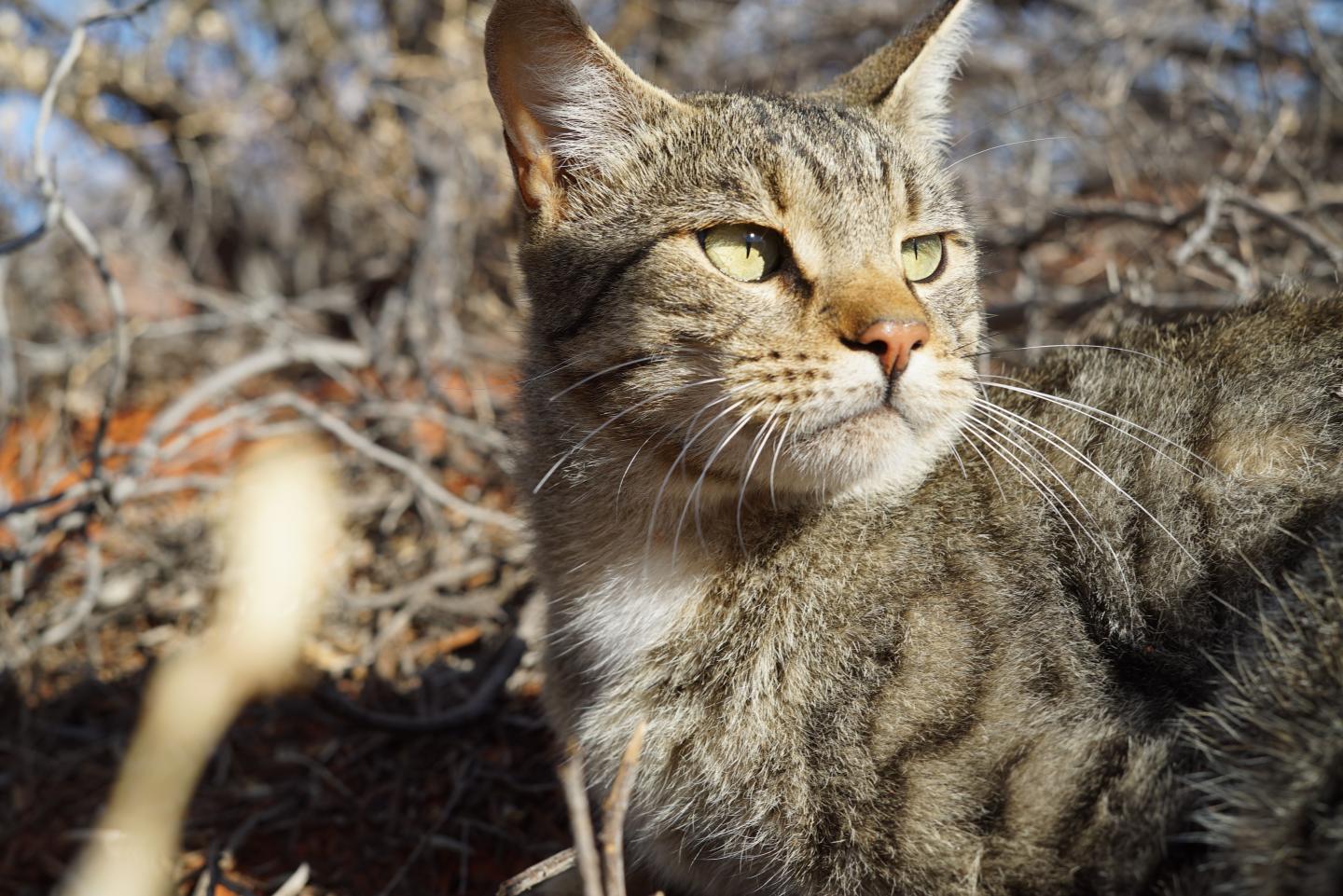
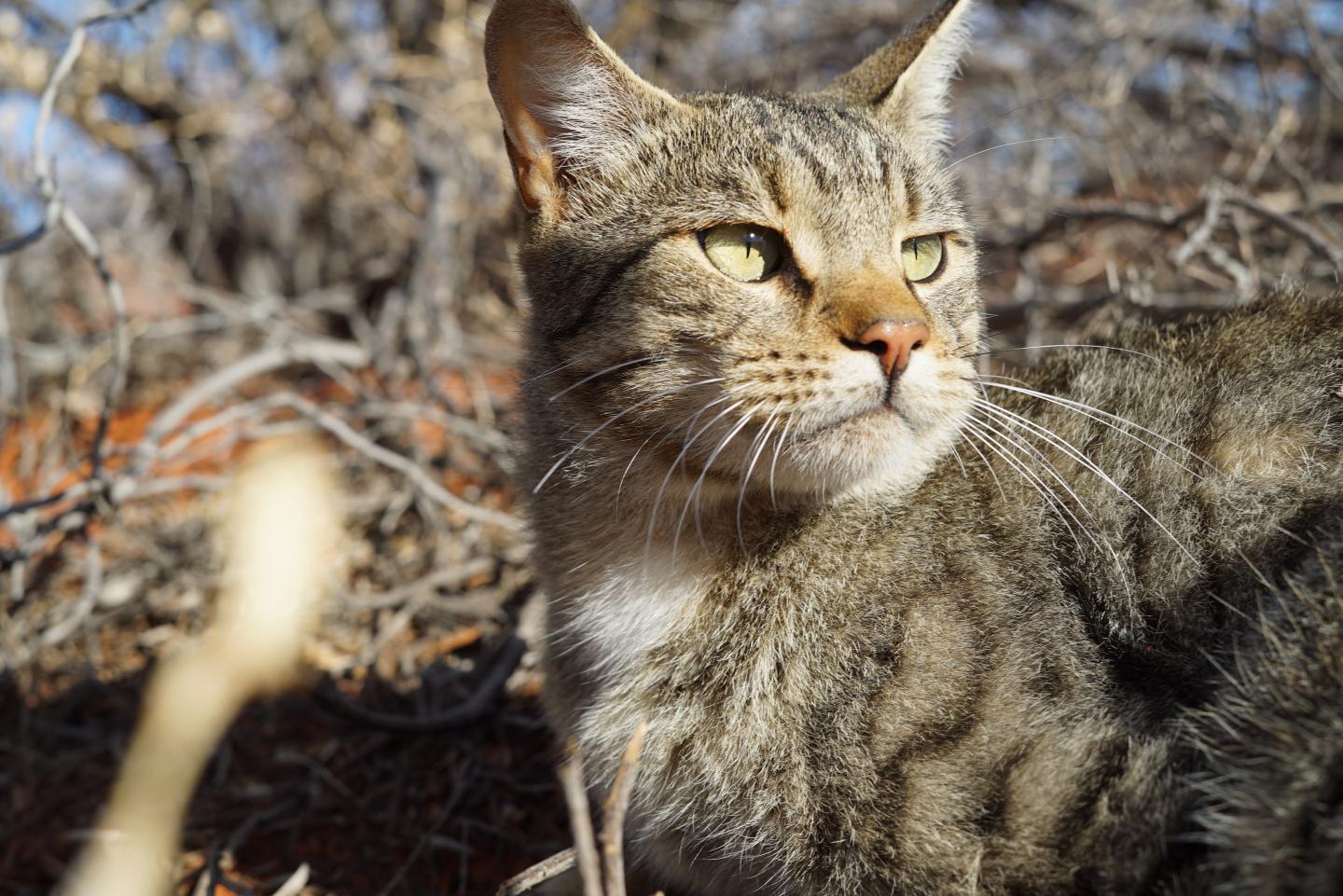
New research led by the Threatened Species Recovery Hub has revealed which Australian mammals are most vulnerable to cats and foxes, and many much-loved potoroos, bandicoots and bettongs, as well as native rodents, are at the top of the list.
Jim Radford from La Trobe University led a team of over 20 scientists and conservation managers on a study to categorise every Australian land mammal for their susceptibility to predation by feral cats and red foxes. Dr Radford said cats and foxes have already played a leading role in at least 25 mammal extinctions and this study would help prevent more.
"Knowing which species are most at risk will help us prioritise where cat and fox control is most needed," Dr Radford said.
"It will also help conservation managers decide which species need the highest level of protection from introduced predators, which currently means being moved to islands or fenced conservation areas where they are out of reach of introduced predators.
"We found that 63 or about 1 in 3 surviving mammal species are highly susceptible to predation by cats and foxes.
The 12 surviving Australian mammal species most susceptible to foxes and feral cats (Australian conservation status in brackets):
- Gilbert's Potoroo Potorous gilbertii (Critically Endangered)
- Central Rock-rat Zyzomys pedunculatus (Critically Endangered)
- Eastern Quoll Dasyurus viverrinus (Endangered)
- Western Barred Bandicoot Perameles bougainville (Endangered)
- Eastern Barred Bandicoot Perameles gunnii (Endangered on mainland Australia)
- Rufous Hare-wallaby or Mala Lagorchestes hirsutus (Endangered on mainland Australia)
- Banded Hare-wallaby Lagostrophus fasciatus (Vulnerable)
- Djoongari or Shark Bay Mouse Pseudomys fieldi (Vulnerable)
- Boodie or Burrowing Bettong Bettongia lesueur (Vulnerable)
- Greater Stick-nest Rat Leporillus conditor (Vulnerable)
- Tasmanian Pademelon Thylogale billardierii (Extinct on mainland, surviving in Tasmania)
- Eastern Bettong Bettongia gaimardi (Extinct on mainland, surviving in Tasmania)
The study was recently published in Wildlife Research.
Dr Radford said that over the last 230 years, Australia has had the highest rate of mammal extinction in the world, losing one to two species per decade since the 1850s.
"Foxes and cats have been a primary factor in the majority of these extinctions. Our study shows that introduced predators remain a significant threat to numerous mammals, many of which are clinging to survival by a thread," Dr Radford said.
The Australian Government's Threatened Species Commissioner, Dr Sally Box, said the research would support improved conservation of our most vulnerable mammals.
"Under the Australian Government's Threatened Species Strategy, there are ambitious targets to tackle the impact of feral cats and we are working with partners from across the country to address this threat. This research will help us to better target our efforts for improved conservation outcomes."
###
The research was undertaken by the Threatened Species Recovery Hub of the Australian Government's National Environmental Science Program, in partnership with government conservation agencies and non-government organisations.
The Hub is a collaboration of 10 leading Australian universities and the Australian Wildlife Conservancy to undertake research to support the recovery of Australia's threatened species.
Available for interview:
- Dr Jim Radford, 0400 815 811, La Trobe University, [email protected]
- Assoc Prof Sarah Legge, The University of Queensland, 0476 861 951 [email protected]
- Prof John Woinarski, Charles Darwin University, 0455 961 000, [email protected]
Additional Media support:
- Dragana Mrkaja, La Trobe University – 0447 508 171 / [email protected]
- Jaana Dielenberg, Threatened Species Recovery Hub – 0413 585 709 / [email protected]
Media Contact
Dragana Mrkaja
[email protected]
044-750-8171
http://www.latrobe.edu.au
Related Journal Article
http://dx.doi.org/10.1071/WR18008