Credit: Phil Jones, Senior Photographer, Augusta University
AUGUSTA, Ga. (Nov. 1, 2018) – The Georgia Esoteric and Molecular Laboratory at the Medical College of Georgia at Augusta University has been selected as a designated laboratory for the National Cancer Institute's Molecular Analysis for Therapy Choice, or MATCH trial, which is assessing the effectiveness of targeting cancer-causing gene changes rather than cancer type.
The NCI-MATCH trial is enrolling up to 6,500 patients, at 2,400 participating sites across the country, with solid tumors or lymphomas that have progressed despite treatment with a standard therapy, or who have rare cancers for which there is no consensus treatment.
MCG is the seventh academic lab in the nation designated for the NCI-MATCH trial.
For the trial, physicians send patient biopsies to these labs for analysis of gene changes known to cause cancer, including mutations and amplifications. Patients are enrolled in one of nearly 40 treatment protocols based on identified changes, regardless of their cancer type, such as breast or colon.
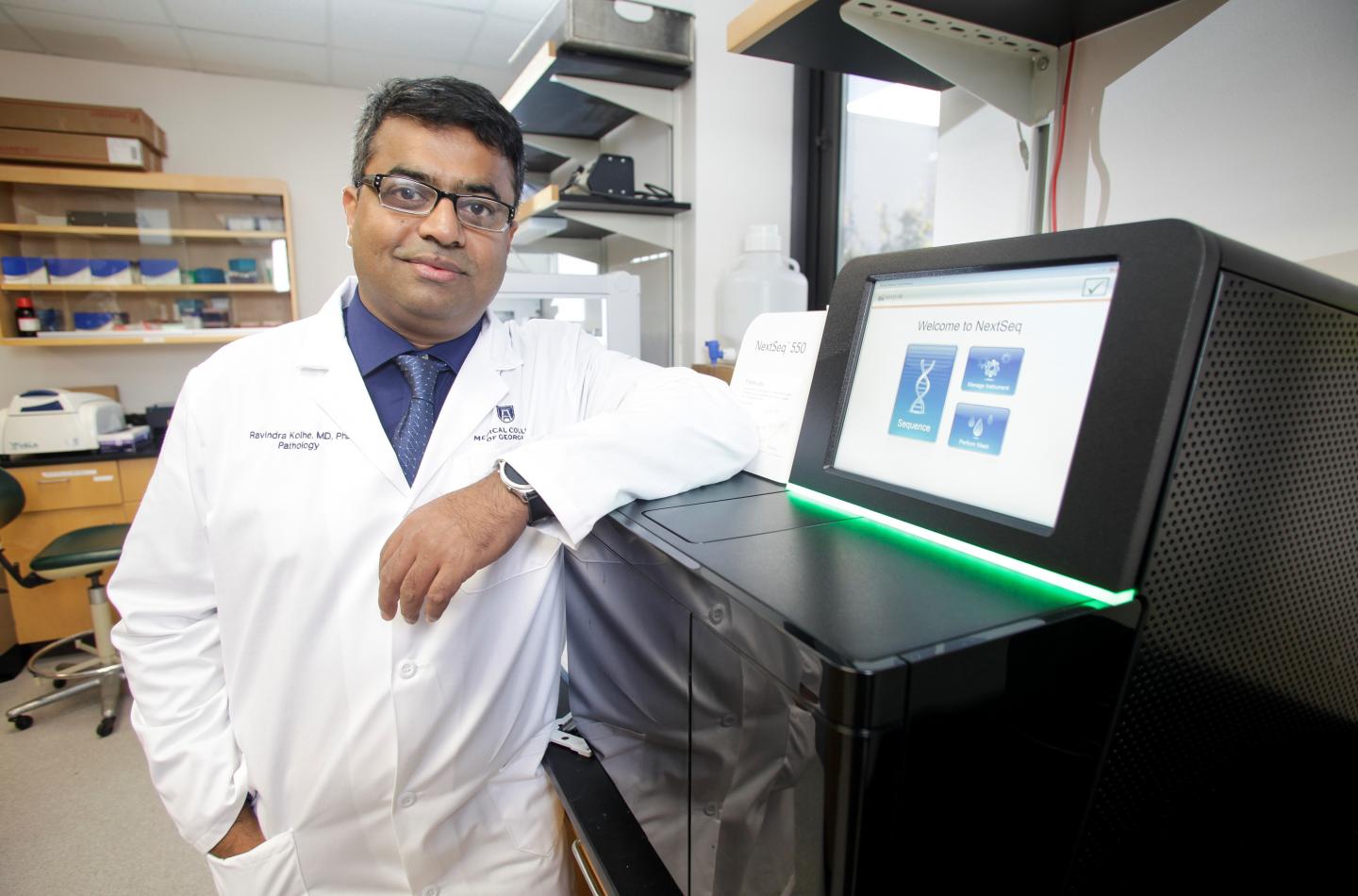
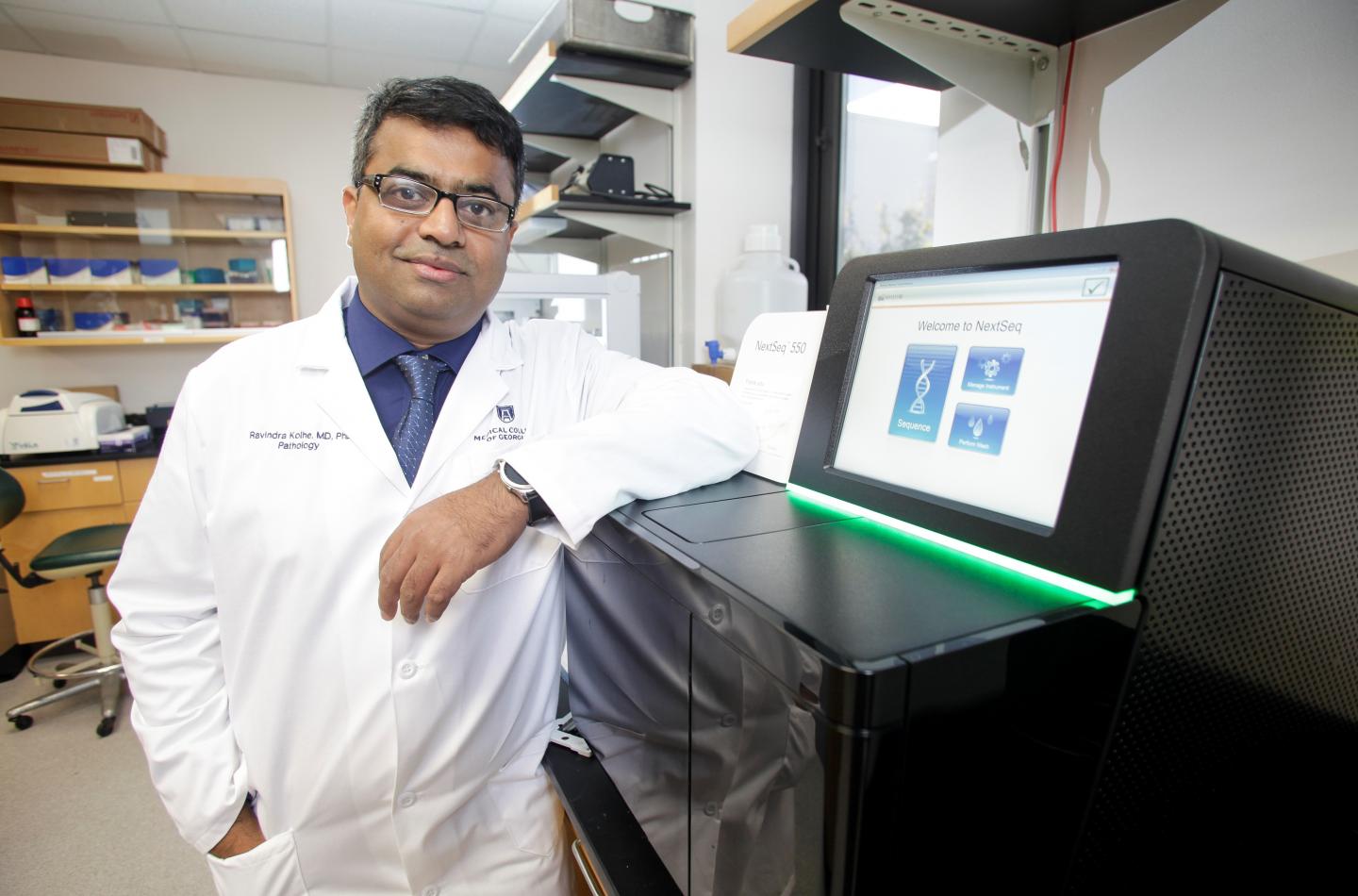
"We are privileged to join the laboratory network for this groundbreaking national trial that we all hope will improve cancer treatment by precisely targeting a patient's gene variants," says Dr. Ravindra Kolhe, molecular pathologist, director of the GEM Laboratory in the MCG Department of Pathology and primary developer of the new test called Augusta OncoTarget.
Augusta OncoTarget, one of the latest additions to MCG's GEM Lab, includes next-generation sequencing that enables large numbers of genes, and an unprecedented number of known cancer-causing variants in those genes, to be tested simultaneously. IBM Watson for Genomics then performs a genomic interpretation of the large amount of data generated to help identify the patient's variants as well as drugs, which are already in use or in clinical trials, known to target them.
Augusta OncoTarget includes the TruSight Tumor 170 panel that simultaneously looks for six different variant classes in both the DNA and RNA of 170 genes in a patient's biopsy.
Within a few minutes, IBM Watson for Genomics identifies gene variants relevant to cancer in the patient sample and associates drugs that target the abnormalities based on the medical literature.
The 170 genes in the panel are commonly altered in a wide variety of cancers in adults and children including brain, breast, lung, bladder, prostate, colorectal, pancreatic, liver, gastric, thyroid, skin, ovarian/uterine, soft tissue cancer like rhabdomyosarcoma as well as leukemia.
Variants detected in the DNA include single nucleotide variations that enable the uncontrolled cell proliferation that is a cancer hallmark, as well as the amino acids that enabled the mutations. They also include the number of copies of a gene, known as amplifications, since multiple copies can dramatically increase the amount of protein produced and aid cancer.
It also detects splicing variants, an alteration in the DNA sequence – the normal order of the letters A, C, T, G – which can alter the proteins produced and the function of genes and cells, enabling, as an example, a healthy cell to become a cancer cell. It also finds insertions and deletions in the DNA sequence, a common genetic variation, which can alter gene function and contribute to disease.
Variants detected in the RNA include gene fusions, since genes normally do not fuse, and their joining can result in the activation of typically silent genes and cancer.
"We look at six different categories of variants in both the DNA and RNA of each gene because cancer can result from all of them," says Kolhe. "We believe this comprehensive analysis will help provide scientifically sound and personalized therapy targets for consideration by patients and their physicians."
###
Kolhe worked with California-based biotech company Illumina, Inc., and IBM Watson Health, headquartered in Cambridge, Massachusetts, to develop Augusta OncoTarget.
The NCI-MATCH trial is co-led by the NCI and the ECOG-ACRIN Cancer Research Group, a Philadelphia-based scientific organization that designs and conducts biomarker-driven cancer research, which is part of the NCI-sponsored National Clinical Trials Network.
Media Contact
Toni Baker
[email protected]
706-721-4421
@MCG_AUG
http://www.augusta.edu/mcg/