• HOME
  • NEWS
  • EXPLORE
    • CAREER
      • Companies
      • Jobs
    • EVENTS
    • iGEM
      • News
      • Team
    • PHOTOS
    • VIDEO
    • WIKI
  • BLOG
  • COMMUNITY
    • FACEBOOK
    • INSTAGRAM
    • TWITTER
Saturday, February 7, 2026
BIOENGINEER.ORG
No Result
View All Result
  • Login
  • HOME
  • NEWS
  • EXPLORE
    • CAREER
      • Companies
      • Jobs
        • Lecturer
        • PhD Studentship
        • Postdoc
        • Research Assistant
    • EVENTS
    • iGEM
      • News
      • Team
    • PHOTOS
    • VIDEO
    • WIKI
  • BLOG
  • COMMUNITY
    • FACEBOOK
    • INSTAGRAM
    • TWITTER
  • HOME
  • NEWS
  • EXPLORE
    • CAREER
      • Companies
      • Jobs
        • Lecturer
        • PhD Studentship
        • Postdoc
        • Research Assistant
    • EVENTS
    • iGEM
      • News
      • Team
    • PHOTOS
    • VIDEO
    • WIKI
  • BLOG
  • COMMUNITY
    • FACEBOOK
    • INSTAGRAM
    • TWITTER
No Result
View All Result
Bioengineer.org
No Result
View All Result
Home NEWS Science News Biology

Are we losing one of our biggest CO2 sinks?

Bioengineer by Bioengineer
October 31, 2018
in Biology
Reading Time: 2 mins read
0
Share on FacebookShare on TwitterShare on LinkedinShare on RedditShare on Telegram
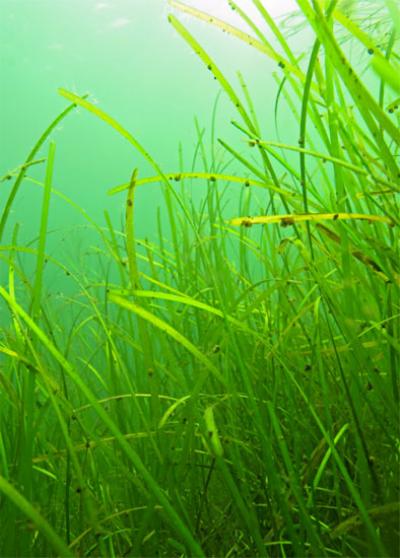
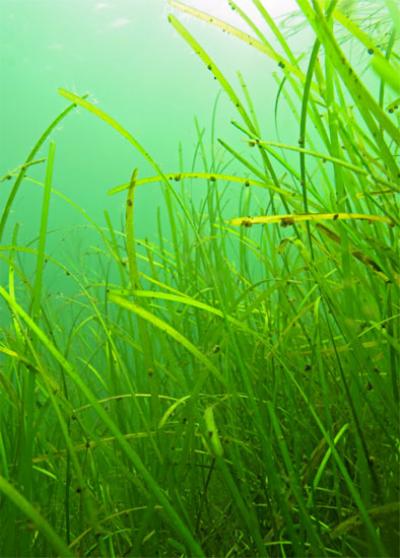
IMAGE

Credit: © Christoffer Boström/Åbo Akademi University

In a new study spanning coastal areas of the Northern Hemisphere, a coordinated researcher network led by MSc Emilia Röhr, Assoc. Prof. Christoffer Boström from Åbo Akademi University and Prof. Marianne Holmer from University of Southern Denmark explored the magnitude of organic carbon stocks stored and sequestered by eelgrass (Zostera marina) meadows–the most abundant seagrass species in temperate waters.

"We discovered that eelgrass organic carbon stocks were comparable to organic carbon stocks of tropical seagrass species, as well as mangroves, saltmarshes and terrestrial ecosystems", Emilia Röhr says.

On average, eelgrass meadows stored 27.2 tons of organic carbon per hectare, although the variation between the regions was considerable (from three to 265 tons per hectare). Hotspots for carbon sequestration were identified especially in the Kattegat-Skagerrak region, and southern parts of the Baltic Sea where the organic carbon stocks were over eight times higher, than in the Archipelago Sea of Finland.

The high carbon storage capacity of eelgrass meadows urges for protection and restoration of this unique ecosystem. Especially in the areas with the highest carbon stock capacity, they deserve recognition as part of global carbon marketing programmes.

"Terrestrial forests are well known for their capacity to store carbon (green carbon), while the so-called blue carbon stored and sequestered by coastal vegetated ecosystems, such as mangroves, saltmarshes, macroalgae and seagrasses, have received much less attention", says Röhr.

"Although these cover only 0.5 % of the seafloor, their carbon storage capacity accounts for more than 55 % of the carbon stored by photosynthetic activity on Earth."

In the marine systems, the blue carbon species alone account for up to 33 % of the total oceanic CO2 uptake. In contrast to terrestrial soils, which usually store carbon up to decades, the carbon stored in blue carbon ecosystems may persist for timescales of millennia or longer and thus, contribute significantly to climate change mitigation and alleviation of the rising atmospheric carbon dioxide concentrations. Despite the importance of these ecosystems, to date, none of them are included in the global carbon trading programmes. Alarmingly, in the past 50 years, at least 1/3rd of the distribution area of coastal vegetated ecosystems has been lost.

###

Read more in The Conversation: https://theconversation.com/we-desperately-need-to-store-more-carbon-seagrass-could-be-the-answer-105524

More information:

Emilia Röhr
Doctoral student in Environmental and Marine Biology at Åbo Akademi University
Email: [email protected]
Tel.: +358 45 651 9960

Christoffer Boström
Associate Professor in Environmental and Marine Biology at Åbo Akademi University
Email: [email protected]
Tel: +358 50 431 8226

Marianne Holmer
Professor at University of Southern Denmark
Email: [email protected]
Tel.: +45 6011 2605

Media Contact

Emilia Röhr
[email protected]
358-456-519-960
@aboakademi

http://www.abo.fi/en

Original Source

https://doi.org/10.1029/2018GB005941 http://dx.doi.org/10.1029/2018GB005941

Share12Tweet8Share2ShareShareShare2

Related Posts

Florida Cane Toad: Complex Spread and Selective Evolution

Florida Cane Toad: Complex Spread and Selective Evolution

February 7, 2026
New Study Uncovers Mechanism Behind Burn Pit Particulate Matter–Induced Lung Inflammation

New Study Uncovers Mechanism Behind Burn Pit Particulate Matter–Induced Lung Inflammation

February 6, 2026

DeepBlastoid: Advancing Automated and Efficient Evaluation of Human Blastoids with Deep Learning

February 6, 2026

Navigating the Gut: The Role of Formic Acid in the Microbiome

February 6, 2026
Please login to join discussion

POPULAR NEWS

  • Robotic Ureteral Reconstruction: A Novel Approach

    Robotic Ureteral Reconstruction: A Novel Approach

    82 shares
    Share 33 Tweet 21
  • Digital Privacy: Health Data Control in Incarceration

    63 shares
    Share 25 Tweet 16
  • Study Reveals Lipid Accumulation in ME/CFS Cells

    57 shares
    Share 23 Tweet 14
  • Breakthrough in RNA Research Accelerates Medical Innovations Timeline

    53 shares
    Share 21 Tweet 13

About

We bring you the latest biotechnology news from best research centers and universities around the world. Check our website.

Follow us

Recent News

Evaluating Pediatric Emergency Care Quality in Ethiopia

TPMT Expression Predictions Linked to Azathioprine Side Effects

Improving Dementia Care with Enhanced Activity Kits

Subscribe to Blog via Email

Enter your email address to subscribe to this blog and receive notifications of new posts by email.

Join 73 other subscribers
  • Contact Us

Bioengineer.org © Copyright 2023 All Rights Reserved.

Welcome Back!

Login to your account below

Forgotten Password?

Retrieve your password

Please enter your username or email address to reset your password.

Log In
No Result
View All Result
  • Homepages
    • Home Page 1
    • Home Page 2
  • News
  • National
  • Business
  • Health
  • Lifestyle
  • Science

Bioengineer.org © Copyright 2023 All Rights Reserved.