Credit: Provided by Baycrest
Forgetfulness and age-related memory lapses are a common complaint for many older adults, but what is still not understood is what causes these changes.
Recent research published by scientists at Baycrest's Rotman Research Institute (RRI) brings us a step closer to uncovering the answer, which could help with distinguishing signs of dementia earlier.
The study, published in the journal Neuropsychologia, found that among older adults, there is a much weaker relationship between what their eyes see and their brain activity.
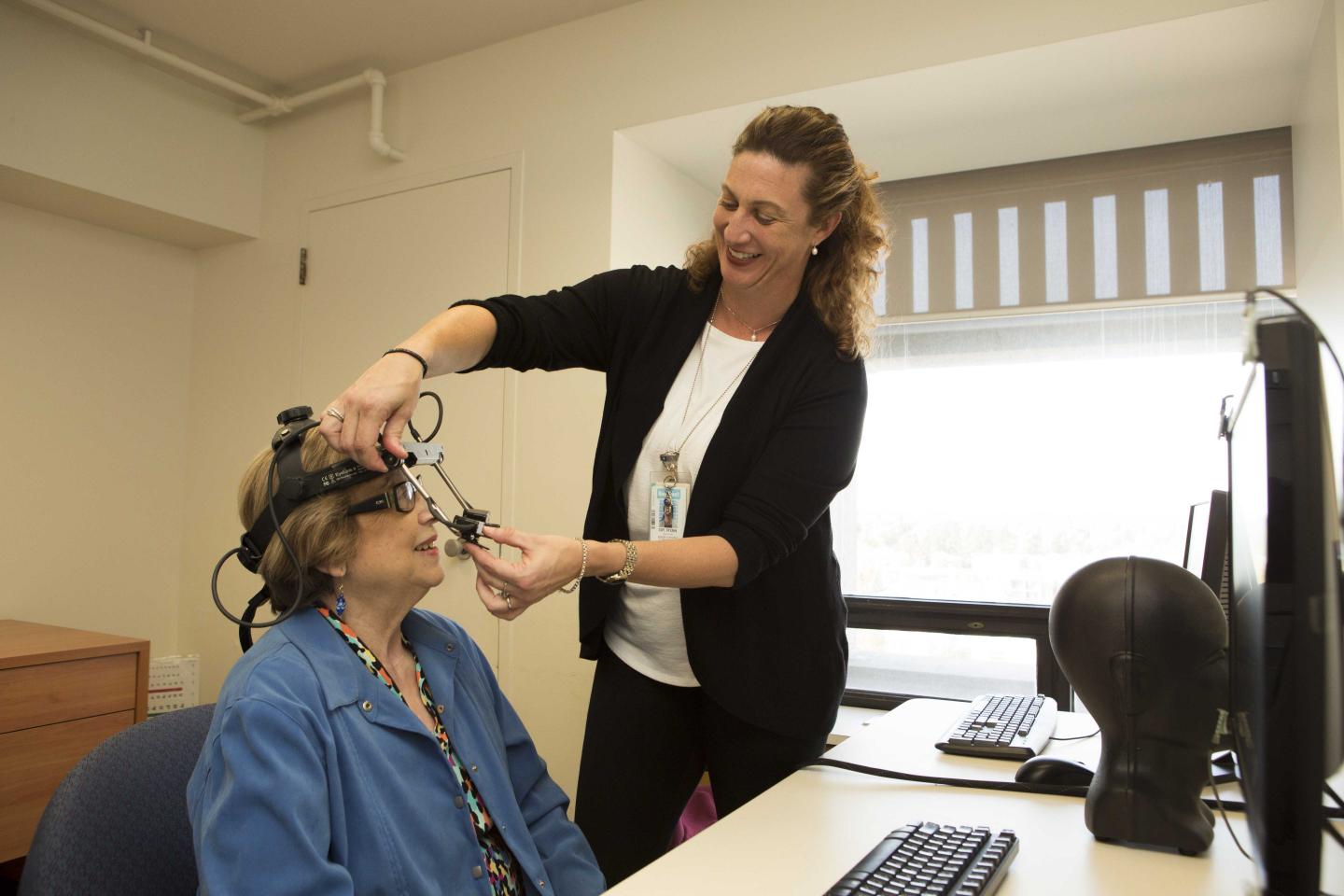
"Eye movements are important for gathering information from the world and the memory centre of the brain – the hippocampus – is important for binding this data together to form a memory of what our eyes see," says Dr. Jennifer Ryan, RRI senior scientist and Reva James Leeds Chair in Neuroscience and Research Leadership. "But we found that older adults are not building up the memory in the same way as younger adults. Something is falling apart somewhere along the path of taking in visual information through the eyes and storing what is seen into a memory."
Previously, Baycrest researchers had identified a connection between what we see and how we remember – when the eyes view and process more details of an object in front of them, there is more brain activity in the memory centre of the brain. When the object is seen multiple times, there is a progressive drop in hippocampus activity, indicating that what is seen is no longer new information. But this doesn't happen with older adults.
In the latest study, researchers found that older adults exhibited greater eye movements, but there isn't a corresponding pattern in brain activity.
"These findings demonstrate that the eyes and brain are taking in information from their surroundings, but the linkage aspect of creating a memory appears to be broken," adds Dr. Ryan, who is also a psychology professor at the University of Toronto. "When the memory isn't being created, the object continues to remain unfamiliar to a person, even when they have seen it multiple times."
The study was conducted with 21 older adults (between the ages of 64 and 79) and 20 younger adults (between the ages of 19 and 28). Research participants were briefly shown faces on a screen where some of the images were displayed multiple times. Researchers analyzed the eye movements and brain scans of individuals as they looked at and analyzed the pictures.
As next steps, researchers will continue exploring the triggers of eye movements and related activity in the brain, which could be used to help predict earlier cognitive decline in Alzheimer's disease or other related dementias.
This study was conducted with support from the Canadian Institutes of Health Research, Natural Sciences and Engineering Research Council and the Canada Research Chairs Program.
With additional funding, scientists could continue research that would inform the development of an eye-tracking cognitive assessment that could one day help doctors evaluate cognitive decline in clients.
###
About Baycrest
Now in its 100th year, Baycrest is a global leader in geriatric residential living, healthcare, research, innovation and education, with a special focus on brain health and aging. Fully affiliated with the University of Toronto, Baycrest provides excellent care for older adults combined with an extensive clinical training program for the next generation of healthcare professionals and one of the world's top research institutes in cognitive neuroscience, the Rotman Research Institute. Baycrest is home to the federally and provincially-funded Centre for Aging and Brain Health Innovation, a solution accelerator focused on driving innovation in the aging and brain health sector, and is the developer of Cogniciti – a free online memory assessment for Canadians 40+ who are concerned about their memory. Founded in 1918 as the Jewish Home for Aged, Baycrest continues to embrace the long-standing tradition of all great Jewish healthcare institutions to improve the well-being of people in their local communities and around the globe. For more information please visit: http://www.baycrest.org
About Baycrest's Rotman Research Institute
The Rotman Research Institute at Baycrest is a premier international centre for the study of human brain function. Through generous support from private donors and funding agencies, the institute is helping to illuminate the causes of cognitive decline in seniors, identify promising approaches to treatment, and lifestyle practices that will protect brain health longer in the lifespan.
For media inquiries:
Michelle Petch Gotuzzo
Baycrest
416-785-2500 ext. 6932
[email protected]
Josephine Lim
Baycrest
416-785-2500 ext. 6127
[email protected]
Media Contact
Michelle Petch Gotuzzo
[email protected]
416-785-2500 x6932
@Baycrest
http://www.baycrest.org
Original Source
https://www.baycrest.org/Baycrest-Pages/News-Media/News/Research/the-eyes-tell-all-about-memory-link http://dx.doi.org/10.1016/j.neuropsychologia.2018.07.032