• HOME
  • NEWS
  • EXPLORE
    • CAREER
      • Companies
      • Jobs
    • EVENTS
    • iGEM
      • News
      • Team
    • PHOTOS
    • VIDEO
    • WIKI
  • BLOG
  • COMMUNITY
    • FACEBOOK
    • INSTAGRAM
    • TWITTER
Saturday, February 7, 2026
BIOENGINEER.ORG
No Result
View All Result
  • Login
  • HOME
  • NEWS
  • EXPLORE
    • CAREER
      • Companies
      • Jobs
        • Lecturer
        • PhD Studentship
        • Postdoc
        • Research Assistant
    • EVENTS
    • iGEM
      • News
      • Team
    • PHOTOS
    • VIDEO
    • WIKI
  • BLOG
  • COMMUNITY
    • FACEBOOK
    • INSTAGRAM
    • TWITTER
  • HOME
  • NEWS
  • EXPLORE
    • CAREER
      • Companies
      • Jobs
        • Lecturer
        • PhD Studentship
        • Postdoc
        • Research Assistant
    • EVENTS
    • iGEM
      • News
      • Team
    • PHOTOS
    • VIDEO
    • WIKI
  • BLOG
  • COMMUNITY
    • FACEBOOK
    • INSTAGRAM
    • TWITTER
No Result
View All Result
Bioengineer.org
No Result
View All Result
Home NEWS Science News Cancer

Mapping the chromatin landscape of human cancer

Bioengineer by Bioengineer
October 25, 2018
in Cancer
Reading Time: 2 mins read
0
Share on FacebookShare on TwitterShare on LinkedinShare on RedditShare on Telegram

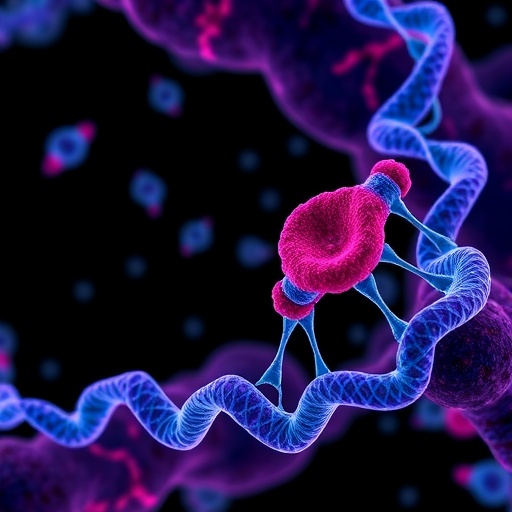
By mapping the largely uncharted chromatin landscape of primary human cancers, researchers have revealed new insights into the regulation of different cancer-related genes. Their study provides a valuable resource to researchers seeking to understand the regulatory dynamics across an array of cancer types and may one day help in partitioning cancer patient populations towards more effective therapies, for each. Cancer is a highly diverse collection of diseases characterized by many different types of tumors, clinical features, patient outcomes and therapeutic responses. Through large-scale genomic and molecular analyses, The Cancer Genome Atlas (TCGA) has documented many of the genetic mutations responsible for cancer. However, while the publicly available TCGA data documents a rich collection of genomic information on human cancers, a more systematic investigation of the DNA-protein complex where genes are found, material known as chromatin, could help better peg the switches that affect different cancer-related genes in ways that impact cancer prognosis and treatment. A recent advancement in studying accessible chromatin, developed by Stanford researchers including those on this new study, is known as ATAC-seq. It has enabled comprehensive chromatin profiling in small samples. ATAC-seq uses an enzyme to reveal accessible segments of chromatin, which in turn reveals active DNA regulatory elements. Here, M. Ryan Corces and colleagues use ATAC-seq to map the chromatin accessibility landscape of 23 types of primary human cancer using 410 samples derived from TCGA. By identifying over 500,000 accessible DNA elements, Corces et al., greatly expanded the scope of known DNA regulatory elements of cancer genomes. Their work offers new insights into inherited risk loci for cancer. The study's results also suggest that a systematic approach to understanding the noncoding genomics in cancer will be needed to truly advance effective diagnosis and therapy of the disease, according to the authors. In a related Perspective, Jussi Taipale writes, "given the scale of the dataset and its multiomic character, there is great potential for new discoveries."

###

Media Contact

Science Press Package Team
[email protected]
202-326-6440
@AAAS

http://www.aaas.org

http://dx.doi.org/10.1126/science.aav1898
Share12Tweet8Share2ShareShareShare2

Related Posts

Deep Learning Uncovers Tetrahydrocarbazoles as Potent Broad-Spectrum Antitumor Agents with Click-Activated Targeted Cancer Therapy Approach

February 7, 2026

Newly Discovered Limonoid DHL-11 from Munronia henryi Targets IMPDH2 to Combat Triple-Negative Breast Cancer

February 7, 2026

New Discovery Reveals Why Ovarian Cancer Spreads Rapidly in the Abdomen

February 6, 2026

New Study Finds Americans Favor In-Clinic Screening Over At-Home Tests for Cervical Cancer

February 6, 2026
Please login to join discussion

POPULAR NEWS

  • Robotic Ureteral Reconstruction: A Novel Approach

    Robotic Ureteral Reconstruction: A Novel Approach

    82 shares
    Share 33 Tweet 21
  • Digital Privacy: Health Data Control in Incarceration

    63 shares
    Share 25 Tweet 16
  • Study Reveals Lipid Accumulation in ME/CFS Cells

    57 shares
    Share 23 Tweet 14
  • Breakthrough in RNA Research Accelerates Medical Innovations Timeline

    53 shares
    Share 21 Tweet 13

About

We bring you the latest biotechnology news from best research centers and universities around the world. Check our website.

Follow us

Recent News

Evaluating Pediatric Emergency Care Quality in Ethiopia

TPMT Expression Predictions Linked to Azathioprine Side Effects

Improving Dementia Care with Enhanced Activity Kits

Subscribe to Blog via Email

Success! An email was just sent to confirm your subscription. Please find the email now and click 'Confirm' to start subscribing.

Join 73 other subscribers
  • Contact Us

Bioengineer.org © Copyright 2023 All Rights Reserved.

Welcome Back!

Login to your account below

Forgotten Password?

Retrieve your password

Please enter your username or email address to reset your password.

Log In
No Result
View All Result
  • Homepages
    • Home Page 1
    • Home Page 2
  • News
  • National
  • Business
  • Health
  • Lifestyle
  • Science

Bioengineer.org © Copyright 2023 All Rights Reserved.