Credit: Markus Scholz / MLU
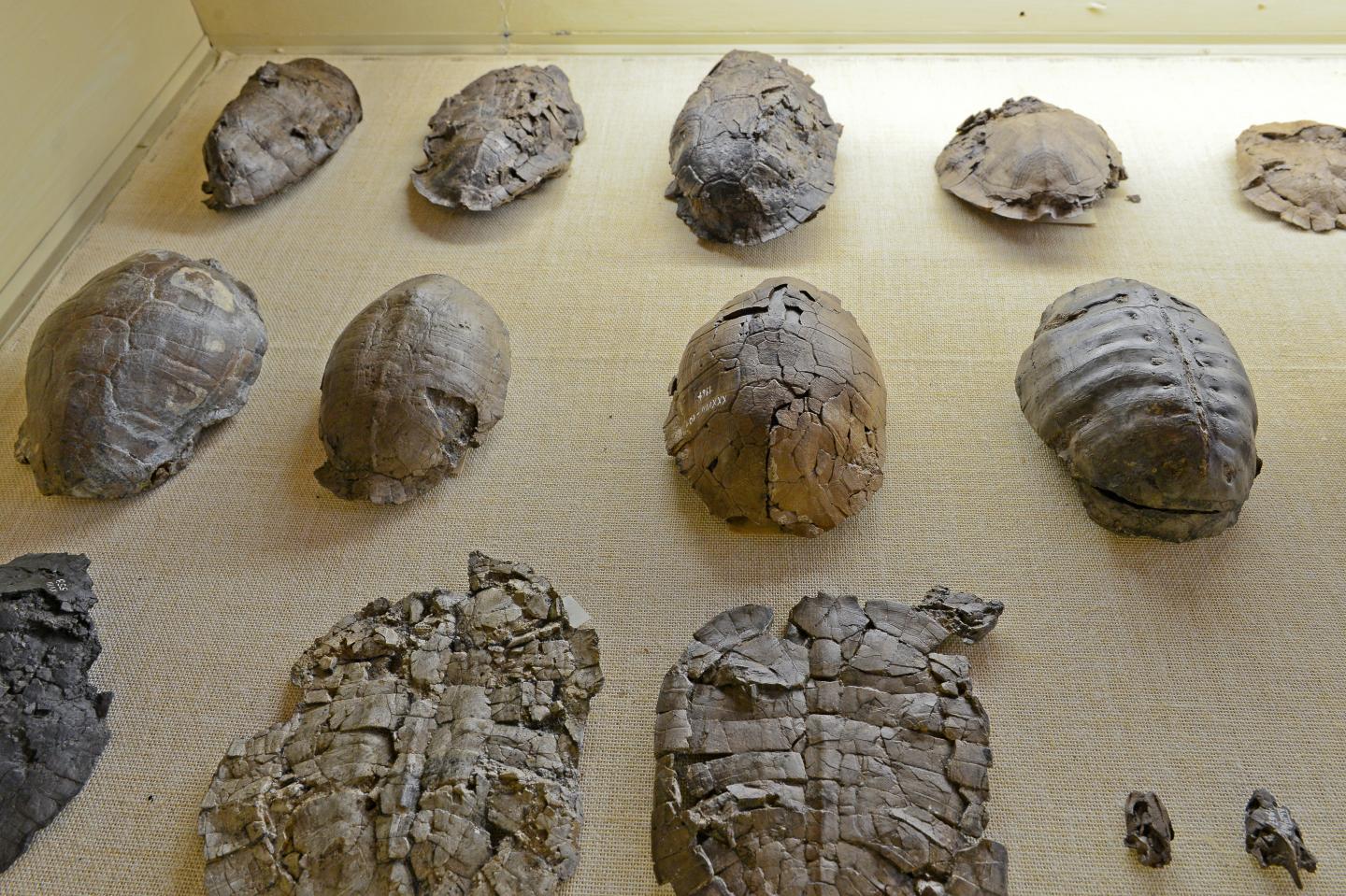
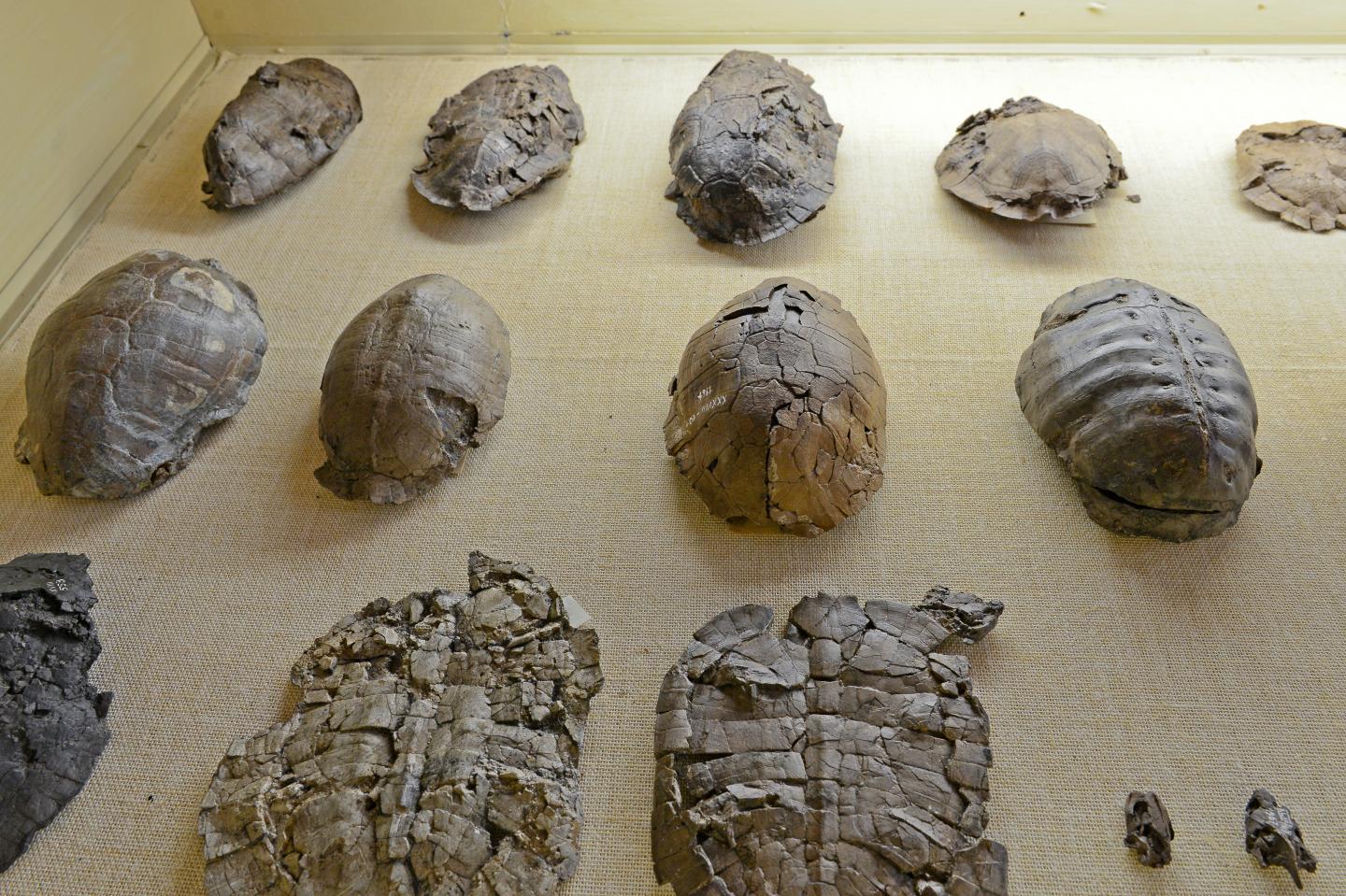
Tortoises are a group of terrestrial turtles globally distributed in habitats ranging from deserts to forests and include species such as the Greek and the Galapagos tortoise. Some species evolved large body sizes with a shell length exceeding 1 metre whereas others are no larger than 6-8 centimetres. Despite a particular interest from naturalists ever since the times of Darwin, the evolution of gigantism in tortoises remains enigmatic.
The fact that all living giant tortoises are insular may suggest that their evolution followed the so-called island rule: a trend toward dwarfism of large animals and gigantism of small animals on islands. An example of insular dwarfism is the Florida key deer, a dwarf version of the mainland white-tailed deer; its small size may be an adaptation to the limited resources found on the islands. Insular gigantism is best exemplified by the famous dodo, an extinct flightless pigeon from Mauritius, probably evolving large body size due to release from predatory pressure. Previous studies on extant tortoises were partly inconclusive: giant size has been linked to the absence of predatory mammals in islands but it has been also proposed that tortoises were already giants when they reached the remote archipelagos. Since very few giant tortoise species survive to the present, these hypotheses are impossible to test without analysing extinct species through the help of the fossil record.
In a recent study in the journal "Cladistics", Dr Evangelos Vlachos from the Paleontological Museum of Trelew, Argentina, and Dr Márton Rabi from the Martin Luther University Halle-Wittenberg (MLU), funded by the German VolkswagenStiftung, assembled the most comprehensive family tree of extinct and extant tortoises so far. The researchers analysed genetic data from living species together with osteological data from fossil and living tortoises.
This is the first study of such global scale to allow for investigating body size evolution in tortoises. The fossils reveal a very different picture of the past compared to the present. Giant size evolved on multiple occasions independently in mainland Asia, Africa, Europe, North and South America at different times of Earth history. However, all of these species went extinct at latest during the Pleistocene ice age.
"The fossils highlight a great number of extinct mainland giant species and suggest that the evolution of giant size was not linked to islands," says Dr Evangelos Vlachos.
Instead, living insular giant tortoises, such as the ones from Galapagos and Seychelles, more likely represent survivors of unrelated giant species that once inhabited South America, East Africa, and/or Madagascar.
"Giant tortoises may have been better island colonizers because they can tolerate water and food shortage during an oceanic dispersal for a longer period than smaller species. Giant tortoises have been reported to survive 740 km of floating in the ocean," says Dr Márton Rabi.
What led to the extinction of these mainland giants remains enigmatic. For the ice age species, it may have been a combination of predatory (including human) pressure and climate change. It is likewise unclear, if not the island rule, then what is driving tortoises to repeatedly evolve into giant forms?
"We expect that warmer climate and predator pressure plays a role in the evolution of giant size but the picture is complex and our sampling of the fossil record is still limited." – Vlachos adds.
An unexpected outcome of the study was that the Mediterranean tortoises (familiar due to their popularity as pets) actually represent a dwarf lineage as their ancestors turned out to be considerably larger.
"Tortoises have been around for more than 55 million years and we are now able to better understand the evolution of this successful group. Today, however, out of the approximately 43 living species 17 are considered endangered and many more are vulnerable largely due to human-induced habitat loss; this is a disappointing fact." – Rabi points out.
###
This study was made available online as an accepted manuscript in November 2017 ahead of final publication in print in August 2018.
Media Contact
Tom Leonhardt
[email protected]
49-345-552-1438
http://www.uni-halle.de
Original Source
https://pressemitteilungen.pr.uni-halle.de/index.php?modus=pmanzeige&pm_id=2939 http://dx.doi.org/10.1111/cla.12227