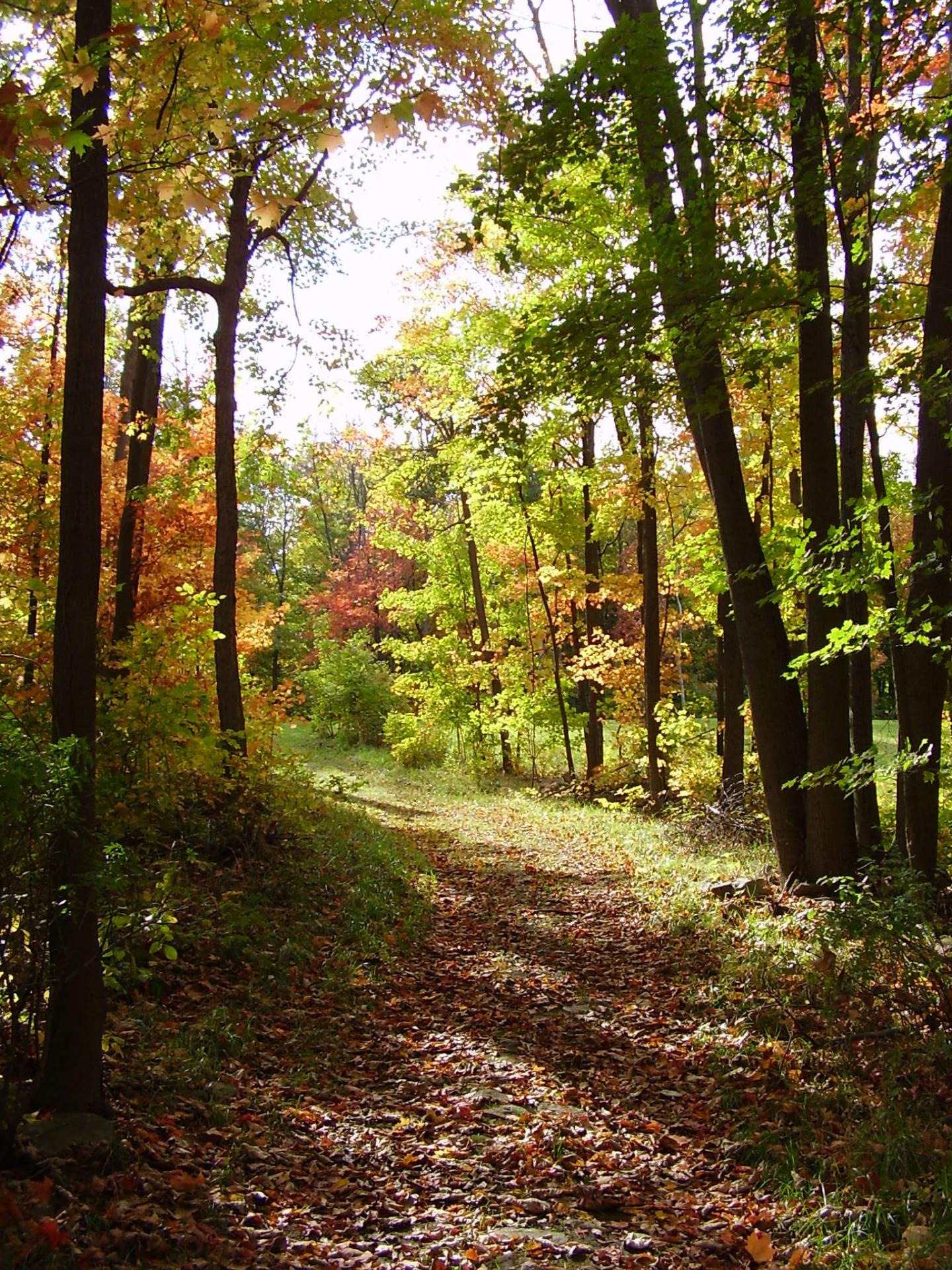
Credit: University of Maryland Center for Environmental Science/Andrew Elmore
FROSTBURG, MD (October 22, 2018)–Researchers have found that global changes, including warming temperatures and increased levels of carbon dioxide in the atmosphere, are causing a decrease in the availability of a key nutrient for terrestrial plants. This could affect the ability of forests to absorb carbon dioxide from the atmosphere and reduce the amount of nutrients available for the creatures that eat them.
"Even if atmospheric carbon dioxide is stabilized at low enough levels to mitigate the most serious impacts of climate change, many terrestrial ecosystems will increasingly display signs of too little nitrogen as opposed to too much," said study co-author Andrew Elmore of the University of Maryland Center for Environmental Science. "Preventing these declines in nitrogen availability further emphasizes the need to reduce human-caused carbon dioxide emissions."
Although the focus on nitrogen availability is often on developed, coastal regions, such as the Chesapeake Bay, that struggle with eutrophication–runoff of nitrogen pollution from fertilized farms and lawns that feeds algae blooms and leads to the reduction in oxygen in the waters–the story is very different on less developed land, such as the mountains of western Maryland.
"This idea that the world is awash in nitrogen and that nitrogen pollution is causing all these environmental effects has been the focus of conversations in the scientific literature and popular press for decades," said Elmore. "What we're finding is that it has hidden this long-term trend in unamended systems that is caused by rising carbon dioxide and longer growing seasons."
Researchers studied a database of leaf chemistry of hundreds of species that had been collected from around the world from 1980-2017 and found a global trend in decreasing nitrogen availability. They found that most terrestrial ecosystems, such as forests and land that has not been treated with fertilizers, are becoming more oligotrophic, meaning too little nutrients are available.
"If nitrogen is less available it has the potential to decrease the productivity of the forest. We call that oligotrophication," said Elmore. "In the forested watershed, it's not a word used a lot for terrestrial systems, but it indicates the direction things are going."
Nitrogen is essential for the growth and development of plants. On the forest floor, microbes break down organic matter such as down fallen leaves and release nitrogen to the soil. The tree retrieves that nitrogen to build proteins and grow. However, as trees have access to more carbon, more and more microbes are becoming nitrogen limited and releasing less nutrients to the trees.
"This new study adds to a growing body of knowledge that forests will not be able to sequester as much carbon from the atmospheric as many models predict because forest growth is limited by nitrogen," said Eric Davidson, director of the University of Maryland Center for Environmental Science's Appalachian Laboratory. "These new insights using novel isotopic analyses provide a new line of evidence that decreases in carbon emissions are urgently needed."
In the U.S. and Europe, regulations on coal-fired power plants have reduced the amount of nitrogen deposition as a consequence of clean air regulations trying to combat acid rain. At the same time, increasing carbon dioxide levels in the atmosphere and longer growing seasons are increasing the nitrogen demand for plants to grow.
"There are now multiple lines of evidence that support the oligotrophication hypothesis," said study co-author Joseph Craine, an ecologist with Jonah Ventures. "Beyond declines in leaf chemistry, we are seeing grazing cattle become more protein limited, pollen protein concentrations decline, and reductions of nitrogen in many streams. These dots are starting to connect into a comprehensive picture of too much carbon flowing through ecosystems."
###
The paper, "Isotopic evidence for oligotrophication of terrestrial ecosystems" was published in Nature Ecology & Evolution by Andrew Elmore and David Nelson of the University of Maryland Center for Environmental Science and Joseph Craine of Jonah Ventures.
UNIVERSITY OF MARYLAND CENTER FOR ENVIRONMENTAL SCIENCE
The University of Maryland Center for Environmental Science leads the way toward better management of Maryland's natural resources and the protection and restoration of the Chesapeake Bay. From a network of laboratories located across the state, UMCES scientists provide sound evidence and advice to help state and national leaders manage the environment, and prepare future scientists to meet the global challenges of the 21st century. http://www.umces.edu
Media Contact
Amy Pelsinsky
[email protected]
410-330-1389
@umces
http://www.umces.edu
Original Source
https://www.umces.edu/content/study-finds-availability-nitrogen-plants-declining-climate-warms