Many important natural products such as antibiotics, immunosuppressants, or cancer drugs are derived from microorganisms. These natural products are often small proteins or peptides which are generated in the cell by NRPS enzymes similar to a modern automobile factory: at each station additional parts are added to the basic structure until finally a completed automobile leaves the factory. With regard to the NRPS, a specific amino acid is incorporated and processed at each station (module), so that in the end peptides emerge that can be linear, cyclic or otherwise modified including unusual amino acids.
If larger peptides are generated by these systems, often several NRPS enzymes – or assembly lines – operate successively. The order in which this happens is determined by docking domains. These are small regions at the end of the assembly lines that fit with the next NRPS enzyme in line like a key in a lock. Although the basic principles of these NRPS interactions have been known for a long time, the structure of the docking domains was unknown until now. The research groups led by Professor Jens Wöhnert form the Institute of Molecular Biosciences and Professor Helge Bode from Molecular Biotechnology at Goethe University have now been able to successfully explain this.
"We were able to determine the structures of individual docking domains and, for the first time, an NRPS docking domain pair as well," explains Carolin Hacker, who is a PhD student in Jens Wöhnert's group. "This made it possible to clarify the rules for the interaction of the docking domains and to change them in such a way that new natural products will be generated," adds Xiaofeng Cai, postdoctoral researcher in Helge Bode's group.
"We are only at the beginning of our research: We need structures of additional and structurally diverse docking domains so that in the end we can utilise them like building blocks. Our goal is to connect various biosynthesis pathways and create totally new substances" Wöhnert explains. "Nature has been quite inventive in this area, and there are apparently numerous different ways to mediate the interaction of these complexes," adds Bode.
Research in this area continues in both groups as part of the LOEWE research cluster MegaSyn. The first results on the structures of additional docking domains are quite promising.
###
Publication:
Carolin Hacker, Xiaofeng Cai, Carsten Kegler, Lei Zhao, A. Katharina Weickhmann, Jan Philip Wurm, Helge B. Bode, Jens Wöhnert: Structure-based redesign of docking domain interactions modulates the product spectrum of a rhabdopeptide-synthesizing NRPS, Nature Communications, https://www.nature.com/ncomms/, DOI: 10.1038/s41467-018-06712-1
You can download an image at: http://www.uni-frankfurt.de/74390329
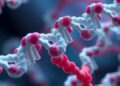
Caption: 3D structure of an NRPS docking domain pair. The docking domains of NRPS B (green) connects to the fitting docking domain of NRPS C (magenta) via a β-leaflet.
Further information:
Professor Jens Wöhnert, Institute for Molecular Biosciences, Faculty 15, Riedberg Campus, Tel. +49 69 798-29785, [email protected]
Professor Helge B. Bode, Molecular Biotechnology, Faculty 15, Riedberg Campus, Tel.: +49 69 798-29557, [email protected].
Current news about science, teaching, and society in GOETHE-UNI online (http://www.aktuelles.uni-frankfurt.de)
Goethe University is a research-oriented university in the European financial centre Frankfurt The university was founded in 1914 through private funding, primarily from Jewish sponsors, and has since produced pioneering achievements in the areas of social sciences, sociology and economics, medicine, quantum physics, brain research, and labour law. It gained a unique level of autonomy on 1 January 2008 by returning to its historic roots as a "foundation university". Today, it is among the top ten in external funding and among the top three largest universities in Germany, with three clusters of excellence in medicine, life sciences and the humanities. Together with the Technical University of Darmstadt and the University of Mainz, it acts as a partner of the inter-state strategic Rhine-Main University Alliance. Internet: http://www.uni-frankfurt.de
Publisher: The President of Goethe University Editor: Dr. Anne Hardy, Referee for Science Communication, PR & Communication Department, Theodor-W.-Adorno-Platz 1, 60323 Frankfurt am Main, Tel: 069-798-13035, Fax: 069-798-763 12531.
Media Contact
Helge B. Bode
[email protected]
49-697-982-9557
@goetheuni
http://www.uni-frankfurt.de
http://dx.doi.org/10.1038/s41467-018-06712-1