• HOME
  • NEWS
  • EXPLORE
    • CAREER
      • Companies
      • Jobs
    • EVENTS
    • iGEM
      • News
      • Team
    • PHOTOS
    • VIDEO
    • WIKI
  • BLOG
  • COMMUNITY
    • FACEBOOK
    • INSTAGRAM
    • TWITTER
Saturday, February 7, 2026
BIOENGINEER.ORG
No Result
View All Result
  • Login
  • HOME
  • NEWS
  • EXPLORE
    • CAREER
      • Companies
      • Jobs
        • Lecturer
        • PhD Studentship
        • Postdoc
        • Research Assistant
    • EVENTS
    • iGEM
      • News
      • Team
    • PHOTOS
    • VIDEO
    • WIKI
  • BLOG
  • COMMUNITY
    • FACEBOOK
    • INSTAGRAM
    • TWITTER
  • HOME
  • NEWS
  • EXPLORE
    • CAREER
      • Companies
      • Jobs
        • Lecturer
        • PhD Studentship
        • Postdoc
        • Research Assistant
    • EVENTS
    • iGEM
      • News
      • Team
    • PHOTOS
    • VIDEO
    • WIKI
  • BLOG
  • COMMUNITY
    • FACEBOOK
    • INSTAGRAM
    • TWITTER
No Result
View All Result
Bioengineer.org
No Result
View All Result
Home NEWS Science News Biology

New fly species found in Indiana may indicate changing climate, says IUPUI researcher

Bioengineer by Bioengineer
October 18, 2018
in Biology
Reading Time: 2 mins read
0
Share on FacebookShare on TwitterShare on LinkedinShare on RedditShare on Telegram
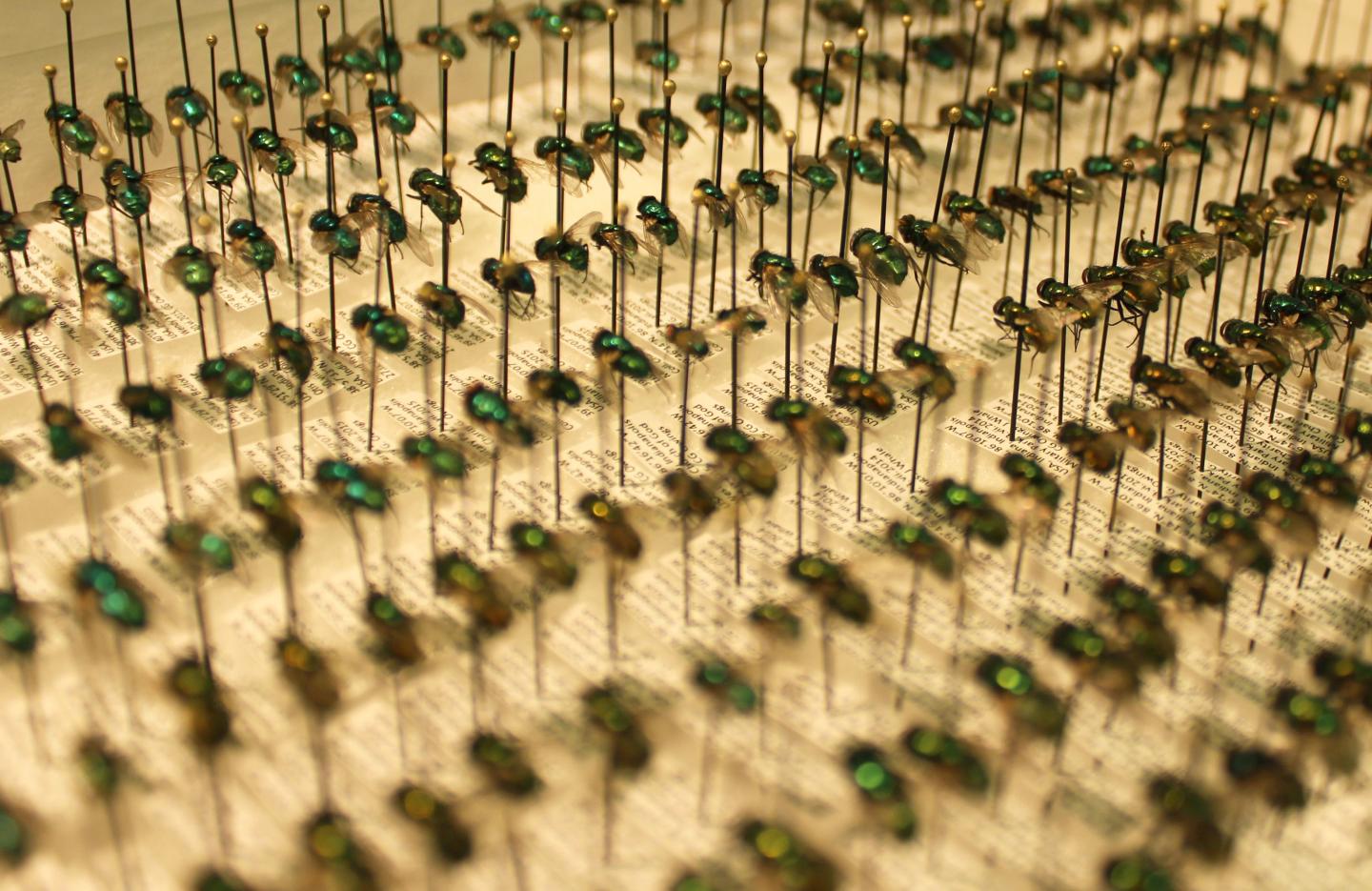
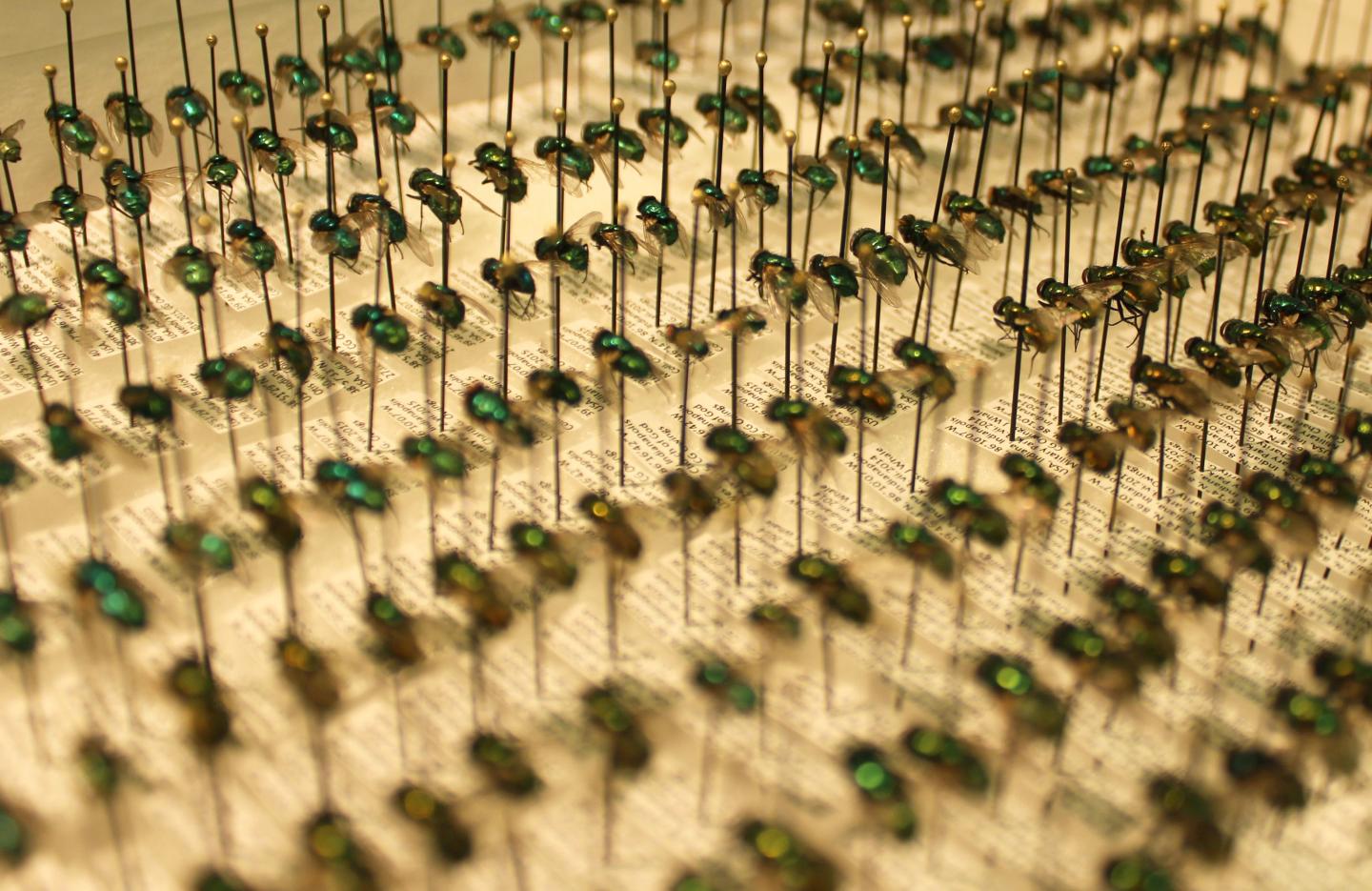
IMAGE

Credit: School of Science at IUPUI

INDIANAPOLIS — A new type of blow fly spotted in Indiana points to shifting species populations due to climate change. Researchers at IUPUI have observed the first evidence of Lucilia cuprina in Indiana, an insect previously known to populate southern states from Virginia to California.

Researchers recorded the L. cuprina species more than two dozen times from 2015 to 2017 in parks and other public places throughout Central Indiana. The fly was observed as far north as Michigan in the 1950s during a short period of warmer temperatures but had not been found in this region since then.

"As temperatures change and increase, the distributions of these insects will continue to change as well," said Christine J. Picard, an associate professor of biology. "There is definitely a northward movement of species — not just insects, but all species — as they try to find temperatures where they are more comfortable."

The movement of this species of fly into the Midwest could also have implications for forensic investigations involving decomposing remains. The growth and development of flies play an important role for scientists looking to learn how long a human or animal has been dead.

"With forensic science and forensic entomology, you should have an idea of which flies are present in your location in part because different species will have different development times," Picard said.

The L. cuprina blow fly's sister species Lucilla sericata is widely present in Indiana and is often used in forensic cases. Since the two species are so closely related, it's difficult to tell them apart. If investigators don't know they are dealing with an L. cuprina instead of the more typically seen L. sericata, their data could be inaccurate.

###

"New Distribution Record for Lucilia cuprina (Diptera: Calliphoridae) in Indiana, United States" is authored by Charity G. Owings and Picard and published in the July issue of Journal of Insect Science.

About the School of Science at IUPUI

The School of Science at IUPUI is committed to excellence in teaching, research and service in the biological, physical, computational, behavioral and mathematical sciences. The school is dedicated to being a leading resource for interdisciplinary research and science education in support of Indiana's effort to expand and diversify its economy.

Media Contact

Candace Gwaltney
[email protected]
317-274-0685

http://science.iupui.edu/

Original Source

https://science.iupui.edu/2018/10/new-fly-species-found-indiana-may-indicate-changing-climate-says-iupui-researcher http://dx.doi.org/10.1093/jisesa/iey071


Share12Tweet8Share2ShareShareShare2

Related Posts

Florida Cane Toad: Complex Spread and Selective Evolution

Florida Cane Toad: Complex Spread and Selective Evolution

February 7, 2026
New Study Uncovers Mechanism Behind Burn Pit Particulate Matter–Induced Lung Inflammation

New Study Uncovers Mechanism Behind Burn Pit Particulate Matter–Induced Lung Inflammation

February 6, 2026

DeepBlastoid: Advancing Automated and Efficient Evaluation of Human Blastoids with Deep Learning

February 6, 2026

Navigating the Gut: The Role of Formic Acid in the Microbiome

February 6, 2026
Please login to join discussion

POPULAR NEWS

  • Robotic Ureteral Reconstruction: A Novel Approach

    Robotic Ureteral Reconstruction: A Novel Approach

    82 shares
    Share 33 Tweet 21
  • Digital Privacy: Health Data Control in Incarceration

    63 shares
    Share 25 Tweet 16
  • Study Reveals Lipid Accumulation in ME/CFS Cells

    57 shares
    Share 23 Tweet 14
  • Breakthrough in RNA Research Accelerates Medical Innovations Timeline

    53 shares
    Share 21 Tweet 13

About

We bring you the latest biotechnology news from best research centers and universities around the world. Check our website.

Follow us

Recent News

Evaluating Pediatric Emergency Care Quality in Ethiopia

TPMT Expression Predictions Linked to Azathioprine Side Effects

Improving Dementia Care with Enhanced Activity Kits

Subscribe to Blog via Email

Enter your email address to subscribe to this blog and receive notifications of new posts by email.

Join 73 other subscribers
  • Contact Us

Bioengineer.org © Copyright 2023 All Rights Reserved.

Welcome Back!

Login to your account below

Forgotten Password?

Retrieve your password

Please enter your username or email address to reset your password.

Log In
No Result
View All Result
  • Homepages
    • Home Page 1
    • Home Page 2
  • News
  • National
  • Business
  • Health
  • Lifestyle
  • Science

Bioengineer.org © Copyright 2023 All Rights Reserved.