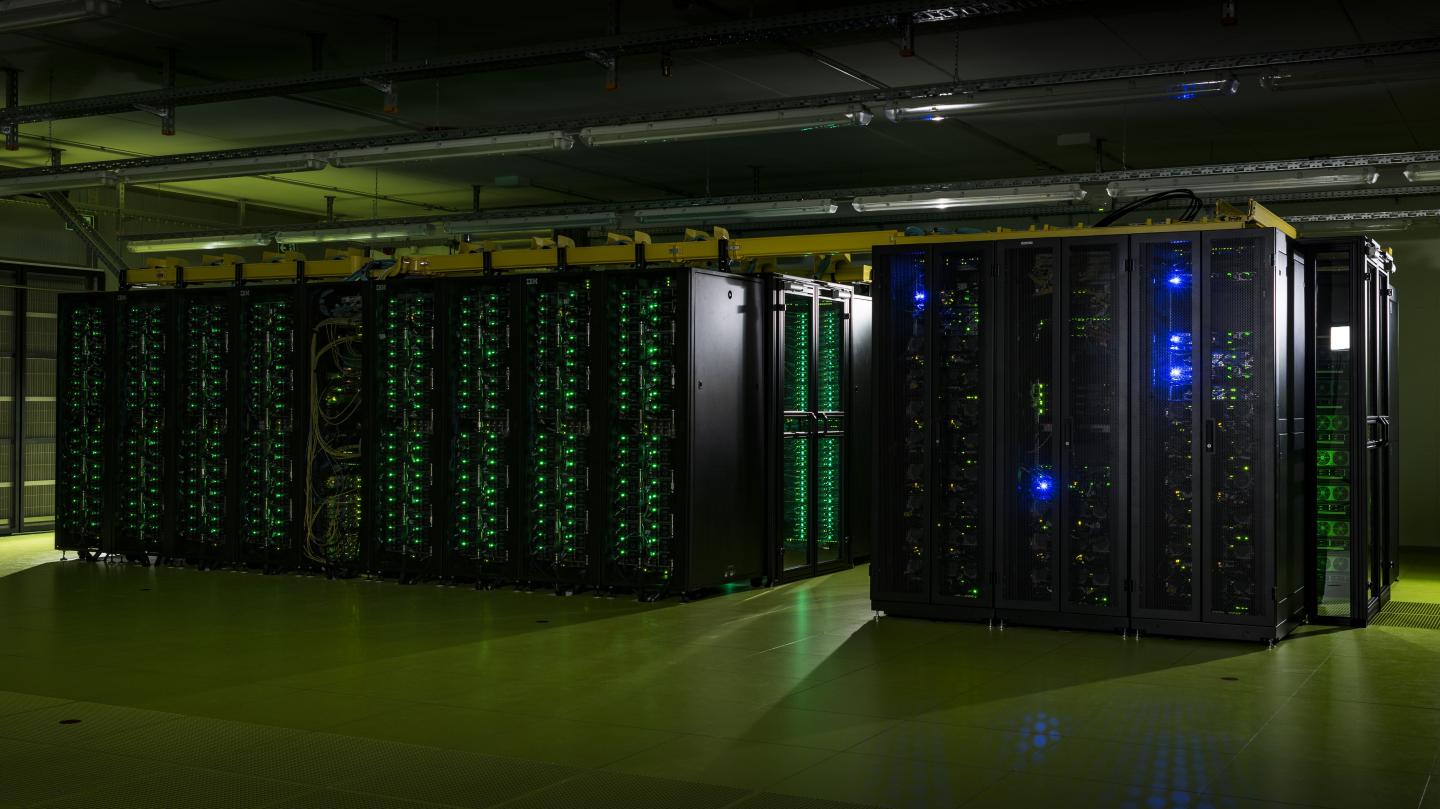
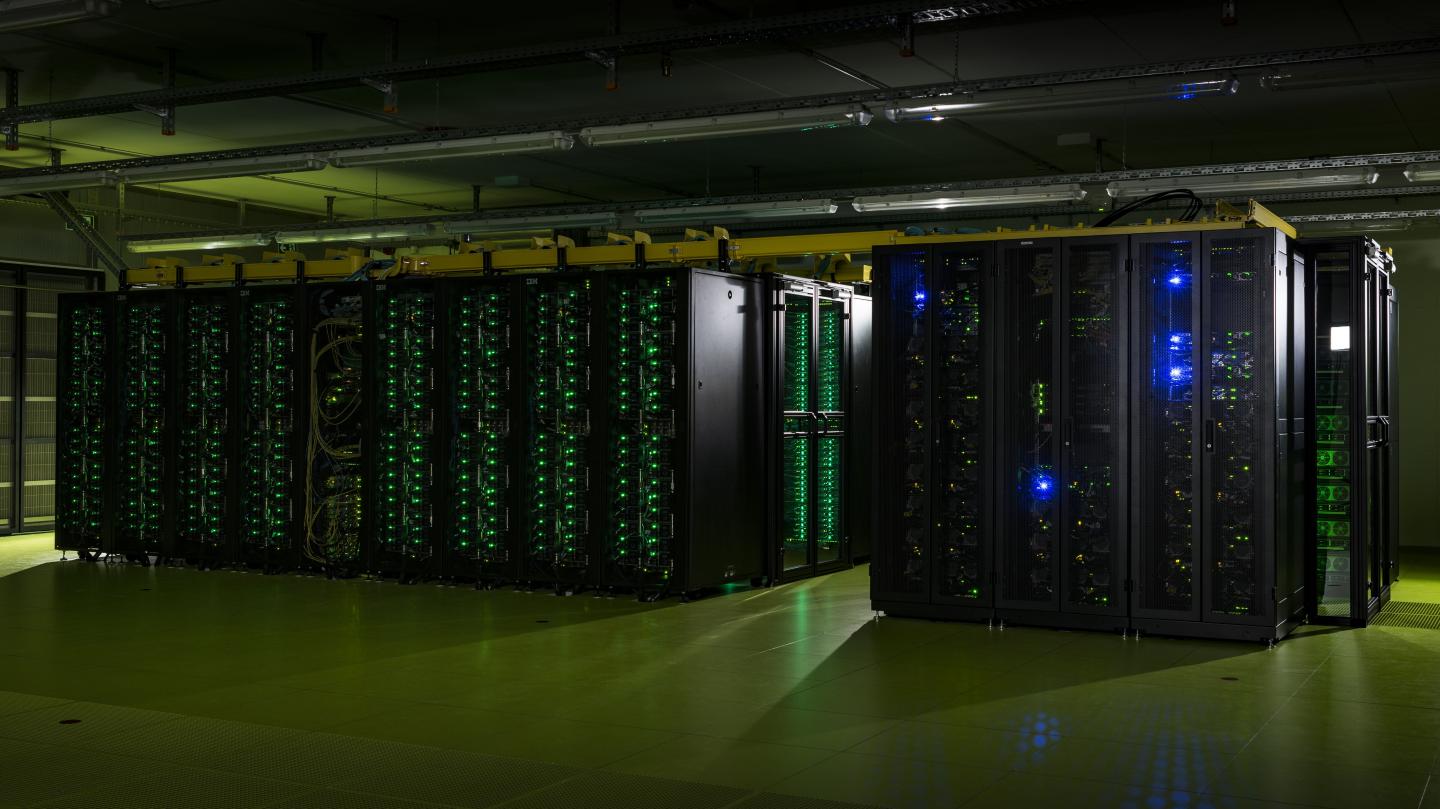
Credit: (Photo: Markus Breig, KIT)
Investigation, diagnosis, and treatment of diseases give rise to big data volumes. Their systematic analysis may produce new findings for the diagnosis and therapy of diseases, such as can-cer. Karlsruhe Institute of Technology (KIT), the German Cancer Research Center (DKFZ), and Heidelberg University now plan to train young researchers at the interface of health research, life sciences, and data sciences in this area. For this purpose, a total budget of EUR 12 million has been made available.
At the newly established Helmholtz Information & Data Science School for Health (HIDSS4Health), earlystage researchers are to be prepared for work with the data volumes arising in the health sector within a joint doctoral program of the three institutions. The young researchers are to learn to develop new methods for diagnosis and therapy based on the evaluation of large data volumes.
An example of digital transformation in the healthcare sector is that machine-learning and other datadriven methods may help interpret images produced by computer tomography or magnetic resonance imaging, says Professor Ralf Mikut from KIT's Institute for Automation and Applied Informatics. "To evaluate such images, a physician has to be highly experienced," adds Mikut, who coordinates the doctoral program at KIT. "Suited algorithms could do useful preparatory work and direct the physician's attention to certain regions." Methods and technologies from data sciences may also be applied in personalized radiation therapy.
"Data on tumor expansion always are subject to uncertainties. In future, these might be considered in therapy planning to improve the results," says Klaus Maier-Hein from the German Cancer Research Center. Computerbased methods, such as simulators or robotsupported surgery trainers might also be applied in the training of physicians, Katja Mombaur of the Institute of Computer Engineering of the University of Heidelberg says.
It is planned to establish positions for 35 to 40 doctoral research-ers, who are to work across the groups at the three institutions in Heidelberg and Karlsruhe. "Our offer addresses applicants who have a data science background and are interested in medical top-ics," says Mikut. KIT invests more than EUR 3 million. About the same sum is invested by DKZF and Heidelberg University together. About EUR 6 million come from the Helmholtz Association of National Research Centres.
In future, the Helmholtz Association will invest EUR 35 million annually in the digitization of research and will establish four new platforms for this purpose. One of these platforms has already been established with the participation of KIT and DKFZ: the Helmholtz Information & Data Science Academy (HIDA). Now, five Helmholtz Information & Data Science Schools (HIDSS) are merging under the umbrella of HIDA.
###
Press contact: Dr. Felix Mescoli, Pressereferent, Tel.: +49 721 608 48120, Fax: +49 721 608 21171, [email protected]
Being „The Research University in the Helmholtz Association", KIT creates and imparts knowledge for the society and the environment. It is the objective to make significant contributions to the global challenges in the fields of energy, mobility and information. For this, about 9,300 employees cooperate in a broad range of disciplines in natural sciences, engineering sciences, economics, and the humanities and social sciences. KIT prepares its 25,500 students for responsible tasks in society, industry, and science by offering research-based study programs. Innovation efforts at KIT build a bridge between important scientific findings and their application for the benefit of society, economic prosperity, and the preservation of our natural basis of life.
Media Contact
Monika Landgraf
[email protected]
49-721-608-47414
@KITKarlsruhe
http://www.kit.edu/index.php
Original Source
https://www.kit.edu/kit/english/pi_2018_121_making-treasuries-of-data-usable-for-medicine.php