
Credit: Kessler Foundation
East Hanover, NJ. October 16, 2018. A recent article by a team of international experts on multiple sclerosis (MS) underscores the importance of expanding the knowledge base about the hippocampus in order to better understand the genesis of cognitive deficits and develop new treatment strategies. The article, "The hippocampus in multiple sclerosis", was published in The Lancet Neurology 2018;17:918-926. (doi: 10.1016/S1474-4422(18)30309-0) The authors are Maria A. Rocco, Frederik Barkhof, John DeLuca, Jonas Frisen, Jeroen JG Geurts, Jaume Sastre-Garrigo, and Massimo Filippi, for the MAGNIMS Study Group.
The article link is: https://doi.org/10.1016/S1474-4422(18)30309-0
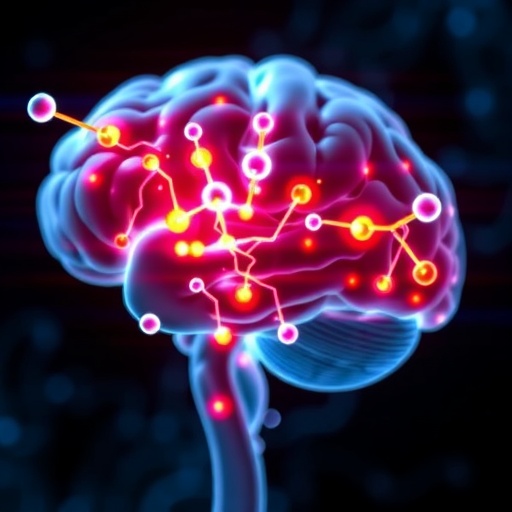
The burgeoning field of neuroimaging has fueled cognitive research in MS, including details of the involvement of the hippocampus and associated changes in cognition, as well as the effects of different types of interventions. Techniques such as magnetic resonance imaging (MRI), functional MRI, and diffusion tensor imaging are yielding fundamental in-vivo information about hippocampal pathology and links with clinical manifestations. The authors examine the literature on neuroimaging of the hippocampus in MS, including studies of focal lesions, structural abnormalities, atrophy, and abnormalities of functional connectivity. There is growing evidence that the hippocampus can be modified by aerobic exercise and memory retraining, suggesting the potential for the development of effective cognitive rehabilitative strategies.
"Recent advances in neuroimaging have greatly improved our understanding of the involvement of the hippocampus in MS," said John DeLuca, PhD, senior VP of Research and Training at Kessler Foundation, and a co-author of the article. "Now we are aware of subregions with different levels of susceptibility to damage, for example, and the potential for hippocampal plasticity and neurogenesis," noted Dr. DeLuca. "The challenge is to correlate these findings with clinical manifestations and renew our efforts toward improving outcomes for the population with MS."
###
Supported by National Institute of Health Research.
About MAGNIMS
MAGNIMS (Magnetic Resonance Imaging in Multiple Sclerosis) is a network of European academic institutions that share a common interest in the study of MS using magnetic resonance imaging techniques. Members include: VU University Medical Centre – Amsterdam, Netherlands, Vall d'Hebron University Hospital – Barcelona, Catalonia, University Hospital Basel – Basel, Switzerland, Glostrup University Hospital – Copenhagen, Denmark, Medical University Graz – Graz, Austria, UCL Institute of Neurology / Queen Square – London, UK, San Raffaele Scientifica Institute / Vita-Salute San Raffaele University – Milano, Italy, Oxford University – Oxford, UK, San Camilo – Forlanini Hospital – Roma, Italy, University of Siena – Siena, Italy.
About Kessler Foundation
Kessler Foundation, a major nonprofit organization in the field of disability, is a global leader in rehabilitation research that seeks to improve cognition, mobility and long-term outcomes, including employment, for people with neurological disabilities caused by diseases and injuries of the brain and spinal cord. Kessler Foundation leads the nation in funding innovative programs that expand opportunities for employment for people with disabilities. For more information, visit KesslerFoundation.org. For more information, or to interview an expert, contact: Carolann Murphy, 973.324.8382, [email protected].
Media Contact
Carolann Murphy
[email protected]
973-324-8382
@KesslerFdn
http://www.KesslerFoundation.org
Related Journal Article
http://dx.doi.org/10.1016/S1474-4422(18)30309-0