• HOME
  • NEWS
  • EXPLORE
    • CAREER
      • Companies
      • Jobs
    • EVENTS
    • iGEM
      • News
      • Team
    • PHOTOS
    • VIDEO
    • WIKI
  • BLOG
  • COMMUNITY
    • FACEBOOK
    • INSTAGRAM
    • TWITTER
Saturday, February 7, 2026
BIOENGINEER.ORG
No Result
View All Result
  • Login
  • HOME
  • NEWS
  • EXPLORE
    • CAREER
      • Companies
      • Jobs
        • Lecturer
        • PhD Studentship
        • Postdoc
        • Research Assistant
    • EVENTS
    • iGEM
      • News
      • Team
    • PHOTOS
    • VIDEO
    • WIKI
  • BLOG
  • COMMUNITY
    • FACEBOOK
    • INSTAGRAM
    • TWITTER
  • HOME
  • NEWS
  • EXPLORE
    • CAREER
      • Companies
      • Jobs
        • Lecturer
        • PhD Studentship
        • Postdoc
        • Research Assistant
    • EVENTS
    • iGEM
      • News
      • Team
    • PHOTOS
    • VIDEO
    • WIKI
  • BLOG
  • COMMUNITY
    • FACEBOOK
    • INSTAGRAM
    • TWITTER
No Result
View All Result
Bioengineer.org
No Result
View All Result
Home NEWS Science News Health

A new way to create molecules for drug development

Bioengineer by Bioengineer
October 12, 2018
in Health
Reading Time: 2 mins read
0
Share on FacebookShare on TwitterShare on LinkedinShare on RedditShare on Telegram
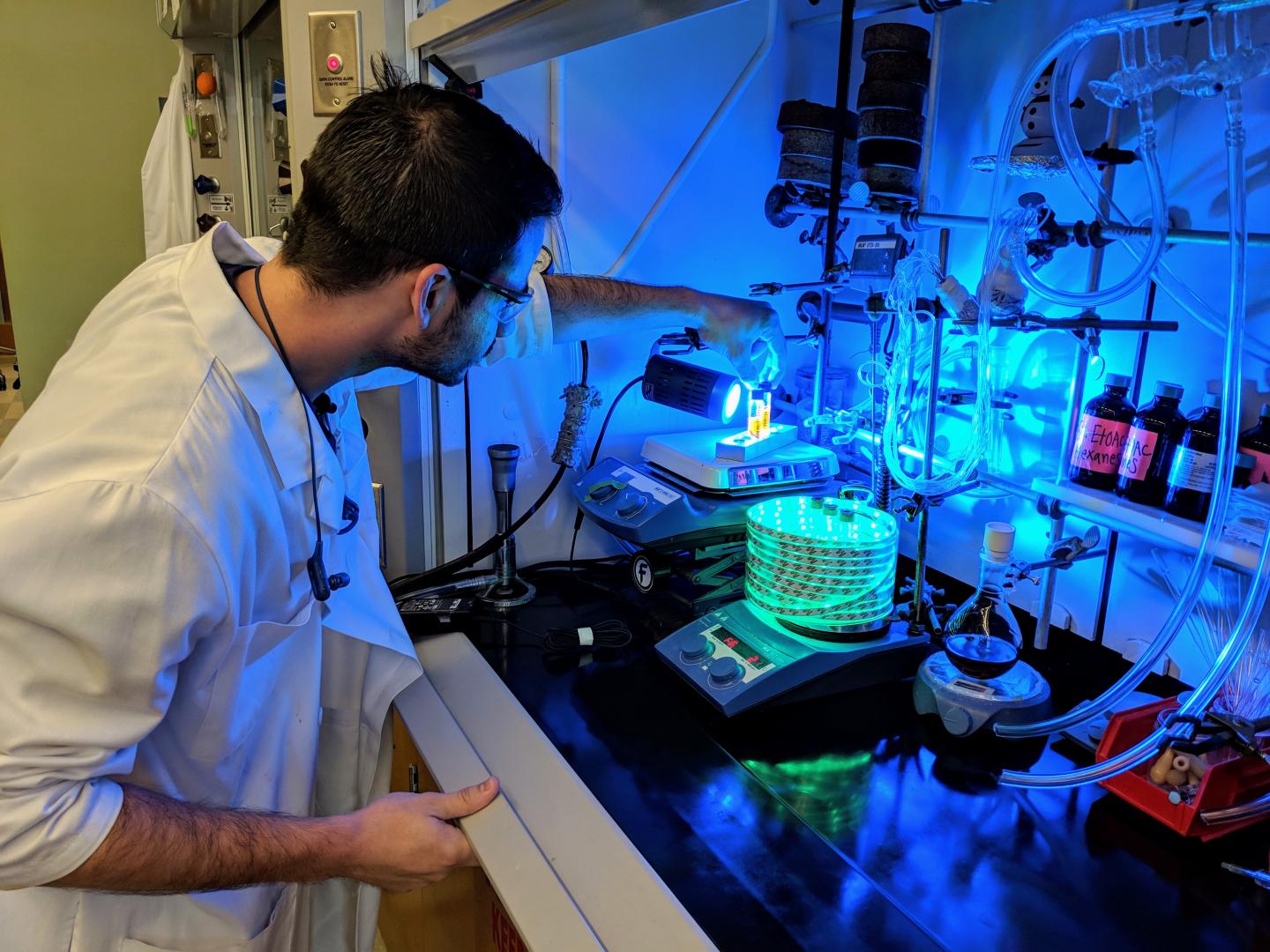
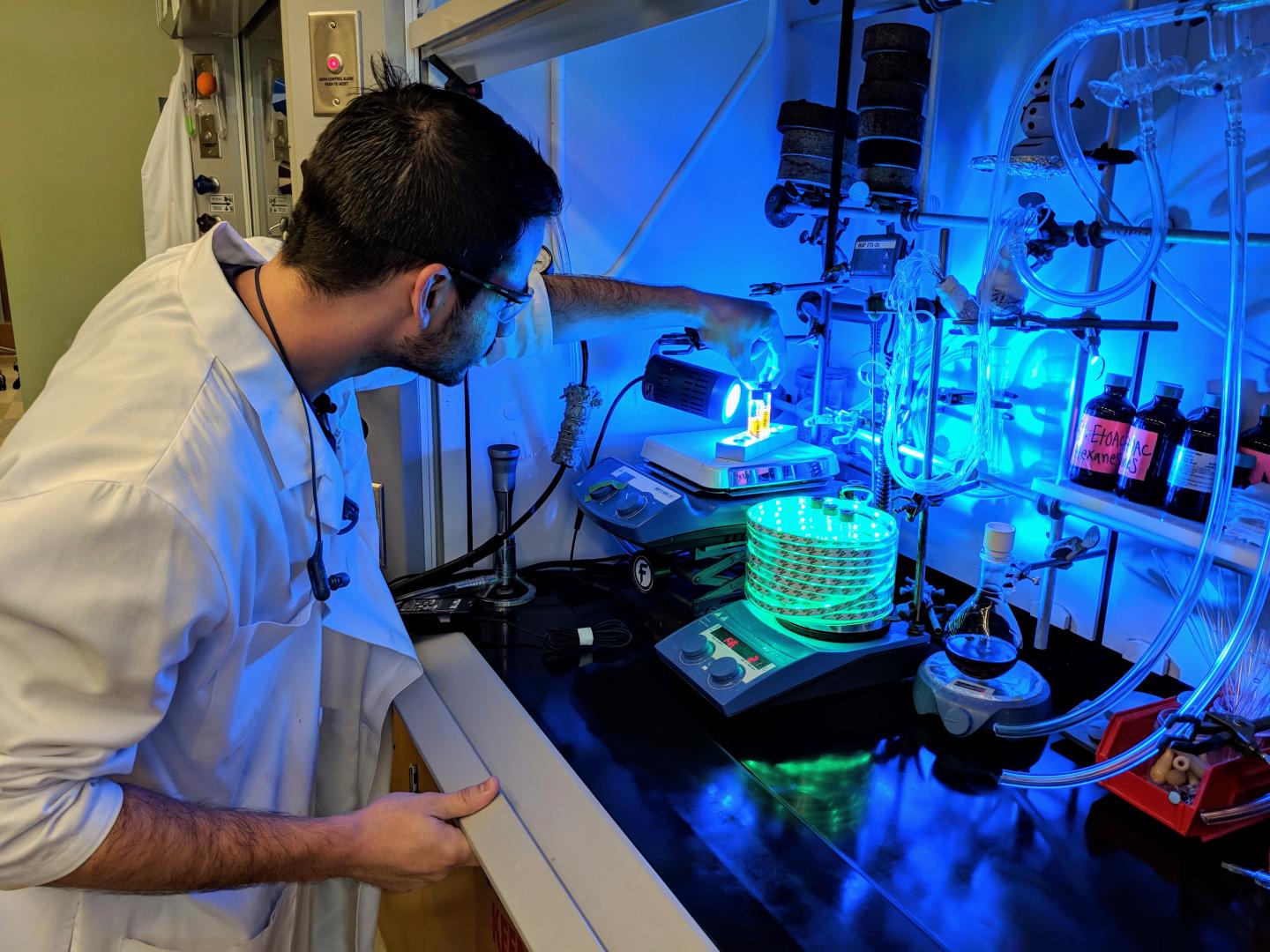
IMAGE

Credit: Jeff Grabmeier

COLUMBUS, Ohio – Chemists at The Ohio State University have developed a new and improved way to generate molecules that can enable the design of new types of synthetic drugs.

Researchers say this new method of forming reactive intermediates called ketyl radicals offers scientists a way to use catalysts to convert simple molecules into complex structures in one chemical reaction. This is done in a less harsh, more sustainable and waste-free manner.

"The previous strategy for creating ketyl radicals is about a century old. We have a found a complementary way to access ketyl radicals using LED lights for the synthesis of complex, drug-like molecules," said David Nagib, co-author of the new study and assistant professor of chemistry and biochemistry at Ohio State. The study was published Oct. 12 in the journal Science.

The story starts with carbonyls, compounds that function as one of the most common building blocks in creating potential new drugs. Unlike classic carbonyl chemistry taught in introductory organic textbooks, when carbonyls are converted to their "radical" form, they become much more reactive. These radicals, containing an unpaired electron desperately seeking its partner, enable researchers to form new bonds, in order to create complex, drug-like products.

Until now, ketyl radical formation has required strong, harsh substances called reductants, like sodium or samarium, to act as catalysts. These reductants can be toxic, expensive and incompatible with creating medicines, Nagib said.

In this study, the researchers found a way to use manganese as a catalyst that could be activated with a simple LED light.

"Manganese is very cheap and abundant, which makes it an excellent catalyst," he said. "Also, it allows us to access radicals by a complementary atom-transfer mechanism, rather than the classic electron-transfer mechanism."

Not only is manganese cheaper and more abundant, it actually is more selective in creating products with defined geometries, so they can fit into drug targets, the study found. The process is less wasteful, as well, recycling the iodine atom used to make the radicals by including it in the more functional products.

This new method to generate ketyl radicals enables researchers to create more versatile and complex structures that could be useful in generating new medicines, Nagib said.

Co-authors of the study, all from Nagib's lab at Ohio State, are Lu Wang, Jeremy Lear, Sean Rafferty and Stacy Fosu. Wang, a lead scientist on this project, recently completed her postdoctoral fellowship and now works for Merck, a major pharmaceutical company.

This research was funded by the National Science Foundation and the National Institutes of Health.

###

Contact: David Nagib, [email protected]

Media Contact

David Nagib
[email protected]
@osuresearch

http://news.osu.edu

Original Source

https://news.osu.edu/a-new-way-to-create-molecules-for-drug-development/

Share12Tweet7Share2ShareShareShare1

Related Posts

Boosting Remote Healthcare: Stepped-Wedge Trial Insights

February 7, 2026

Barriers and Boosters of Seniors’ Physical Activity in Karachi

February 7, 2026

Evaluating Pediatric Emergency Care Quality in Ethiopia

February 7, 2026

TPMT Expression Predictions Linked to Azathioprine Side Effects

February 7, 2026
Please login to join discussion

POPULAR NEWS

  • Robotic Ureteral Reconstruction: A Novel Approach

    Robotic Ureteral Reconstruction: A Novel Approach

    82 shares
    Share 33 Tweet 21
  • Digital Privacy: Health Data Control in Incarceration

    63 shares
    Share 25 Tweet 16
  • Study Reveals Lipid Accumulation in ME/CFS Cells

    57 shares
    Share 23 Tweet 14
  • Breakthrough in RNA Research Accelerates Medical Innovations Timeline

    53 shares
    Share 21 Tweet 13

About

We bring you the latest biotechnology news from best research centers and universities around the world. Check our website.

Follow us

Recent News

Boosting Remote Healthcare: Stepped-Wedge Trial Insights

Barriers and Boosters of Seniors’ Physical Activity in Karachi

Evaluating Pediatric Emergency Care Quality in Ethiopia

Subscribe to Blog via Email

Enter your email address to subscribe to this blog and receive notifications of new posts by email.

Join 73 other subscribers
  • Contact Us

Bioengineer.org © Copyright 2023 All Rights Reserved.

Welcome Back!

Login to your account below

Forgotten Password?

Retrieve your password

Please enter your username or email address to reset your password.

Log In
No Result
View All Result
  • Homepages
    • Home Page 1
    • Home Page 2
  • News
  • National
  • Business
  • Health
  • Lifestyle
  • Science

Bioengineer.org © Copyright 2023 All Rights Reserved.