

• HOME
  • NEWS
  • EXPLORE
    • CAREER
      • Companies
      • Jobs
    • EVENTS
    • iGEM
      • News
      • Team
    • PHOTOS
    • VIDEO
    • WIKI
  • BLOG
  • COMMUNITY
    • FACEBOOK
    • INSTAGRAM
    • TWITTER
Saturday, February 7, 2026
BIOENGINEER.ORG
No Result
View All Result
  • Login
  • HOME
  • NEWS
  • EXPLORE
    • CAREER
      • Companies
      • Jobs
        • Lecturer
        • PhD Studentship
        • Postdoc
        • Research Assistant
    • EVENTS
    • iGEM
      • News
      • Team
    • PHOTOS
    • VIDEO
    • WIKI
  • BLOG
  • COMMUNITY
    • FACEBOOK
    • INSTAGRAM
    • TWITTER
  • HOME
  • NEWS
  • EXPLORE
    • CAREER
      • Companies
      • Jobs
        • Lecturer
        • PhD Studentship
        • Postdoc
        • Research Assistant
    • EVENTS
    • iGEM
      • News
      • Team
    • PHOTOS
    • VIDEO
    • WIKI
  • BLOG
  • COMMUNITY
    • FACEBOOK
    • INSTAGRAM
    • TWITTER
No Result
View All Result
Bioengineer.org
No Result
View All Result
Home NEWS Science News Cancer

Tumor microenvironment acts as a mechanism of resistance to chemotherapy

Bioengineer by Bioengineer
September 6, 2016
in Cancer
Reading Time: 2 mins read
0
Share on FacebookShare on TwitterShare on LinkedinShare on RedditShare on Telegram
IMAGE

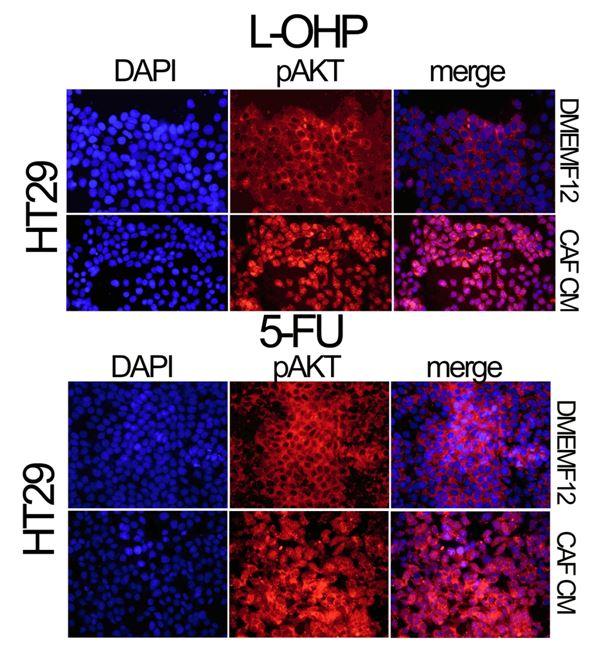
Researchers at Bellvitge Biomedical Research Institute (IDIBELL) have published a new Oncotarget work which highlights the importance of the tumor environment as a source of resistance to treatment in colorectal cancer, the fourth most common cancer and the leading cause of cancer death worldwide. The article describes how the presence of certain molecules in the environment of the tumor triggers processes that protect the tumor cells from the action of conventional chemotherapy. Resistance to treatment is one of the main obstacles that patients face during the course of the disease; therefore, understand the mechanisms by which it develops is essential to improve the prognosis.

The study led by Dr David G. Molleví, researcher of the Program against cancer therapeutic resistance (PROCURE) of IDIBELL, reports how certain cytokines, chemokines and other soluble factors secreted by carcinoma associated fibroblasts (CAFs), a type of normal cell which is closely associated with primary tumor cells, induce processes that slow down cell cycle, affecting the proliferation of tumor cells. In the presence of conventional chemotherapy, such factors allow stabilization and activation of selected downstream proteins that minimize the effectiveness of the treatment. However, it has also been reported that inhibition of the JAK/STAT signaling pathway, addict to many of these cytokines, might revert the process.

The importance of tumor microenvironment (TME) as a relevant contributor to cancer progression and its role in the development of resistance to therapies has become increasingly apparent to researchers. “Although current cancer research mainly focuses on therapies against specific targets, most tumors are still treated with conventional cytotoxic therapies, so drug resistance remains the main obstacle to their success” explains Dr Molleví.

“From a clinical perspective, identifying the soluble factors that mediate such microenvironment-mediated drug resistance might yield valuable information to circumvent it”, says Dr Molleví;. “Hampering key common, nomal cells responsible for the synthesis of such factors might be an interesting approach to avoid the protective effect exerted by such molecules and to render tumor cells sensitive to chemotherapy”.

###

Media Contact

Gemma Fornons
[email protected]
34-638-685-074
@idibell_en

Inicio

The post Tumor microenvironment acts as a mechanism of resistance to chemotherapy appeared first on Scienmag.


Share12Tweet8Share2ShareShareShare2

Related Posts

Deep Learning Uncovers Tetrahydrocarbazoles as Potent Broad-Spectrum Antitumor Agents with Click-Activated Targeted Cancer Therapy Approach

February 7, 2026

Newly Discovered Limonoid DHL-11 from Munronia henryi Targets IMPDH2 to Combat Triple-Negative Breast Cancer

February 7, 2026

New Discovery Reveals Why Ovarian Cancer Spreads Rapidly in the Abdomen

February 6, 2026

New Study Finds Americans Favor In-Clinic Screening Over At-Home Tests for Cervical Cancer

February 6, 2026
Please login to join discussion

POPULAR NEWS

  • Robotic Ureteral Reconstruction: A Novel Approach

    Robotic Ureteral Reconstruction: A Novel Approach

    82 shares
    Share 33 Tweet 21
  • Digital Privacy: Health Data Control in Incarceration

    63 shares
    Share 25 Tweet 16
  • Study Reveals Lipid Accumulation in ME/CFS Cells

    57 shares
    Share 23 Tweet 14
  • Breakthrough in RNA Research Accelerates Medical Innovations Timeline

    53 shares
    Share 21 Tweet 13

About

We bring you the latest biotechnology news from best research centers and universities around the world. Check our website.

Follow us

Recent News

Phage-Antibiotic Combo Beats Resistant Peritoneal Infection

Boosting Remote Healthcare: Stepped-Wedge Trial Insights

Barriers and Boosters of Seniors’ Physical Activity in Karachi

Subscribe to Blog via Email

Enter your email address to subscribe to this blog and receive notifications of new posts by email.

Join 73 other subscribers
  • Contact Us

Bioengineer.org © Copyright 2023 All Rights Reserved.

Welcome Back!

Login to your account below

Forgotten Password?

Retrieve your password

Please enter your username or email address to reset your password.

Log In
No Result
View All Result
  • Homepages
    • Home Page 1
    • Home Page 2
  • News
  • National
  • Business
  • Health
  • Lifestyle
  • Science

Bioengineer.org © Copyright 2023 All Rights Reserved.
