

• HOME
  • NEWS
  • EXPLORE
    • CAREER
      • Companies
      • Jobs
    • EVENTS
    • iGEM
      • News
      • Team
    • PHOTOS
    • VIDEO
    • WIKI
  • BLOG
  • COMMUNITY
    • FACEBOOK
    • INSTAGRAM
    • TWITTER
Wednesday, April 22, 2026
BIOENGINEER.ORG
No Result
View All Result
  • Login
  • HOME
  • NEWS
  • EXPLORE
    • CAREER
      • Companies
      • Jobs
        • Lecturer
        • PhD Studentship
        • Postdoc
        • Research Assistant
    • EVENTS
    • iGEM
      • News
      • Team
    • PHOTOS
    • VIDEO
    • WIKI
  • BLOG
  • COMMUNITY
    • FACEBOOK
    • INSTAGRAM
    • TWITTER
  • HOME
  • NEWS
  • EXPLORE
    • CAREER
      • Companies
      • Jobs
        • Lecturer
        • PhD Studentship
        • Postdoc
        • Research Assistant
    • EVENTS
    • iGEM
      • News
      • Team
    • PHOTOS
    • VIDEO
    • WIKI
  • BLOG
  • COMMUNITY
    • FACEBOOK
    • INSTAGRAM
    • TWITTER
No Result
View All Result
Bioengineer.org
No Result
View All Result
Home NEWS Science News Health

Common herbicide compound may save millions of lives

Bioengineer by Bioengineer
October 4, 2018
in Health
Reading Time: 2 mins read
0
Share on FacebookShare on TwitterShare on LinkedinShare on RedditShare on Telegram
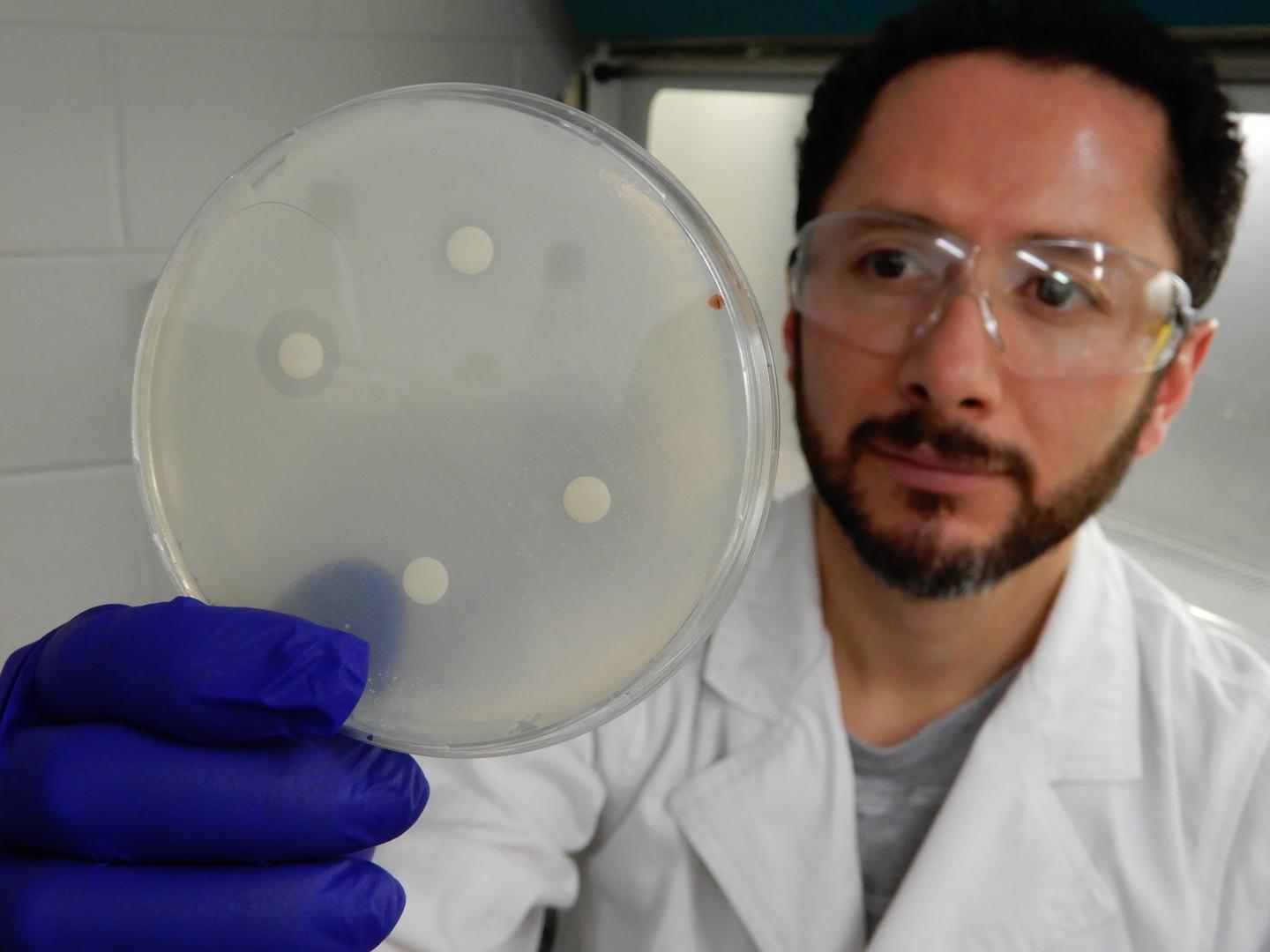
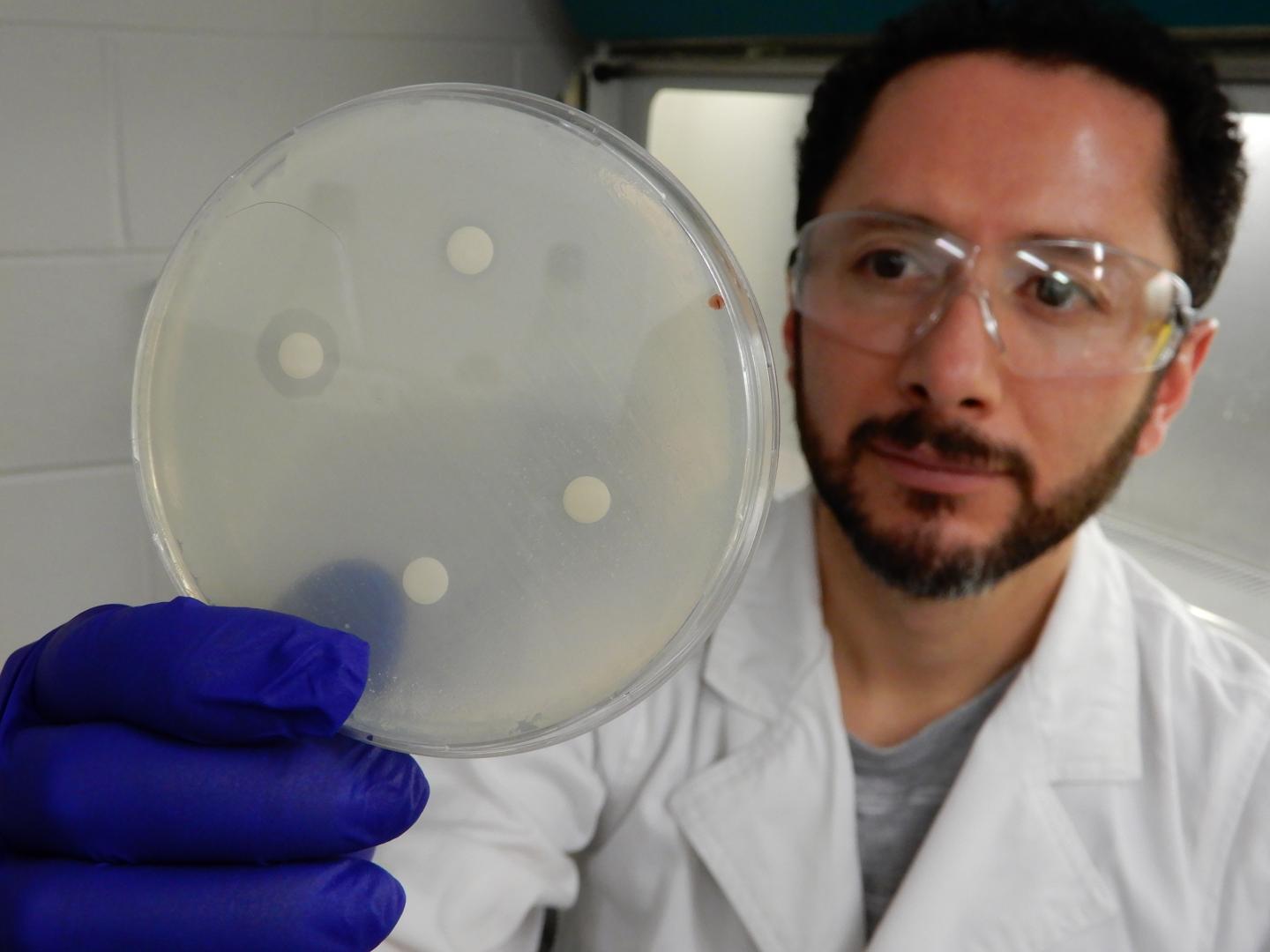
IMAGE

Credit: The University of Queensland.

A chemical compound found in common herbicides could help fight hospital-acquired human fungal pathogenic infections, which claim an estimated two million lives per year.

A team of international researchers led by The University of Queensland has discovered that the chemical chlorimuron ethyl also targets a range of fungal infections that are potentially fatal to humans, particularly people undergoing treatments which place the immune system under stress.

Dr Luke Guddat, from UQ's School of Chemistry and Molecular Biosciences, said the finding was very timely, given the growth in drug-resistant infections.

"There are more drug-resistant fungal diseases than ever – posing a major threat to global human health – and new drugs are urgently required to combat these diseases," he said.

"Through this research we wanted to see if a specific class of commercial herbicide has the ability to stop the growth of these infections.

"We thought this was a good idea, since plants and fungi have a similar enzyme that these chemicals inhibit, and it turns out we were correct."

The researchers tested five different families of compounds, to see if they could inhibit a key enzyme from the fungal species, Candida albicans and Cryptococcus neoformans.

One of the five, chlorimurion ethyl, was a stand-out candidate.

"In studies in the petri dish and with mice, it was highly effective at preventing proliferation of growth," Dr Guddat said.

"By inhibiting this enzyme you're removing a key metabolic step that makes three types of amino acids, which these infections need to grow.

"And most importantly, humans don't have this enzyme – we obtain these amino acids from our food – so there's very little chance that these compounds will be toxic to humans, a factor which limits the use of many of the other currently prescribed antifungal drugs."

Dr Guddat said while there's a bright future for the development of compounds to treat this type of infection, more research is necessary.

"We're only at the early stage of this journey, but we're excited to see the prospects for new treatments in the future."

###

The study was published in Proceedings of the National Academy of Sciences (DOI: 10.1073/pnas.1809422115).

Media Contact

Dr Luke Guddatt
[email protected]
61-447-123-584
@uq_news

http://www.uq.edu.au

Original Source

https://www.uq.edu.au/news/article/2018/10/common-herbicide-compound-may-save-millions-of-lives http://dx.doi.org/10.1073/pnas.1809422115

Share12Tweet8Share2ShareShareShare2

Related Posts

Tracing Lead in Ambient Air from Wood Combustion

April 22, 2026

Portable Air Cleaners Reduce Indoor Pollution, Improve Perception

April 22, 2026

DNA Methyltransferase 3a Loss Sparks Cardiomyocyte Pyroptosis

April 22, 2026

Quinone-Based Hydrogel Enables Instant Wet Tissue Hemostasis

April 22, 2026
Please login to join discussion

POPULAR NEWS

  • Research Indicates Potential Connection Between Prenatal Medication Exposure and Elevated Autism Risk

    795 shares
    Share 318 Tweet 199
  • Scientists Investigate Possible Connection Between COVID-19 and Increased Lung Cancer Risk

    65 shares
    Share 26 Tweet 16
  • Salmonella Haem Blocks Macrophages, Boosts Infection

    58 shares
    Share 23 Tweet 15
  • NSF funds machine-learning research at UNO and UNL to study energy requirements of walking in older adults

    101 shares
    Share 40 Tweet 25

About

We bring you the latest biotechnology news from best research centers and universities around the world. Check our website.

Follow us

Recent News

Tracing Lead in Ambient Air from Wood Combustion

Brain Blood Flow in Teens After Infant Heart Surgery

AI-Powered Decision Support Boosts Donor Heart Utilization for Transplants

Subscribe to Blog via Email

Enter your email address to subscribe to this blog and receive notifications of new posts by email.

Join 79 other subscribers
  • Contact Us

Bioengineer.org © Copyright 2023 All Rights Reserved.

Welcome Back!

Login to your account below

Forgotten Password?

Retrieve your password

Please enter your username or email address to reset your password.

Log In
No Result
View All Result
  • Homepages
    • Home Page 1
    • Home Page 2
  • News
  • National
  • Business
  • Health
  • Lifestyle
  • Science

Bioengineer.org © Copyright 2023 All Rights Reserved.