• HOME
  • NEWS
  • EXPLORE
    • CAREER
      • Companies
      • Jobs
    • EVENTS
    • iGEM
      • News
      • Team
    • PHOTOS
    • VIDEO
    • WIKI
  • BLOG
  • COMMUNITY
    • FACEBOOK
    • INSTAGRAM
    • TWITTER
Saturday, February 7, 2026
BIOENGINEER.ORG
No Result
View All Result
  • Login
  • HOME
  • NEWS
  • EXPLORE
    • CAREER
      • Companies
      • Jobs
        • Lecturer
        • PhD Studentship
        • Postdoc
        • Research Assistant
    • EVENTS
    • iGEM
      • News
      • Team
    • PHOTOS
    • VIDEO
    • WIKI
  • BLOG
  • COMMUNITY
    • FACEBOOK
    • INSTAGRAM
    • TWITTER
  • HOME
  • NEWS
  • EXPLORE
    • CAREER
      • Companies
      • Jobs
        • Lecturer
        • PhD Studentship
        • Postdoc
        • Research Assistant
    • EVENTS
    • iGEM
      • News
      • Team
    • PHOTOS
    • VIDEO
    • WIKI
  • BLOG
  • COMMUNITY
    • FACEBOOK
    • INSTAGRAM
    • TWITTER
No Result
View All Result
Bioengineer.org
No Result
View All Result
Home NEWS Science News Cancer

New approach on the use of big data in clinical decision support

Bioengineer by Bioengineer
October 3, 2018
in Cancer
Reading Time: 2 mins read
0
Share on FacebookShare on TwitterShare on LinkedinShare on RedditShare on Telegram
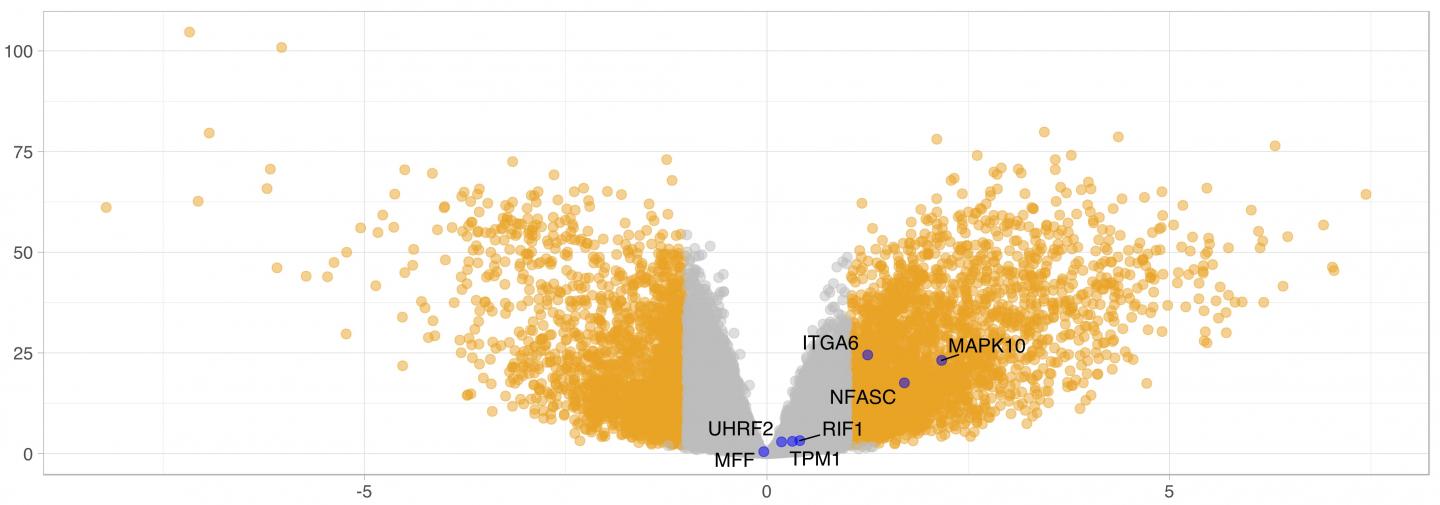
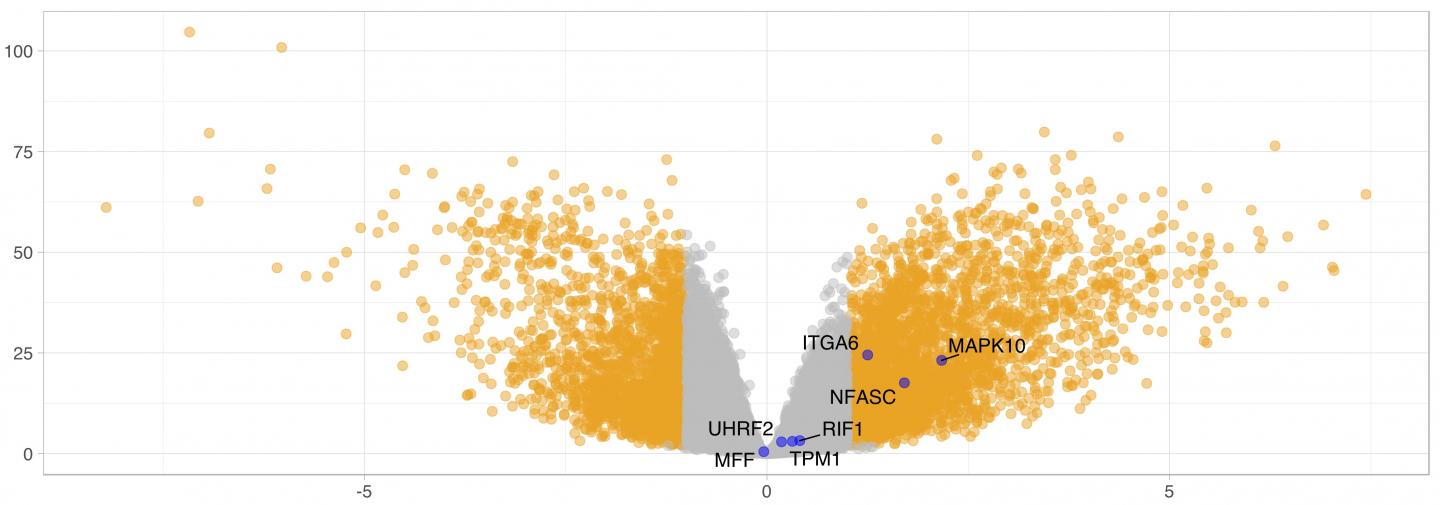
IMAGE

Credit: Nuno Agostinho, iMM.

A new computational approach that allows the identification of molecular alterations associated with prognosis and resistance to therapy of different types of cancer was developed by the research grould led by Nuno Barbosa Morais, Group Leader at Instituto de Medicina Molecular João Lobo Antunes (iMM; Portugal), and now published open access in Nucleic Acids Research*.

Cancer cells are characterised by perturbations in the regulation of genes and, in particular, by alterations in alternative splicing, a process by which the same gene can originate different proteins. Some of those alterations are associated with different malignant features of cancer and its resistance to treatment but vary from tumour to tumour. "Each patient hosts a different cancer, so that scientists and clinicians need molecular information about many individuals to, supported by data, understand disease mechanisms, assess prognosis and make predictions on the best treatment for each patient based on their tumour's molecular profile", explains Nuno Barbosa Morais.

"We have created a software that, by analysing large databases with clinical and splicing information for thousands of tumours, detects patterns of similarities between different cases and allows, for instance, to identify the relation of each molecular alteration with patient survival, for more than thirty types of cancer. In practice, the program allows to quickly convert a lot of genome-wide data into biological information with clinical potential", explains Nuno Saraiva Agostinho, first author of the study and student of the PhD programme CAML (Centro Académico de Medicina de Lisboa, da Faculdade de Medicina da Universidade Lisboa).

"Thanks to this approach, we have already identified a possible mechanism of resistance to chemotherapy in colorectal cancer that we are now investigating, in an international collaboration that we are leading. We have also identified a new prognostic marker in breast cancer that we will now study, teaming up with other iMM colleagues", highlights Nuno Barbosa Morais, who leads the lab and has supervised the study.

###

This work was funded by the European Molecular Biology Organisation (EMBO) and the Portuguese Fundação para a Ciência e a Tecnologia (FCT).

*Saraiva-Agostinho, N, Barbosa-Morais, N.L. (2018) psichomics: graphical application for alternative splicing quantification and analysis. Nucleic Acids Research. gky888, https://doi.org/10.1093/nar/gky888

Media Contact

Inês Domingues
[email protected]
351-915-456-900

https://imm.medicina.ulisboa.pt/en/

Related Journal Article

http://dx.doi.org/10.1093/nar/gky888
Share12Tweet7Share2ShareShareShare1

Related Posts

Deep Learning Uncovers Tetrahydrocarbazoles as Potent Broad-Spectrum Antitumor Agents with Click-Activated Targeted Cancer Therapy Approach

February 7, 2026

Newly Discovered Limonoid DHL-11 from Munronia henryi Targets IMPDH2 to Combat Triple-Negative Breast Cancer

February 7, 2026

New Discovery Reveals Why Ovarian Cancer Spreads Rapidly in the Abdomen

February 6, 2026

New Study Finds Americans Favor In-Clinic Screening Over At-Home Tests for Cervical Cancer

February 6, 2026
Please login to join discussion

POPULAR NEWS

  • Robotic Ureteral Reconstruction: A Novel Approach

    Robotic Ureteral Reconstruction: A Novel Approach

    82 shares
    Share 33 Tweet 21
  • Digital Privacy: Health Data Control in Incarceration

    63 shares
    Share 25 Tweet 16
  • Study Reveals Lipid Accumulation in ME/CFS Cells

    57 shares
    Share 23 Tweet 14
  • Breakthrough in RNA Research Accelerates Medical Innovations Timeline

    53 shares
    Share 21 Tweet 13

About

We bring you the latest biotechnology news from best research centers and universities around the world. Check our website.

Follow us

Recent News

Decoding Prostate Cancer Origins via snFLARE-seq, mxFRIZNGRND

Digital Health Perspectives from Baltic Sea Experts

Florida Cane Toad: Complex Spread and Selective Evolution

Subscribe to Blog via Email

Enter your email address to subscribe to this blog and receive notifications of new posts by email.

Join 73 other subscribers
  • Contact Us

Bioengineer.org © Copyright 2023 All Rights Reserved.

Welcome Back!

Login to your account below

Forgotten Password?

Retrieve your password

Please enter your username or email address to reset your password.

Log In
No Result
View All Result
  • Homepages
    • Home Page 1
    • Home Page 2
  • News
  • National
  • Business
  • Health
  • Lifestyle
  • Science

Bioengineer.org © Copyright 2023 All Rights Reserved.