• HOME
  • NEWS
  • EXPLORE
    • CAREER
      • Companies
      • Jobs
    • EVENTS
    • iGEM
      • News
      • Team
    • PHOTOS
    • VIDEO
    • WIKI
  • BLOG
  • COMMUNITY
    • FACEBOOK
    • INSTAGRAM
    • TWITTER
Saturday, February 7, 2026
BIOENGINEER.ORG
No Result
View All Result
  • Login
  • HOME
  • NEWS
  • EXPLORE
    • CAREER
      • Companies
      • Jobs
        • Lecturer
        • PhD Studentship
        • Postdoc
        • Research Assistant
    • EVENTS
    • iGEM
      • News
      • Team
    • PHOTOS
    • VIDEO
    • WIKI
  • BLOG
  • COMMUNITY
    • FACEBOOK
    • INSTAGRAM
    • TWITTER
  • HOME
  • NEWS
  • EXPLORE
    • CAREER
      • Companies
      • Jobs
        • Lecturer
        • PhD Studentship
        • Postdoc
        • Research Assistant
    • EVENTS
    • iGEM
      • News
      • Team
    • PHOTOS
    • VIDEO
    • WIKI
  • BLOG
  • COMMUNITY
    • FACEBOOK
    • INSTAGRAM
    • TWITTER
No Result
View All Result
Bioengineer.org
No Result
View All Result
Home NEWS Science News Health

UTA researchers patent technology for smart seat cushion, adaptable prosthetics

Bioengineer by Bioengineer
September 20, 2018
in Health
Reading Time: 2 mins read
0
Share on FacebookShare on TwitterShare on LinkedinShare on RedditShare on Telegram
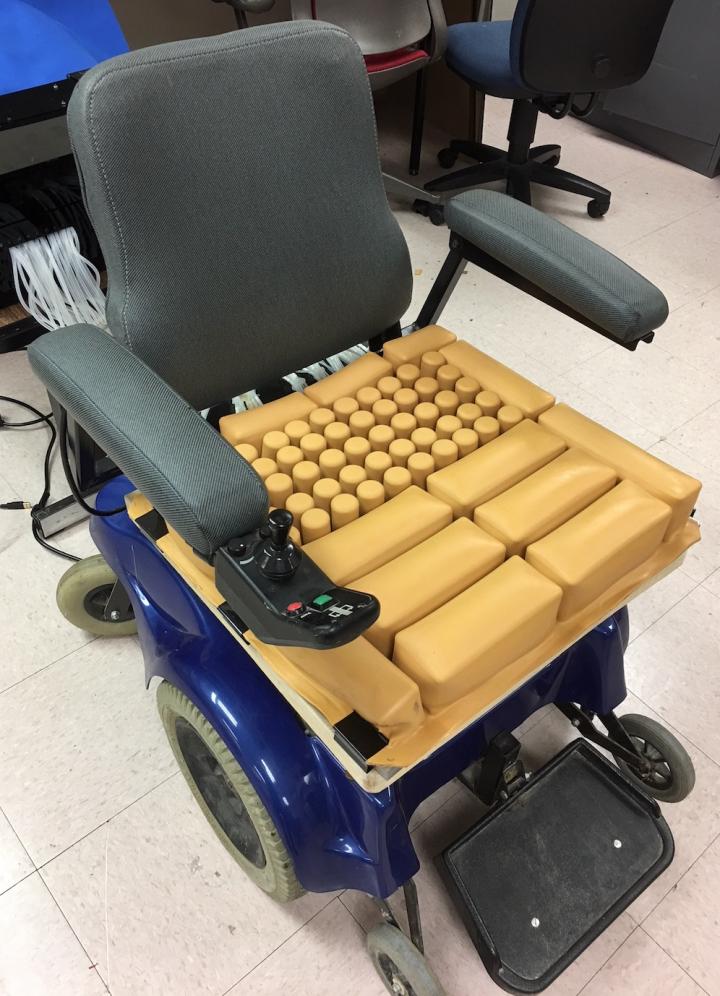
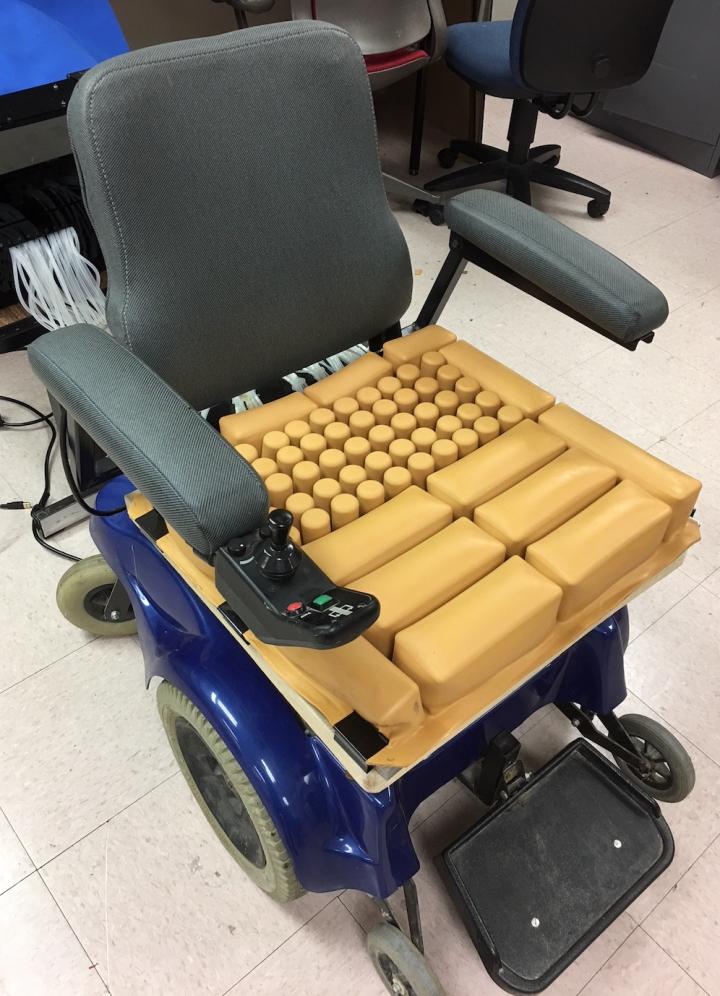
IMAGE

Credit: UTA

The University of Texas at Arlington has patented a smart seat cushion that uses changes in air pressure to redistribute body weight and help prevent the painful ulcers caused by sitting for long periods of time in a wheelchair.

The same technology can be used to create prosthetic liners that adapt their shape to accommodate changes in body volume during the day and maintain a comfortable fit for the prosthesis. P

oor prosthetic fit can cause skin damage and create sores in the residual limb of the wearer.

"Pressure ulcers caused by long periods of sitting without relieving pressure at boney regions such as the tailbone, frequently occur in people who spend significant amount of time on wheelchairs. In the case of prosthesis users, poor fitting of the prosthesis leads to pressure injuries for amputees that can severely affect their daily life," said Muthu Wijesundara, co-inventor of the technology and chief research scientist at UTA's Research Institute or UTARI.

"Our technology improves on existing solutions by including real-time pressure monitoring and automated pressure modulation capabilities to help combat the formation of pressure ulcers or sores."

The researchers recently presented the results of their studies on a full-sized seat cushion prototype at the ASME 2018 International Design Engineering Technical Conferences & Computers and Information in Engineering Conference held August 26-29, 2018 in Quebec City, Canada.

When a person sits on the cushion, a network of sensors generates a pressure map and identifies vulnerable areas where pressure relief is needed. Automated pressure modulation uses this data to reconfigure the seat cushion surface to offload and redistribute pressure from sensitive areas. Additionally, the seat cushion periodically changes the pressure profile to eliminate pressure buildup over time.

The researchers demonstrated the effectiveness of the technology using healthy volunteers with different weights who assumed different positions: leaning forward, backward, to the left or right. In all cases, the seat cushion measured the pressure immediately and automatically performed an effective pressure redistribution to offload pressure from sensitive areas. "This technology has multitude of applications in biomedical fields," Wijesundara said. "We really feel that it shows great promise in helping patients and their caregivers avoid the pain of stress ulcers and sores."

Mickey McCabe, director of UTARI, congratulated the UTA team on the recent patent issue.

"UTA's Research Institute has the mission of taking inventions out of the lab and making them useful to society," McCabe said. "This patented technology will do precisely that, helping patients avoid added trauma and reducing the burden of costs associated with ulcers and sores on the healthcare system. A real win-win for all sides."

###

Media Contact

Louisa Kellie
[email protected]
817-524-8926
@utarlington

http://www.uta.edu

Original Source

https://www.uta.edu/news/releases/2018/09/Seat%20Cushion%20release.php

Share12Tweet7Share2ShareShareShare1

Related Posts

Improving Dementia Care with Enhanced Activity Kits

February 7, 2026

Decoding Prostate Cancer Origins via snFLARE-seq, mxFRIZNGRND

February 7, 2026

Digital Health Perspectives from Baltic Sea Experts

February 7, 2026

Exploring Decision-Making in Dementia Caregivers’ Mobility

February 7, 2026
Please login to join discussion

POPULAR NEWS

  • Robotic Ureteral Reconstruction: A Novel Approach

    Robotic Ureteral Reconstruction: A Novel Approach

    82 shares
    Share 33 Tweet 21
  • Digital Privacy: Health Data Control in Incarceration

    63 shares
    Share 25 Tweet 16
  • Study Reveals Lipid Accumulation in ME/CFS Cells

    57 shares
    Share 23 Tweet 14
  • Breakthrough in RNA Research Accelerates Medical Innovations Timeline

    53 shares
    Share 21 Tweet 13

About

We bring you the latest biotechnology news from best research centers and universities around the world. Check our website.

Follow us

Recent News

Improving Dementia Care with Enhanced Activity Kits

Decoding Prostate Cancer Origins via snFLARE-seq, mxFRIZNGRND

Digital Health Perspectives from Baltic Sea Experts

Subscribe to Blog via Email

Enter your email address to subscribe to this blog and receive notifications of new posts by email.

Join 73 other subscribers
  • Contact Us

Bioengineer.org © Copyright 2023 All Rights Reserved.

Welcome Back!

Login to your account below

Forgotten Password?

Retrieve your password

Please enter your username or email address to reset your password.

Log In
No Result
View All Result
  • Homepages
    • Home Page 1
    • Home Page 2
  • News
  • National
  • Business
  • Health
  • Lifestyle
  • Science

Bioengineer.org © Copyright 2023 All Rights Reserved.