

• HOME
  • NEWS
  • EXPLORE
    • CAREER
      • Companies
      • Jobs
    • EVENTS
    • iGEM
      • News
      • Team
    • PHOTOS
    • VIDEO
    • WIKI
  • BLOG
  • COMMUNITY
    • FACEBOOK
    • INSTAGRAM
    • TWITTER
Saturday, February 7, 2026
BIOENGINEER.ORG
No Result
View All Result
  • Login
  • HOME
  • NEWS
  • EXPLORE
    • CAREER
      • Companies
      • Jobs
        • Lecturer
        • PhD Studentship
        • Postdoc
        • Research Assistant
    • EVENTS
    • iGEM
      • News
      • Team
    • PHOTOS
    • VIDEO
    • WIKI
  • BLOG
  • COMMUNITY
    • FACEBOOK
    • INSTAGRAM
    • TWITTER
  • HOME
  • NEWS
  • EXPLORE
    • CAREER
      • Companies
      • Jobs
        • Lecturer
        • PhD Studentship
        • Postdoc
        • Research Assistant
    • EVENTS
    • iGEM
      • News
      • Team
    • PHOTOS
    • VIDEO
    • WIKI
  • BLOG
  • COMMUNITY
    • FACEBOOK
    • INSTAGRAM
    • TWITTER
No Result
View All Result
Bioengineer.org
No Result
View All Result
Home NEWS Science News Cancer

New micro-platform reveals cancer cells’ natural behavior

Bioengineer by Bioengineer
September 19, 2018
in Cancer
Reading Time: 2 mins read
0
Share on FacebookShare on TwitterShare on LinkedinShare on RedditShare on Telegram

Credit: Hokkaido University

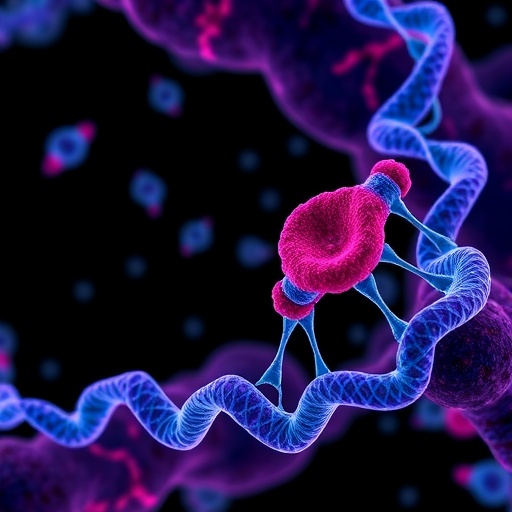
A new cell culture platform allows researchers to observe never-before-seen behaviors of live cancer cells under the microscope, leading to explanations of long-known cancer characteristics.

The easy-to-produce platform developed by Hokkaido University researchers offers cancer cells micro-scale attachment sites that elicit never-before-seen behaviors highly relevant to cancer's clinical properties. The observation of these behaviors shed light on the mechanisms behind well-known properties of pancreatic cancer, one of the most lethal malignant tumors, and may lead to the identification of new treatment targets.

"Cancer studies so far either use cell cultures in which cancer cells don't necessarily behave naturally, or tissue samples that don't allow live observation. So there is a big gap in our knowledge of how cancer cells actually behave," says Assistant Professor Yukiko Miyatake, who led the study and focuses on cancer development mechanisms. To close this gap, she teamed up with Associate Professor Kaori Kuribayashi-Shigetomi who specializes on micro-nano-scale bio-engineering.

Together they created a new cell culture substrate from a coated glass slide with etched islands of 30μm diameter. For healthy cells, this is just enough space for one or two to attach. But when the researchers seeded them with pancreatic cancer cells (although they also tried other cancer cells with similar results) and incubated them overnight, the cells self-organized into micro-tumors that could move in a concerted way, as if it were one organism. Precursors to this turned out to be papillary structures that accommodate 4 or more cells by cell-in-cell invasion. This process, called entosis, is so far known only as a step in cell degradation. Here, the incorporated cells remained alive and, to their surprise, the incorporation was reversible.

When they treated the micro-tumors with the widely used anti-cancer agent Nocodazole, the micro-tumor disintegrated, but the now-detached cells survived. Moreover, the researchers observed the micro-tumors "fishing" for surrounding dead cells and ingesting them, in the process releasing chemical markers typical for dead cells. These markers ended up on the cancer cells' surfaces, presumably masking them and enabling them to evade the immune system's killer cells.

Striving to reduce the suffering cancer causes, Miyatake says: "I hope this easy and low-cost technique will find widespread adoption. If the discoveries made during these first observations are physiologically or pathologically relevant phenomena, many more new hints may be gleaned for the development of more effective cancer treatment approaches."

###

Media Contact

Naoki Namba
011-706-2185
@hokkaidouni

https://www.global.hokudai.ac.jp/

Original Source

https://www.global.hokudai.ac.jp/blog/new-micro-platform-reveals-cancer-cells-natural-behavior/ http://dx.doi.org/10.1038/s41598-018-32122-w
Share12Tweet7Share2ShareShareShare1

Related Posts

Deep Learning Uncovers Tetrahydrocarbazoles as Potent Broad-Spectrum Antitumor Agents with Click-Activated Targeted Cancer Therapy Approach

February 7, 2026

Newly Discovered Limonoid DHL-11 from Munronia henryi Targets IMPDH2 to Combat Triple-Negative Breast Cancer

February 7, 2026

New Discovery Reveals Why Ovarian Cancer Spreads Rapidly in the Abdomen

February 6, 2026

New Study Finds Americans Favor In-Clinic Screening Over At-Home Tests for Cervical Cancer

February 6, 2026
Please login to join discussion

POPULAR NEWS

  • Robotic Ureteral Reconstruction: A Novel Approach

    Robotic Ureteral Reconstruction: A Novel Approach

    82 shares
    Share 33 Tweet 21
  • Digital Privacy: Health Data Control in Incarceration

    63 shares
    Share 25 Tweet 16
  • Study Reveals Lipid Accumulation in ME/CFS Cells

    57 shares
    Share 23 Tweet 14
  • Breakthrough in RNA Research Accelerates Medical Innovations Timeline

    53 shares
    Share 21 Tweet 13

About

We bring you the latest biotechnology news from best research centers and universities around the world. Check our website.

Follow us

Recent News

Barriers and Boosters of Seniors’ Physical Activity in Karachi

Evaluating Pediatric Emergency Care Quality in Ethiopia

TPMT Expression Predictions Linked to Azathioprine Side Effects

Subscribe to Blog via Email

Enter your email address to subscribe to this blog and receive notifications of new posts by email.

Join 73 other subscribers
  • Contact Us

Bioengineer.org © Copyright 2023 All Rights Reserved.

Welcome Back!

Login to your account below

Forgotten Password?

Retrieve your password

Please enter your username or email address to reset your password.

Log In
No Result
View All Result
  • Homepages
    • Home Page 1
    • Home Page 2
  • News
  • National
  • Business
  • Health
  • Lifestyle
  • Science

Bioengineer.org © Copyright 2023 All Rights Reserved.
