Credit: St. Jude Children's Research Hospital
Geneticists at St. Jude Children's Research Hospital have discovered a previously unknown cell growth mechanism that makes a wide range of cancers resistant to rapamycin and related drugs. The finding offers the promise of new drug therapies that can overcome that resistance to treat cancers including leukemia and tumors in the brain and other organs.
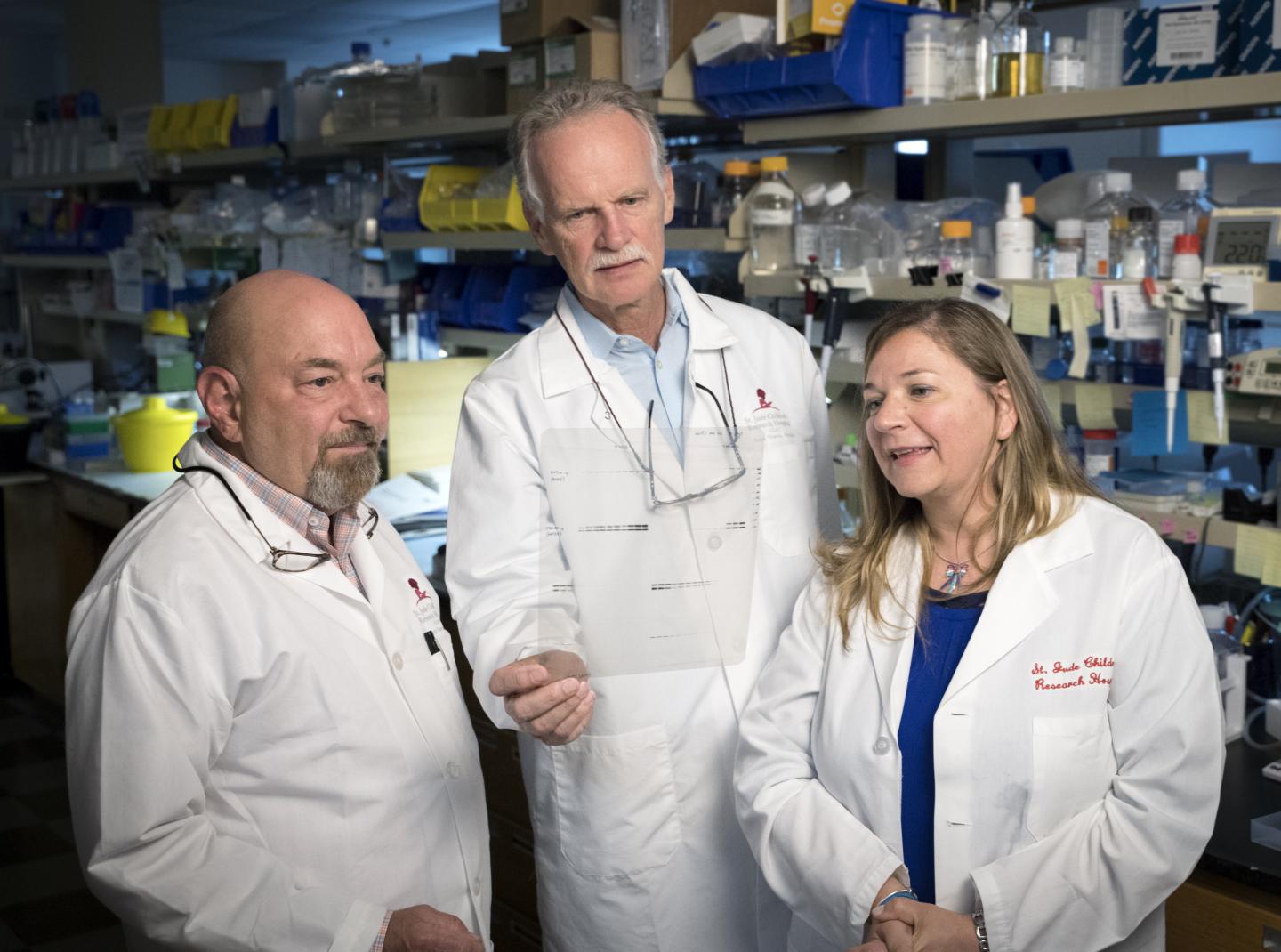
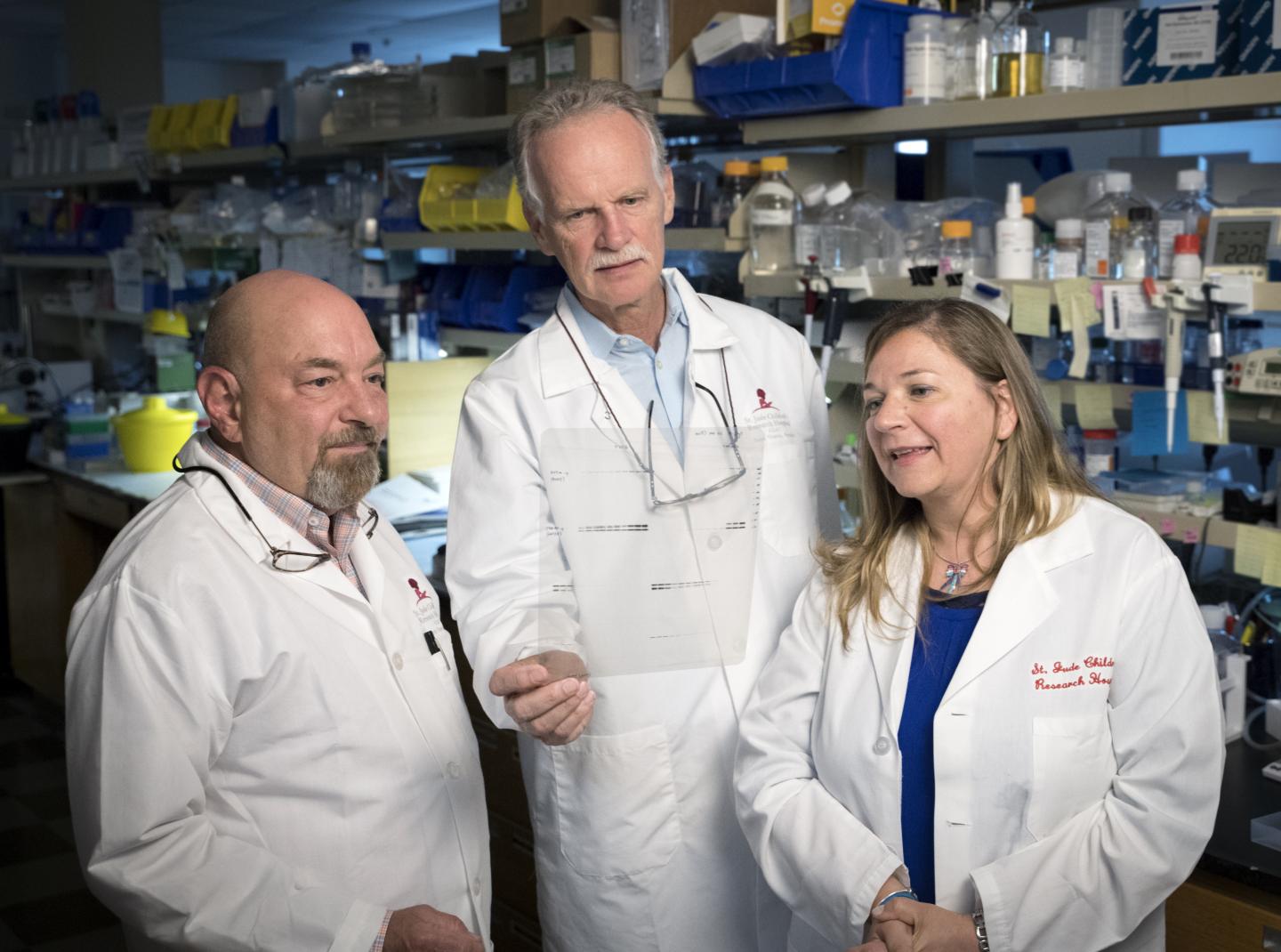
The researchers, led by Gerard Grosveld, Ph.D., member and chair of the Department of Genetics, published their findings as an advance online publication of the journal Science Advances.
The enzyme mTOR is a central regulator of cell growth and is often abnormally activated in many cancers to drive their proliferation. The drug rapamycin and its close relatives, called rapalogs, are known to plug into the mTOR molecule to block its action. However, the drugs have proven only marginally effective against cancers, because most are resistant to the drugs.
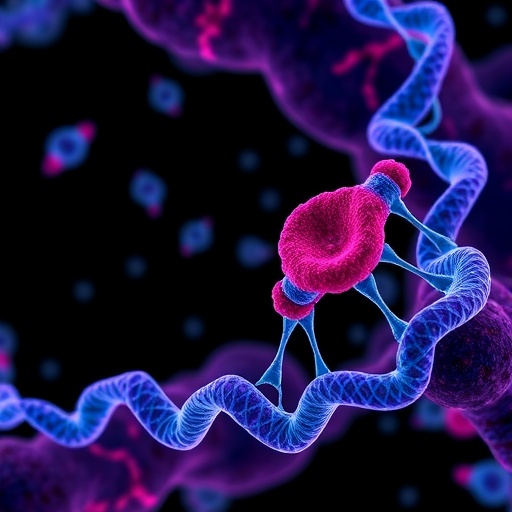
Researchers had known that the mTOR enzyme was controlled in its many functions by being embedded in two protein complexes, called mTORC1 and mTORC2. However, a chance experiment in the Grosveld laboratory hinted that a third mTOR complex might exist that was assembled by a protein called ETV7. The experiment associated ETV7 over-activation with over-activation of mTOR.
By exploring genomic data on cancers, the researchers found that ETV7 was abnormally activated in a large fraction of many cancers, including acute lymphoblastic leukemia, acute myeloid leukemia, pediatric solid tumors and the brain tumor medulloblastoma. In fact, one publication reported ETV7 to be among the top 10 percent of over-represented proteins in liver cancer.
The researchers' experiments with cell cultures revealed that ETV7 spurred cells to grow faster by hyper activating mTOR. But mysteriously, ETV7 was not part of mTORC1 or mTORC2.
Further experiments revealed that ETV7 directed assembly of a distinctly different complex, which they dubbed mTORC3. The researchers established that mTORC3 was distinct by showing that it lacked components specific to the other two complexes. Also, the investigators found the other complexes lacked ETV7. Importantly, researchers showed that mTORC3 showed complete rapamycin resistance.
Researchers showed that eliminating ETV7 in rapamycin resistant tumor cells rendered them sensitive to rapamycin. In studies with a mouse model developing muscle tumors, investigators found that the production of mTORC3 accelerated tumor formation and made the tumors more aggressive.
The researchers called the discovery of mTORC3 a "paradigm shift" in the study of mTOR that "identifies a novel target for anticancer drug development."
Said Grosveld, "This new complex has not been on anybody's radar screen, even though mTOR complexes have been studied for the last 25 years. We have developed solid data for the existence of mTORC3, and now, we are seeking to isolate and identify the components of the complex."
Future studies will also pursue drugs that specifically inhibit mTORC3 by interfering with ETV7. When combined with drugs to block mTORC1 and mTORC2, such therapies could make a wide range of cancers sensitive to rapalogs.
###
First author of the paper is Franklin Harwood, the other St. Jude authors were, Brendan O'Hara, Monica Cardone, Laura Janke, David Finkelstein, Igor Entin and Leena Paul, Ramon Klein Geltink, formerly of St. Jude and now at the Max Planck Institute of Immunobiology and Epigenetics; and Peter Houghton, of the University of Texas Health Science Center at San Antonio.
The research was supported by the Van Vleet Foundation of Memphis, the National Institutes of Health (R01CA-72999, RO1CA-77776, RO1CA-165995, CA021765) and ALSAC, the fundraising and awareness organization of St. Jude.
Media Contact
Michael Sheffield
[email protected]
901-595-0221
@StJudeResearch
http://www.stjude.org
Original Source
http://www.stjude.org/mTOR-discovery-drug-resistance http://dx.doi.org/10.1126/sciadv.aar3938