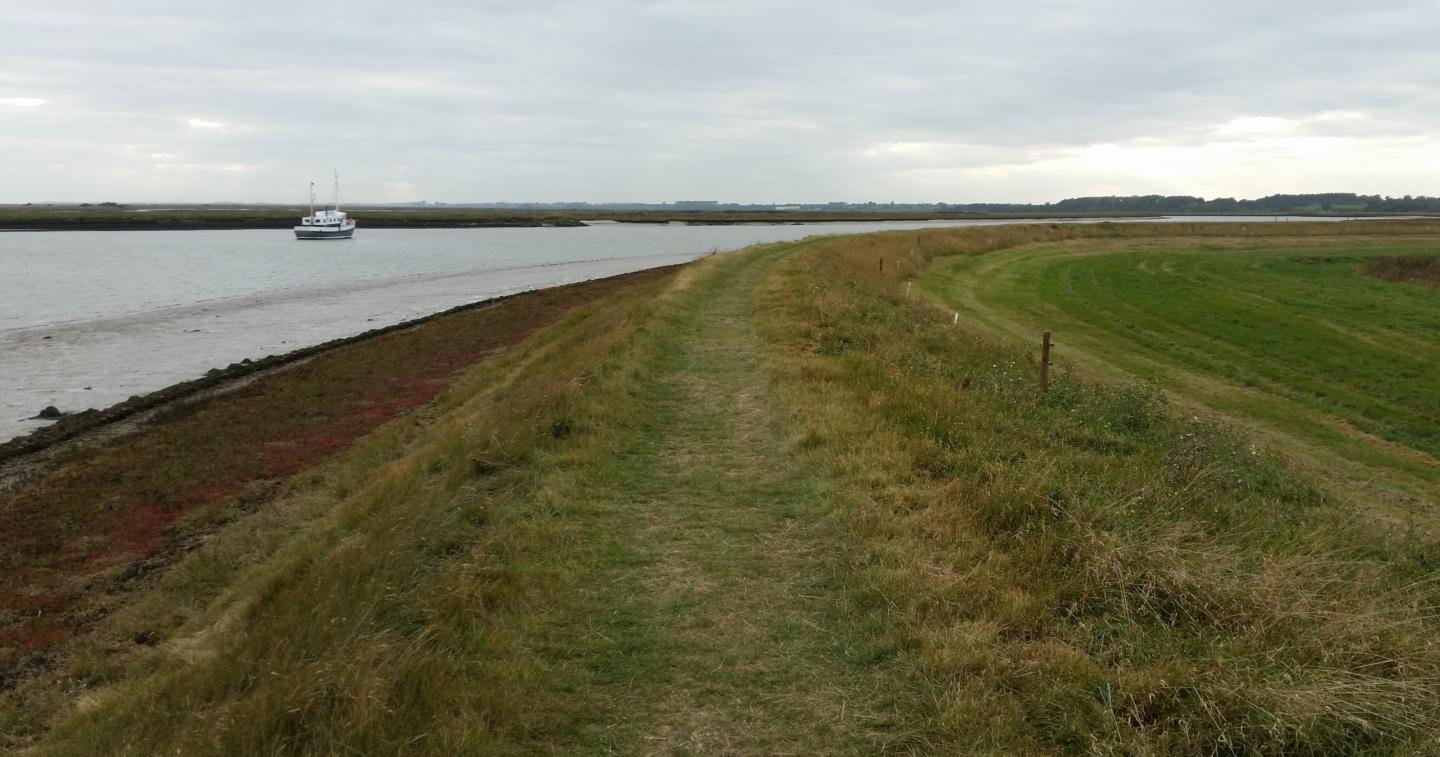
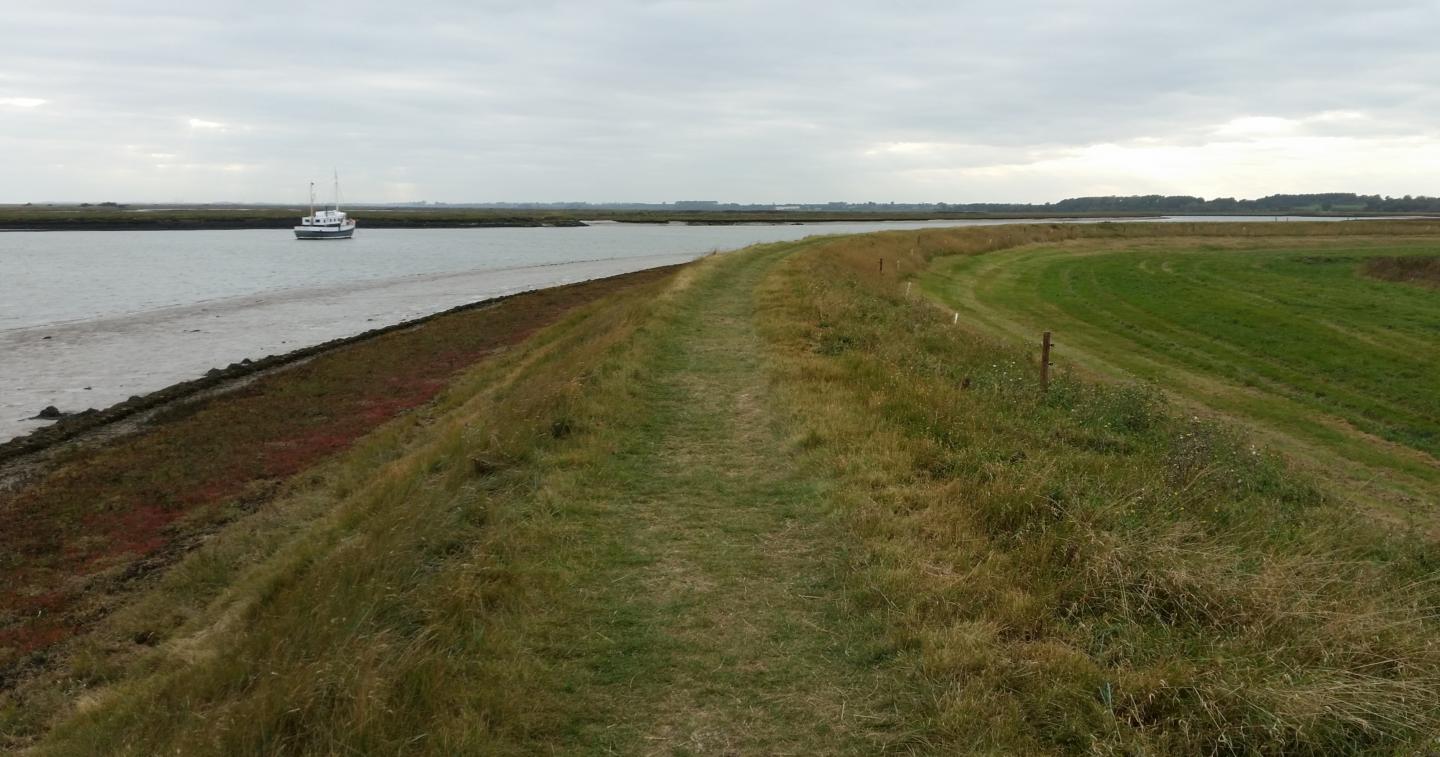
Credit: University of Lincoln
Up to 30 per cent of coastal wetlands could be lost globally by the year 2100 with a dramatic effect on global warming and coastal flooding, if action is not taken to protect them, new research warns.
The global study, led by researchers at the University of Lincoln, UK, suggests that the future of global coastal wetlands, including tidal marshes and mangroves, could be secured if they were able to migrate further inland.
Geographers examined localised data from around the globe on coastal elevation, tides, sediment availability, coastal population and estimates of sea level rise to assess whether coastal wetlands are likely to have enough sediment to increase their elevation at the rate sea levels will rise, or whether there is enough space to establish themselves further inland.
The results show there could be global coastal wetland gains of up to 60 per cent if more than a third of the areas had space to move inland. The use of more localised data provides more accurate global results than previous estimates which warned of catastrophic losses of up to 90 per cent – but scientists say action must be taken now to save coastal wetlands from ever increasing sea levels.
The findings of the study have important implications for the future development of public policies, with the authors calling for an upscale in current efforts for coastal wetland restoration.
Coastal wetlands have a direct impact on global warming levels by helping to remove carbon dioxide from the atmosphere. They are also an important form of coastal protection, reducing the energy of waves and the intensity of storm surges, thereby reducing coastal erosion and coastal flooding.
The research was led by Dr Mark Schuerch from the University of Lincoln's School of Geography in collaboration with the universities of Cambridge and Southampton in the UK; University of Antwerp in Belgium; Christian-Albrechts University of Kiel and Humboldt-University in Germany; Monash University in Australia; Virginia Institute of Marine Science in the USA; the UN Environment World Conservation Monitoring Centre; and the Global Climate Forum.
Dr Schuerch said: "Rather than being an inevitable consequence of global rising sea levels, our findings indicate that large-scale coastal wetland loss might be avoidable if sufficient additional space can be created by increasing the number of innovative 'nature-based adaptation' solutions to coastal management. These enable coastal wetlands to migrate inland through displacement of coastal flood defences and the designation of nature reserve buffers in upland areas surrounding coastal wetlands. If these are strategically scaled up they could help coastal wetlands adapt to rising sea levels and protect rapidly increasing global coastal populations."
Further research is now needed to improve understanding of the adaption mechanisms of coastal wetlands to see level rise, particularly their ability to migrate inland.
###
The full paper, Future responses of global coastal wetlands to sea level rise, has been published in the scientific journal Nature and is available to read online at https://www.nature.com/articles/s41586-018-0476-5.
Media Contact
Laura Jones
[email protected]
01-522-886-242
@unilincoln
http://www.lincoln.ac.uk/home/
Related Journal Article
http://dx.doi.org/10.1038/s41586-018-0476-5