Credit: © NUST MISIS
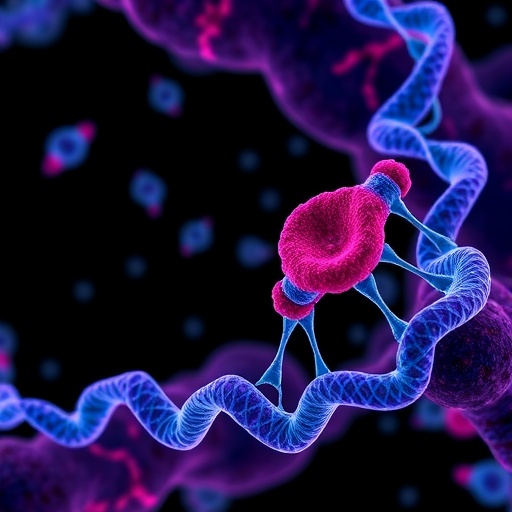
Scientists have learned how to observe the processes of oncolytic viruses in cancer cells in real time. For the first time ever, a group of scientists from NUST MISIS and the University of Calgary (Canada) has managed to apply the technique of intravital microscopy to study the interaction of oncolytic viruses with both tumor and healthy cells of the body. The researchers have presented a technological development that can visually observe how the virus behaves in the tissues of a living organism. The research results have been published in international scientific journal Molecular Therapy Oncolytics.
Today, doctors typically treat cancer surgically, through either radiation or chemotherapy. Therapy with an oncolytic virus – virotherapy or oncolytics – is a fairly new and promising method of cancer treatment based on the creation (including the methods to genetically engineer them) of special modified viruses that target and kill tumor cells. Oncolytic viruses also stimulate anticancer immunity, which leads the tumor to destroy itself.
The body`s immune system must destroy cancer cells immediately to prevent any damage, but cancer cells have special biochemical tricks that allow them to bypass the immune system. That is why cancer sometimes doesn't appear until it's at a critical stage.
On the other hand, antiviral protection doesn't work well in cancer cells (this is due to a defect in the interferon system). As a result, oncolytic viruses can contribute to the death of malignant cells, and «attract the attention» of the immune system so it finally detects the remaining cancer. The mechanism is the following: the cancer cell, affected by the virus, releases signals of danger to the immune system which signals it to recognize the tumor and to direct a special kind of immune cells – T-killers – to fight it.
Although this method is actively being studied in the U.S., Europe, and China, and is considered promising, it hasn't yet received mass application. This is largely due to a lack of understanding how these oncolytic viruses work.
«For the first time ever, an international team of scientists led by Victor Naumenko, a Candidate of Medical Sciences and a researcher at the NUST MISIS Biomedical Nanomaterials Laboratory, has applied the modern method of intravital microscopy to study the delivery of the virus to a tumor to monitor the dynamics of [the virus's] spread and to simulate the immune system», said Alevtina Chernikova, Rector of NUST MISIS.
«We have developed a technique that allows us to monitor the virus in a living organism. We have conducted our experiments on the vesicular stomatitis virus, which is completely safe for humans, [as well as being] easy to genetically modify and easy to produce in large quantities. At the same time, most tumor lines are sensitive to this virus. The vesicular stomatitis virus can be marked with dyes that preserve its biological activity and provide visualization in animal tissues through single- and twophoton microscopy», said Victor Naumenko.
Modern microscopic research is mostly about studies of dead tissues and cell samples. However, the intravital microscope allows researchers to observe the processes in living tissues and organs in real time, while the examined animal is under anesthesia, and the high resolution allows them to see individual cells and track their interactions.
Researchers have managed to visualize the dynamic interactions between the virus and the body's cells in the blood, tumors, and internal organs of living mice in an «online» mode.
«The method has a sufficient resolution to monitor the in vivo capture and transfer of viral particles by leukocytes, the spread of the infection site in tumors, and the activation of immune processes in the spleen and lymph nodes. We believe that this technology is a powerful new tool for studying and optimizating virotherapy», Naumenko declared.
###
Media Contact
Lyudmila Dozhdikova
[email protected]
7-495-647-2309
http://en.misis.ru/
Related Journal Article
http://dx.doi.org/10.1016/j.omto.2018.06.001