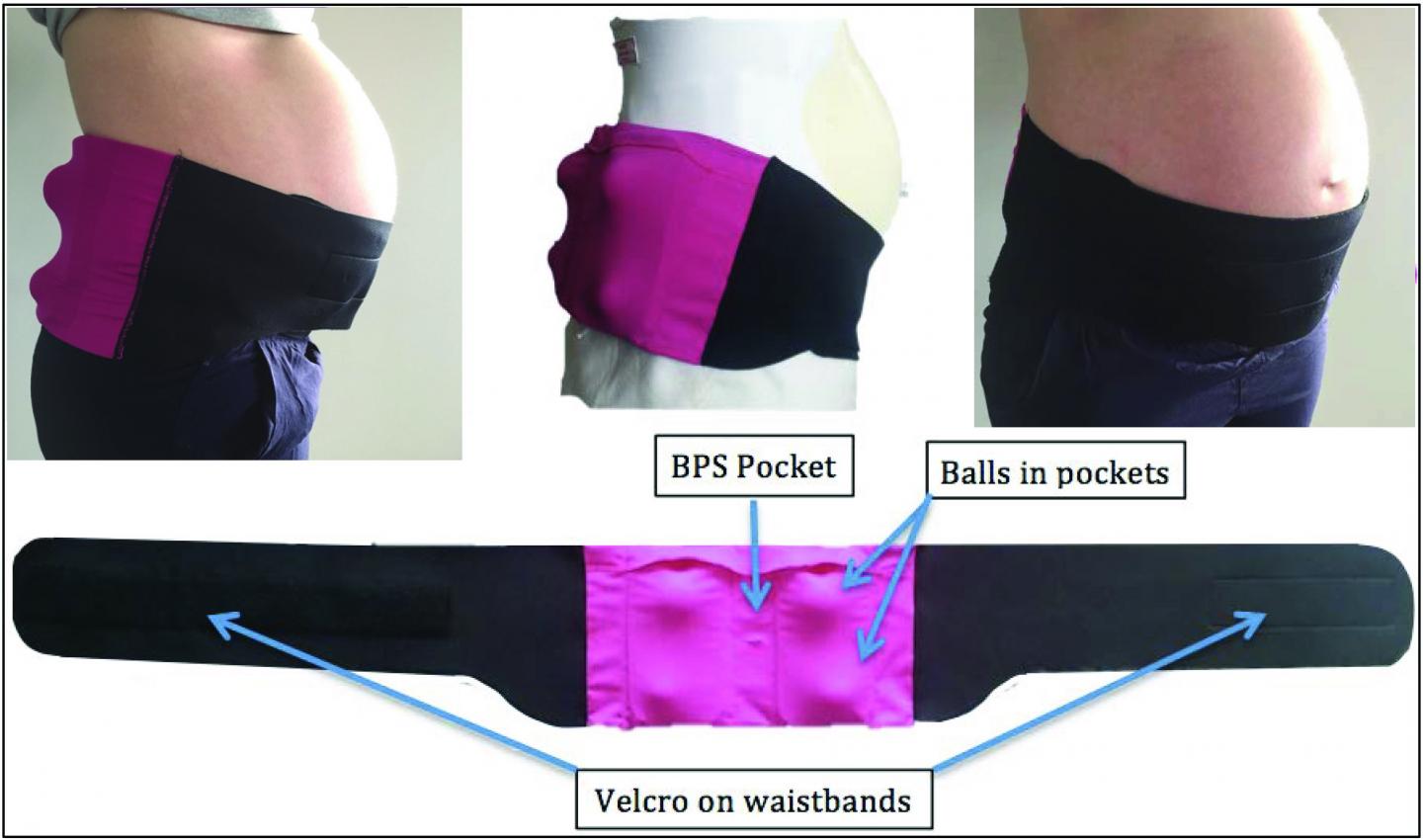
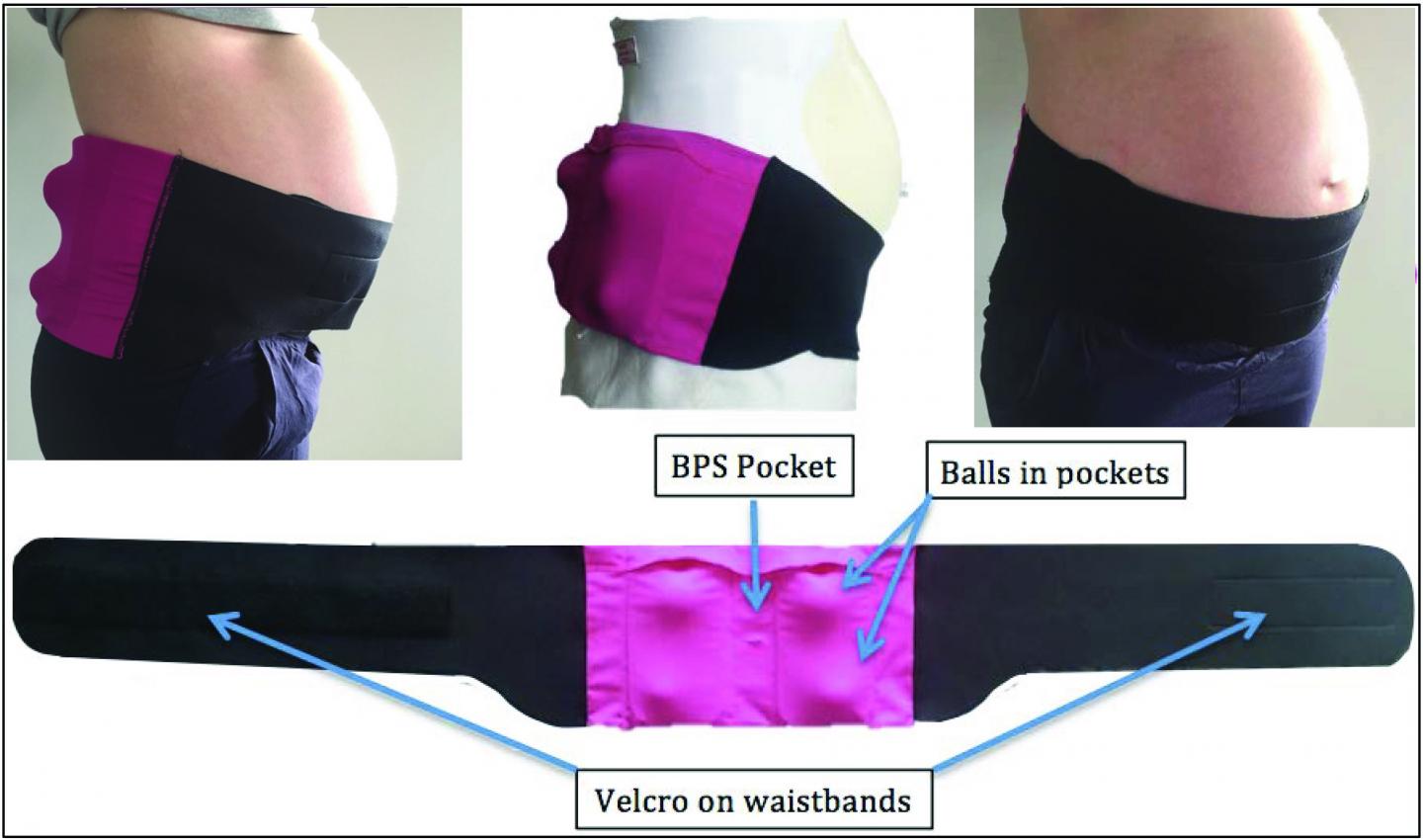
Credit: Global Innovations for Reproductive Health & Life, Cleveland, Ohio
DARIEN, IL – A new study suggests that an intervention to reduce supine sleep in late pregnancy may promote maternal and fetal health.
Results show that median time spent sleeping supine was reduced significantly from 48.3 minutes during the control night to 28.5 minutes during the intervention night. Improvement was observed in both maternal and fetal parameters during the intervention night, with an increase in median minimum maternal oxygen saturations, fewer maternal oxygen desaturations, and fewer fetal heart rate decelerations.
"Our findings suggest that women can comfortably sleep wearing a device around their waist that effectively stops them from sleeping on their back," said principal investigator Jane Warland, PhD, associate professor at the School of Nursing and Midwifery at the University of South Australia in Adelaide. "Using positional therapy to keep the pregnant mother off her back may reduce supine sleep in late pregnancy and may also provide both maternal and fetal health benefits, with minimal impact on maternal perception of sleep quality and sleep time."
The study results are published in the Aug. 15 issue of the Journal of Clinical Sleep Medicine.
According to the authors, most pregnant women spend about 25 percent of their sleep time in the supine position, which may be a risk factor for stillbirth and low birth weight. This relationship may be due in part to an exacerbation of sleep-disordered breathing and deprivation of oxygen to the fetus when sleeping on the back. While positional therapy is a well-accepted way to reduce supine sleep time and increase side-sleeping in adults with sleep-disordered breathing, no prior studies have examined its use in pregnant women.
"Wearing a device that minimizes back sleep, and which is comfortable and doesn't impact the mother's sleep length or quality, may be a simple way to reduce stillbirth incidence, especially if the mother is at increased risk due to other factors," Warland said.
The study involved 25 healthy women during late pregnancy (between 32 and 38 weeks gestation). For two consecutive nights they were evaluated while sleeping at home: one night with no intervention as a control, and one night while wearing the PrenaBelt, a positional therapy device designed specifically for use in pregnancy.
Maternal heart rate, blood oxygen saturation, and sleep and breathing parameters were assessed using a finger-based plethysmography device. Sleep position was recorded with a body position sensor that was inserted in the PrenaBelt. Fetal and maternal heart rate also were recorded using a device that monitors the electrical signals on the mother's abdomen.
The authors noted that additional research is needed to further explore the risks and benefits of positional therapy in late pregnancy.
###
The study was supported by a "Pathfinder" grant from the University of South Australia School of Nursing and Midwifery. Additional research support was provided by Australia's National Health and Medical Research Council and by the American Academy of Sleep Medicine Foundation. Two of the study co-authors are officers at Global Innovations for Reproductive Health & Life (GIRHL), which has a PrenaBelt patent application on which they are listed as inventors.
To request a copy of the study, "Modifying Maternal Sleep Position in Late Pregnancy Through Positional Therapy: A Feasibility Study," or to arrange an interview with the study author or an AASM spokesperson, please contact Communications Coordinator Corinne Lederhouse at 630-737-9700, ext. 9366, or [email protected].
The monthly, peer-reviewed Journal of Clinical Sleep Medicine is the official publication of the American Academy of Sleep Medicine, a professional membership society that improves sleep health and promotes high quality, patient-centered care through advocacy, education, strategic research, and practice standards (aasm.org). The AASM encourages patients to talk to their doctor about sleep problems and visit SleepEducation.org for more information about sleep, including a searchable directory of AASM-accredited sleep centers.
Media Contact
Corinne Lederhouse
[email protected]
630-737-9700
@AASMorg
Original Source
https://aasm.org/positional-sleep-therapy/ http://dx.doi.org/10.5664/jcsm.7280