• HOME
  • NEWS
  • EXPLORE
    • CAREER
      • Companies
      • Jobs
    • EVENTS
    • iGEM
      • News
      • Team
    • PHOTOS
    • VIDEO
    • WIKI
  • BLOG
  • COMMUNITY
    • FACEBOOK
    • INSTAGRAM
    • TWITTER
Friday, April 10, 2026
BIOENGINEER.ORG
No Result
View All Result
  • Login
  • HOME
  • NEWS
  • EXPLORE
    • CAREER
      • Companies
      • Jobs
        • Lecturer
        • PhD Studentship
        • Postdoc
        • Research Assistant
    • EVENTS
    • iGEM
      • News
      • Team
    • PHOTOS
    • VIDEO
    • WIKI
  • BLOG
  • COMMUNITY
    • FACEBOOK
    • INSTAGRAM
    • TWITTER
  • HOME
  • NEWS
  • EXPLORE
    • CAREER
      • Companies
      • Jobs
        • Lecturer
        • PhD Studentship
        • Postdoc
        • Research Assistant
    • EVENTS
    • iGEM
      • News
      • Team
    • PHOTOS
    • VIDEO
    • WIKI
  • BLOG
  • COMMUNITY
    • FACEBOOK
    • INSTAGRAM
    • TWITTER
No Result
View All Result
Bioengineer.org
No Result
View All Result
Home NEWS Science News Biology

Bioengineers unveil surprising sensory and self-healing abilities of seashore creatures

Bioengineer by Bioengineer
August 29, 2018
in Biology
Reading Time: 2 mins read
0
Share on FacebookShare on TwitterShare on LinkedinShare on RedditShare on Telegram
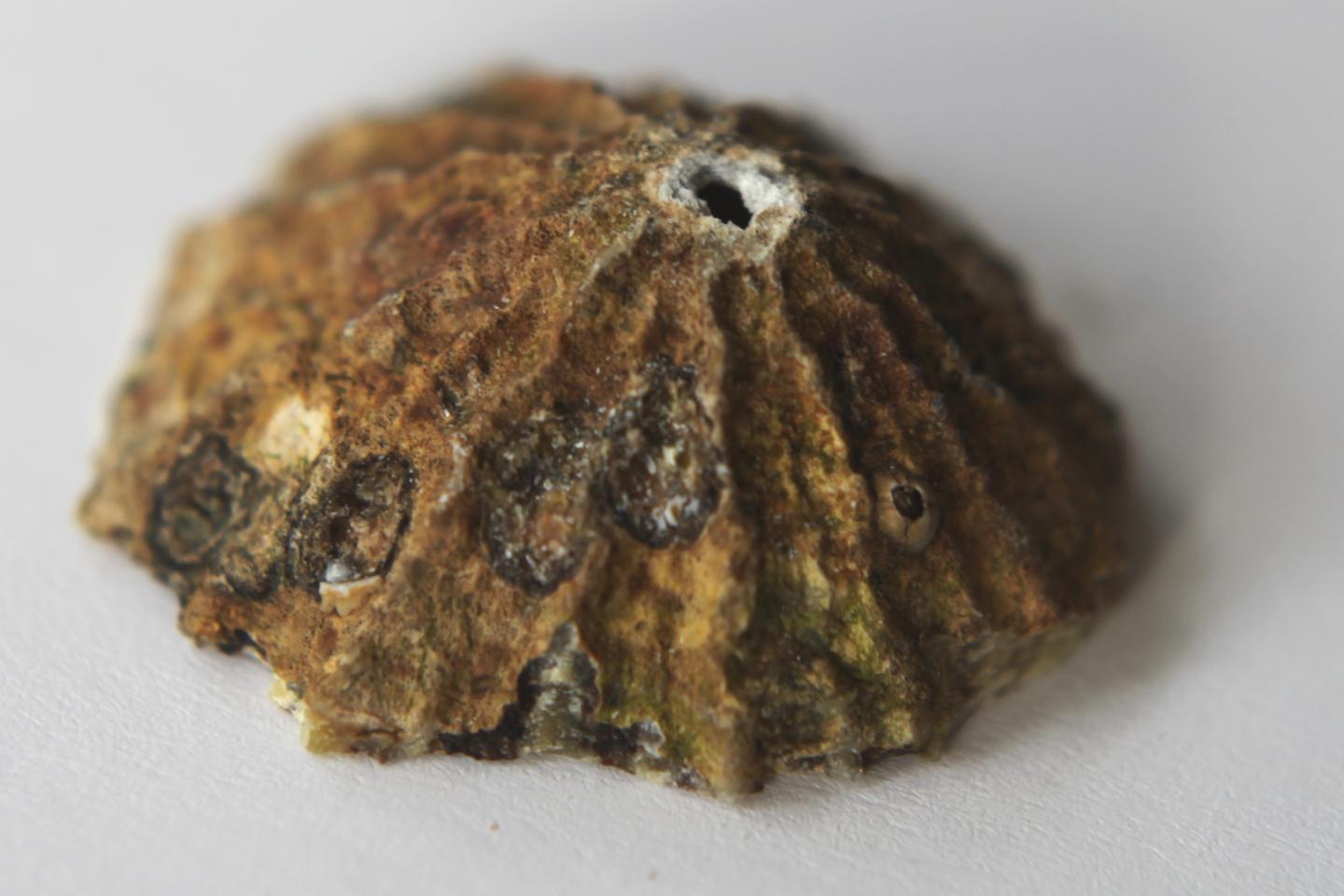
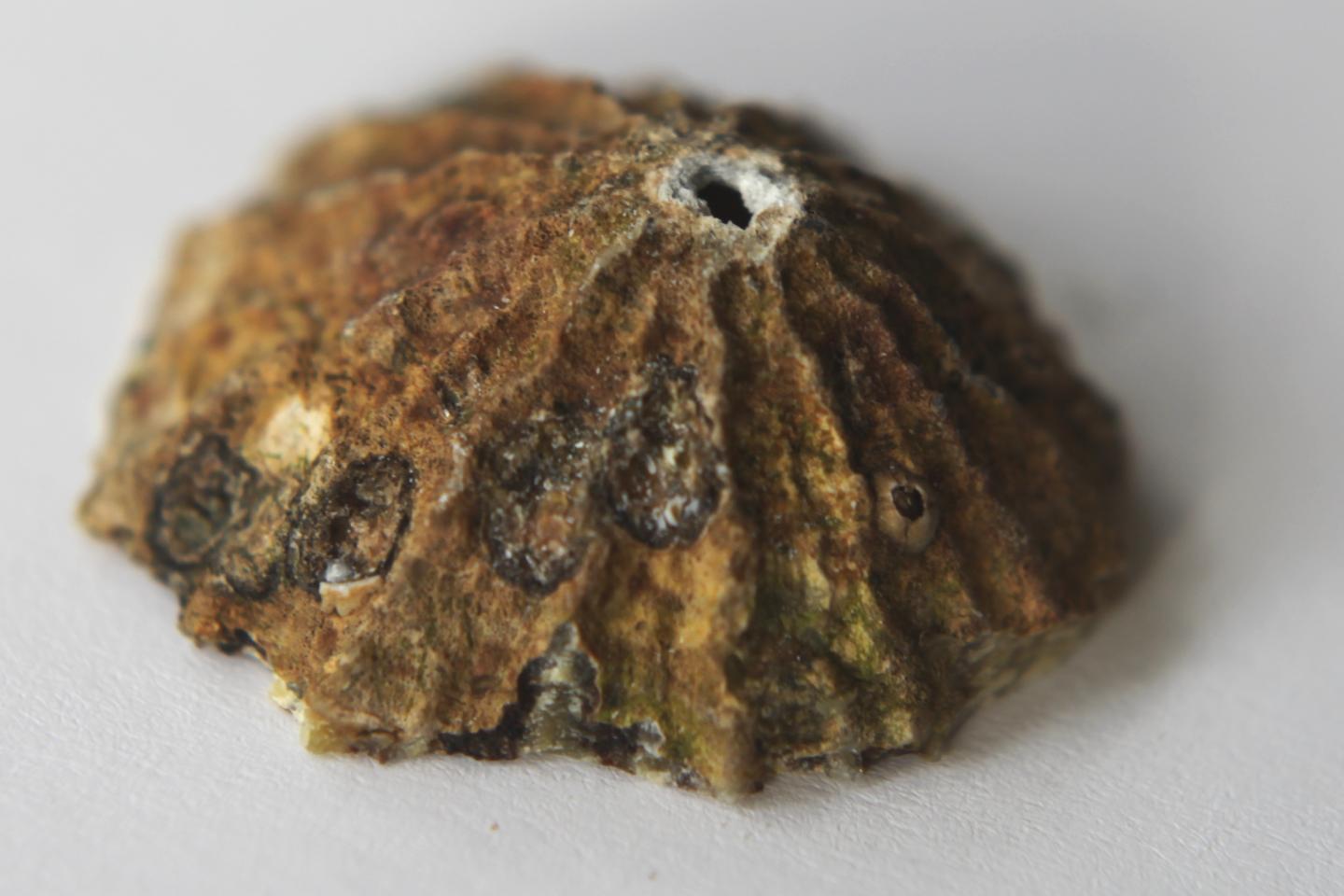
IMAGE

Credit: Professor David Taylor and Maeve O'Neill, Trinity College Dublin

New research from bioengineers paints a surprisingly complex picture of limpets – the little seashore creatures that are ubiquitous on rocky patches of beaches in many parts of the world. The bioengineers have discovered that limpets are able to detect minor damage to their shells with surprising accuracy before remodelling them to make them stronger. In many ways, the way they heal is similar to the way broken bones mend in mammals.

The bioengineers discovered that the apex of a limpet's shell acts like the "crumple zone" of a car, by taking the brunt of any major damage to protect what's inside. What most surprised them, however, was that limpets that experience shell damage seem to know or sense this – and, unlike typical car owners – actively carry out repairs themselves, by depositing new biological material to repair structural weaknesses and restore former mechanical strength.

The research, led by a team from Trinity College Dublin, has just been published by the Journal of the Royal Society Interface.

To assess how limpets reacted to damage, the researchers simulated some of the stresses they experience in the wild from rough seas and moving rocks/debris (by dropping weights); general abrasion and shell weathering (by using a metal file); and from attacks from predators (by using a nail to create a small hole in the apex). The limpets reacted to these stresses by repairing their shells from within, and while after 60 days the shells were never as thick as before, they had regained their former protective strength.

Co-first author, Maeve O'Neill is a PhD Candidate in Trinity's School of Engineering. She said: "Our study shows that limpets are able to repair damage to their shell, both visually and functionally, and that they are also able to restore mechanical strength in as little as a month. The way they do this is essentially similar to how bones heal in mammals, as the process is at least partially carried out by the deposition of new material."

Professor of Materials Engineering at Trinity, David Taylor, added: "We've studied healing before, in human bones and also in the exoskeletons of insects, but we were amazed to discover that these simple marine organisms are capable of reacting in a very subtle and clever way."

###

Media Contact

Thomas Deane
[email protected]
353-189-64685
@tcddublin

http://www.tcd.ie/

Related Journal Article

http://dx.doi.org/10.1098/rsif.2018.0299
Share12Tweet8Share2ShareShareShare2

Related Posts

Stem Cell Reports Names Hongmei Wang as New Associate Editor

Stem Cell Reports Names Hongmei Wang as New Associate Editor

April 10, 2026
Research Reveals Wildlife Trade Increases Risk of Disease Transmission to Humans

Research Reveals Wildlife Trade Increases Risk of Disease Transmission to Humans

April 9, 2026

Oxygen’s Role Uncovered: Key Factor in Limb Regeneration Revealed

April 9, 2026

Ancient Mammal Ancestor’s Secret Unveiled: First-Ever Egg Discovered

April 9, 2026
Please login to join discussion

POPULAR NEWS

  • Boosting Breast Cancer Risk Prediction with Genetics

    45 shares
    Share 18 Tweet 11
  • Popular Anti-Aging Compound Linked to Damage in Corpus Callosum, Study Finds

    44 shares
    Share 18 Tweet 11
  • Imagine a Social Media Feed That Challenges Your Views Instead of Reinforcing Them

    1012 shares
    Share 400 Tweet 250
  • Revolutionary Theory Transforms Quantum Perspective on the Big Bang

    40 shares
    Share 16 Tweet 10

About

BIOENGINEER.ORG

We bring you the latest biotechnology news from best research centers and universities around the world. Check our website.

Follow us

Recent News

Short Survey Enables Tracking of Health Literacy Variations Among Finnish Adults

Plant-Based Diet Linked to Increased Mycotoxin Exposure?

Boosted WNT10B/FOXO6 Drives Kidney Inflammation, Fibrosis

Subscribe to Blog via Email

Enter your email address to subscribe to this blog and receive notifications of new posts by email.

Join 78 other subscribers
  • Contact Us

Bioengineer.org © Copyright 2023 All Rights Reserved.

Welcome Back!

Login to your account below

Forgotten Password?

Retrieve your password

Please enter your username or email address to reset your password.

Log In
No Result
View All Result
  • Homepages
    • Home Page 1
    • Home Page 2
  • News
  • National
  • Business
  • Health
  • Lifestyle
  • Science

Bioengineer.org © Copyright 2023 All Rights Reserved.