The National Ecological Observatory Network (NEON) has named Arizona State University as its primary location to house a national biorepository for the next 30 years. Hundreds of thousands of biological… view more
Credit: Samantha Lloyd/ASU VisLab
Ecosystems and natural resources are rapidly changing across our nation and around the world. Now, more than ever before, measuring the causes and effects of environmental change is taking on greater importance.
The National Ecological Observatory Network (NEON) has named Arizona State University as its primary location to house a national biorepository for the next 30 years. Hundreds of thousands of biological samples collected over the next three decades from 81 field sites across the U.S., including Alaska, Hawaii and Puerto Rico, will be curated by ASU's Biodiversity Knowledge Integration Center (BioKIC) and Natural History Collections, and be made available to the greater scientific community.
NEON is the first-ever, continental-scale ecological observation facility sponsored by the National Science Foundation and managed by Battelle Memorial Institute.
Nico Franz, professor at ASU's School of Life Sciences and founding director of ASU's BioKIC, will serve as primary investigator for the $4.1 million National Science Foundation grant, which is projected to increase to $35 million over the full funding period.
"NEON is a project of immense scope for biology in general and for ecological forecasting in particular," said Franz. "I believe that NEON and ASU are an excellent fit. The biorepository has a clear purpose and relevance to society. We will play a key role in documenting shifts in invasive species, disease vectors — such as mosquitoes — and changes in ecological communities and functions.
"Moreover, two of NEON's sites are located in Arizona, so we are also adding sample diversity from local sites. We are combining our history as a collections unit with a new identity in order to advance ecological monitoring and forecasting nationwide," Franz said.
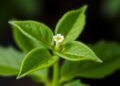
For the next 30 years, ASU will receive as many as 100,000 biological samples each year. These diverse bio-samples will include DNA extractions, frozen soil samples, bulk and pinned insect collections, herbarium vouchers, and partial or entire vertebrate specimens, among others. Dozens of expert field biologists will gather the samples and associated data and send them to ASU.
Once they arrive at the university, the samples will be processed, stored and made available to the public and to use for scientific research. Detailed information about each specimen will be available online through the NEON Data Portal and a new NEON Biorepository Data Portal, based on the "Symbiota" software platform developed by ASU.
More valuable research over the long term
Given the current and potential future effects of environmental change, the NEON project is of critical importance. Because the project will span three decades, scientists will be able to gather long-term ecological data that they could not with shorter studies.
"NEON is designed to test the degree to which Earth's ecosystems influence each other across very large scales of space and time," said James P. Collins, Virginia M. Ullman Professor of Natural History and the Environment at ASU. "The NEON observatory is being commissioned at a time when Earth's ecosystems are changing at an increasing rate and over ever greater spatial scales. This makes NEON exactly the right research infrastructure to have in place to help us understand environmental change and other large-scale forces influencing Earth's ecosystems. The biorepository will help to place ASU at the leading edge of macrosystems-level research."
As head of the Biological Sciences Directorate at NSF from 2005 to 2009, Collins played a lead role in securing funding for building NEON by working with the research community, NSF's leadership, the National Science Board, the White House's Office of Management and Budget, and Congress.
Opportunity for student learning
The NEON Biorepository will be housed at the existing ASU Natural History Collections facility. Eventually, the biorepository will need additional space and will include specially designed freezer storage. Large portions of samples are intended for cryo-storage — a combination of ultralow and liquid nitrogen freezers that will ensure long-term preservation for genomic research.
Hundreds of biodiversity sample shipments will arrive each year that will need to be processed. And a high rate of sample use for NEON-related research projects is expected. To meet the work demands, Franz and his team will hire at least six collection specialists and up to 10 undergraduate student workers who will be closely involved in the project.
"ASU students will receive state-of-the-art skills in bio-collections curation and biodiversity data science," said Franz. "The latter theme will be connected to efforts within and beyond our school to boost undergraduate as well as graduate training in data science that is related specifically to the complex fields of evolutionary biology and ecological data."
Professor Kathleen Pigg, a paleobotanist with the ASU Natural History Collections, said this is an exciting time for ASU students, as they will be provided unique research experiences.
"The presence of the NEON biorepository at the Natural History Collections will provide tremendous opportunities for students to participate in data collection and curation vital to addressing environmental issues," said Pigg.
###
The ASU team will begin accepting biological samples this fall.
Media Contact
Sandra Leander
[email protected]
480-965-9865
@ASU
http://asunews.asu.edu/
Original Source
https://asunow.asu.edu/20180821-asu-receives-multimillion-grant-nsf-create-national-biorepository