

• HOME
  • NEWS
  • EXPLORE
    • CAREER
      • Companies
      • Jobs
    • EVENTS
    • iGEM
      • News
      • Team
    • PHOTOS
    • VIDEO
    • WIKI
  • BLOG
  • COMMUNITY
    • FACEBOOK
    • INSTAGRAM
    • TWITTER
Friday, April 10, 2026
BIOENGINEER.ORG
No Result
View All Result
  • Login
  • HOME
  • NEWS
  • EXPLORE
    • CAREER
      • Companies
      • Jobs
        • Lecturer
        • PhD Studentship
        • Postdoc
        • Research Assistant
    • EVENTS
    • iGEM
      • News
      • Team
    • PHOTOS
    • VIDEO
    • WIKI
  • BLOG
  • COMMUNITY
    • FACEBOOK
    • INSTAGRAM
    • TWITTER
  • HOME
  • NEWS
  • EXPLORE
    • CAREER
      • Companies
      • Jobs
        • Lecturer
        • PhD Studentship
        • Postdoc
        • Research Assistant
    • EVENTS
    • iGEM
      • News
      • Team
    • PHOTOS
    • VIDEO
    • WIKI
  • BLOG
  • COMMUNITY
    • FACEBOOK
    • INSTAGRAM
    • TWITTER
No Result
View All Result
Bioengineer.org
No Result
View All Result
Home NEWS Science News Biology

Mechanisms of hair follicle-specific fibroblast formation unraveled

Bioengineer by Bioengineer
August 22, 2018
in Biology
Reading Time: 2 mins read
0
Share on FacebookShare on TwitterShare on LinkedinShare on RedditShare on Telegram
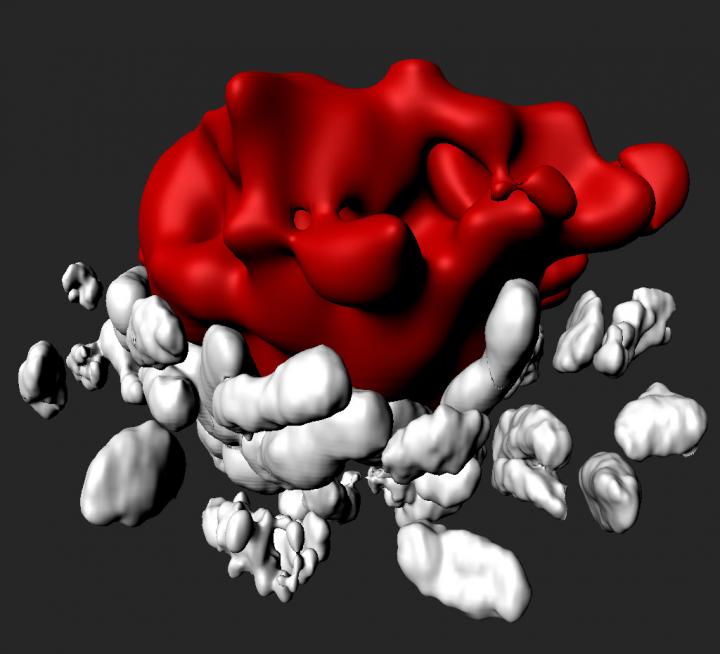
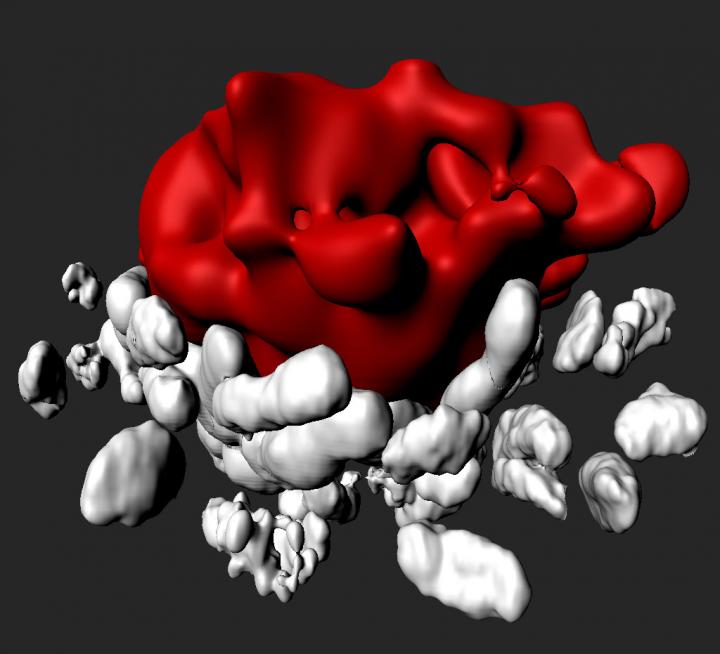
IMAGE

Credit: Otto Mäkinen

Hair growth is regulated by a small cluster of hair-specific fibroblasts, the dermal papilla. But exactly how dermal papilla forms has remained elusive until now. In a recent study professor Marja Mikkola's research group at the University of Helsinki used confocal microscopy of live skin to show that the dermal condensate forms via cell migration.

In a study recently published in eLife, Leah Biggs and Otto Mäkelä and their co-workers from the Institute of Biotechnology, University of Helsinki investigated the cellular and molecular mechanisms driving dermal condensate formation. The research group of Marja Mikkola used confocal microscopy of live skin to show that the dermal condensate forms via cell migration.

Further, they discovered that dermal condensate cells cease proliferation soon after commitment.

"This might explain why it has been so difficult to expand dermal papilla cells in vitro," says graduate student Otto Mäkelä.

Hair growth is regulated by a small cluster of cells known as the dermal papilla. This dermal papilla only arises once during the lifetime of an organism and is lost upon skin injury. Further, upon transplantation, the dermal papilla, or its precursor the dermal condensate, can produce a new hair follicle. Unfortunately, this cell identity cannot be maintained in culture conditions, thus limiting potential therapies to existing dermal papilla cells. The mechanisms and molecular cues of dermal condensate formation have remained elusive so far. Given that in vitro expansion of dermal condensate cells is not feasible, determination of the in vivo events governing dermal condensate formation will be beneficial for future therapy.

The researchers also followed up on the Mikkola group's previous discovery of Fgf20, the only growth factor thus far identified to be necessary for dermal condensate formation in vivo. Using RNA sequencing and cell culture, the team uncovered the early transcriptional targets of Fgf20 signaling and found that Fgf20 promotes several cellular behaviors characteristic of dermal condensate formation.

"However, further studies are required to assess whether Fgf20 could be utilized in future hair restoration therapies," concludes post-doctoral researcher Leah Biggs.

###

Media Contact

Marja Mikkola
[email protected]
358-504-484-550
@helsinkiuni

http://www.helsinki.fi/university/

Original Source

https://www.helsinki.fi/en/news/life-science/mechanisms-of-hair-follicle-specific-fibroblast-formation-unraveled http://dx.doi.org/10.7554/eLife.36468


Share12Tweet8Share2ShareShareShare2

Related Posts

Stem Cell Reports Names Hongmei Wang as New Associate Editor

Stem Cell Reports Names Hongmei Wang as New Associate Editor

April 10, 2026
Research Reveals Wildlife Trade Increases Risk of Disease Transmission to Humans

Research Reveals Wildlife Trade Increases Risk of Disease Transmission to Humans

April 9, 2026

Oxygen’s Role Uncovered: Key Factor in Limb Regeneration Revealed

April 9, 2026

Ancient Mammal Ancestor’s Secret Unveiled: First-Ever Egg Discovered

April 9, 2026
Please login to join discussion

POPULAR NEWS

  • Boosting Breast Cancer Risk Prediction with Genetics

    45 shares
    Share 18 Tweet 11
  • Popular Anti-Aging Compound Linked to Damage in Corpus Callosum, Study Finds

    44 shares
    Share 18 Tweet 11
  • Imagine a Social Media Feed That Challenges Your Views Instead of Reinforcing Them

    1012 shares
    Share 400 Tweet 250
  • Revolutionary Theory Transforms Quantum Perspective on the Big Bang

    40 shares
    Share 16 Tweet 10

About

We bring you the latest biotechnology news from best research centers and universities around the world. Check our website.

Follow us

Recent News

NAT10 Drives Cisplatin Resistance, Immune Escape in Gastric Cancer

Short Survey Enables Tracking of Health Literacy Variations Among Finnish Adults

Plant-Based Diet Linked to Increased Mycotoxin Exposure?

Subscribe to Blog via Email

Enter your email address to subscribe to this blog and receive notifications of new posts by email.

Join 78 other subscribers
  • Contact Us

Bioengineer.org © Copyright 2023 All Rights Reserved.

Welcome Back!

Login to your account below

Forgotten Password?

Retrieve your password

Please enter your username or email address to reset your password.

Log In
No Result
View All Result
  • Homepages
    • Home Page 1
    • Home Page 2
  • News
  • National
  • Business
  • Health
  • Lifestyle
  • Science

Bioengineer.org © Copyright 2023 All Rights Reserved.