• HOME
  • NEWS
  • EXPLORE
    • CAREER
      • Companies
      • Jobs
    • EVENTS
    • iGEM
      • News
      • Team
    • PHOTOS
    • VIDEO
    • WIKI
  • BLOG
  • COMMUNITY
    • FACEBOOK
    • INSTAGRAM
    • TWITTER
Saturday, February 7, 2026
BIOENGINEER.ORG
No Result
View All Result
  • Login
  • HOME
  • NEWS
  • EXPLORE
    • CAREER
      • Companies
      • Jobs
        • Lecturer
        • PhD Studentship
        • Postdoc
        • Research Assistant
    • EVENTS
    • iGEM
      • News
      • Team
    • PHOTOS
    • VIDEO
    • WIKI
  • BLOG
  • COMMUNITY
    • FACEBOOK
    • INSTAGRAM
    • TWITTER
  • HOME
  • NEWS
  • EXPLORE
    • CAREER
      • Companies
      • Jobs
        • Lecturer
        • PhD Studentship
        • Postdoc
        • Research Assistant
    • EVENTS
    • iGEM
      • News
      • Team
    • PHOTOS
    • VIDEO
    • WIKI
  • BLOG
  • COMMUNITY
    • FACEBOOK
    • INSTAGRAM
    • TWITTER
No Result
View All Result
Bioengineer.org
No Result
View All Result
Home NEWS Science News Biology

Study of bird migration tricky due to hybridization

Bioengineer by Bioengineer
August 22, 2018
in Biology
Reading Time: 2 mins read
0
Share on FacebookShare on TwitterShare on LinkedinShare on RedditShare on Telegram
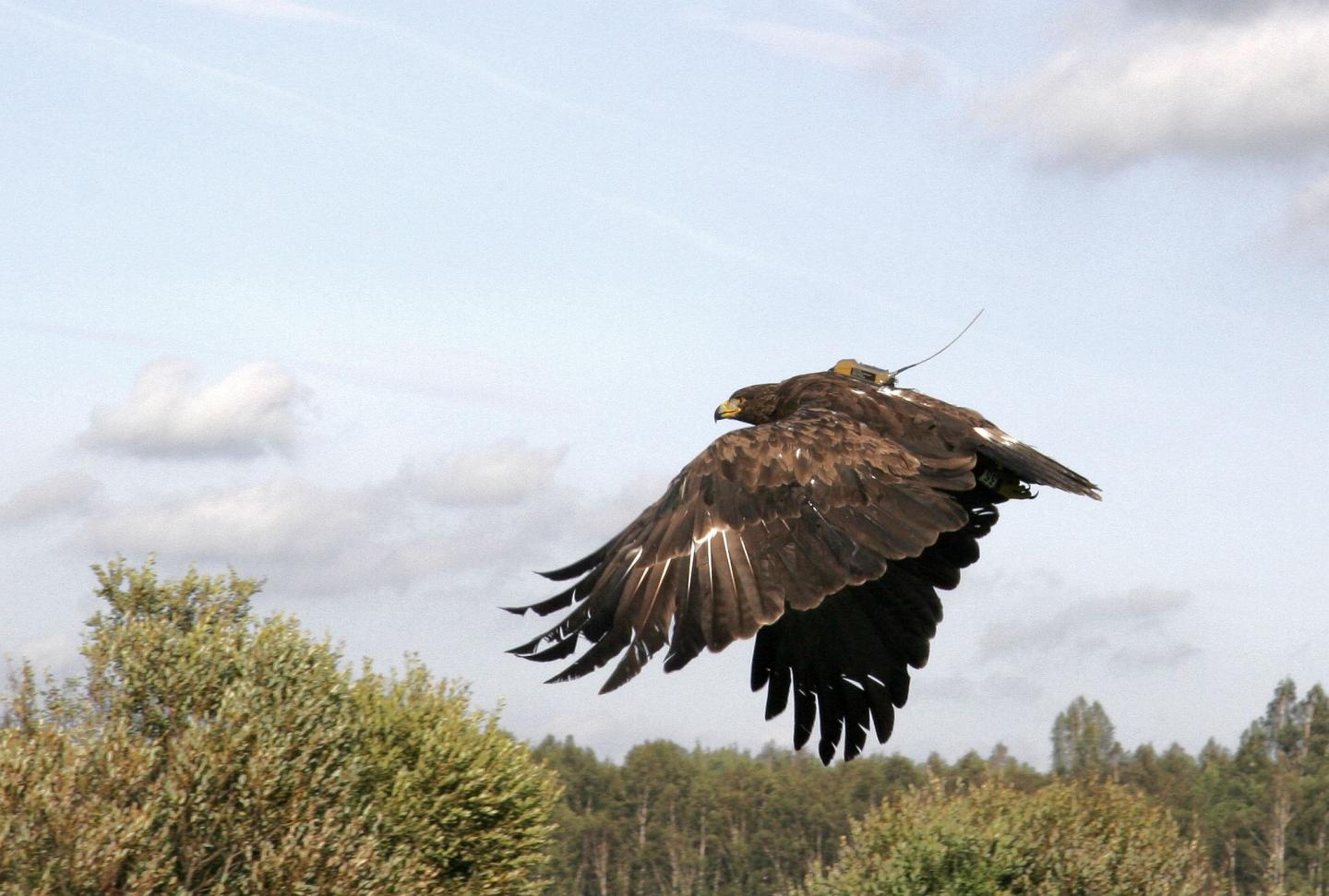
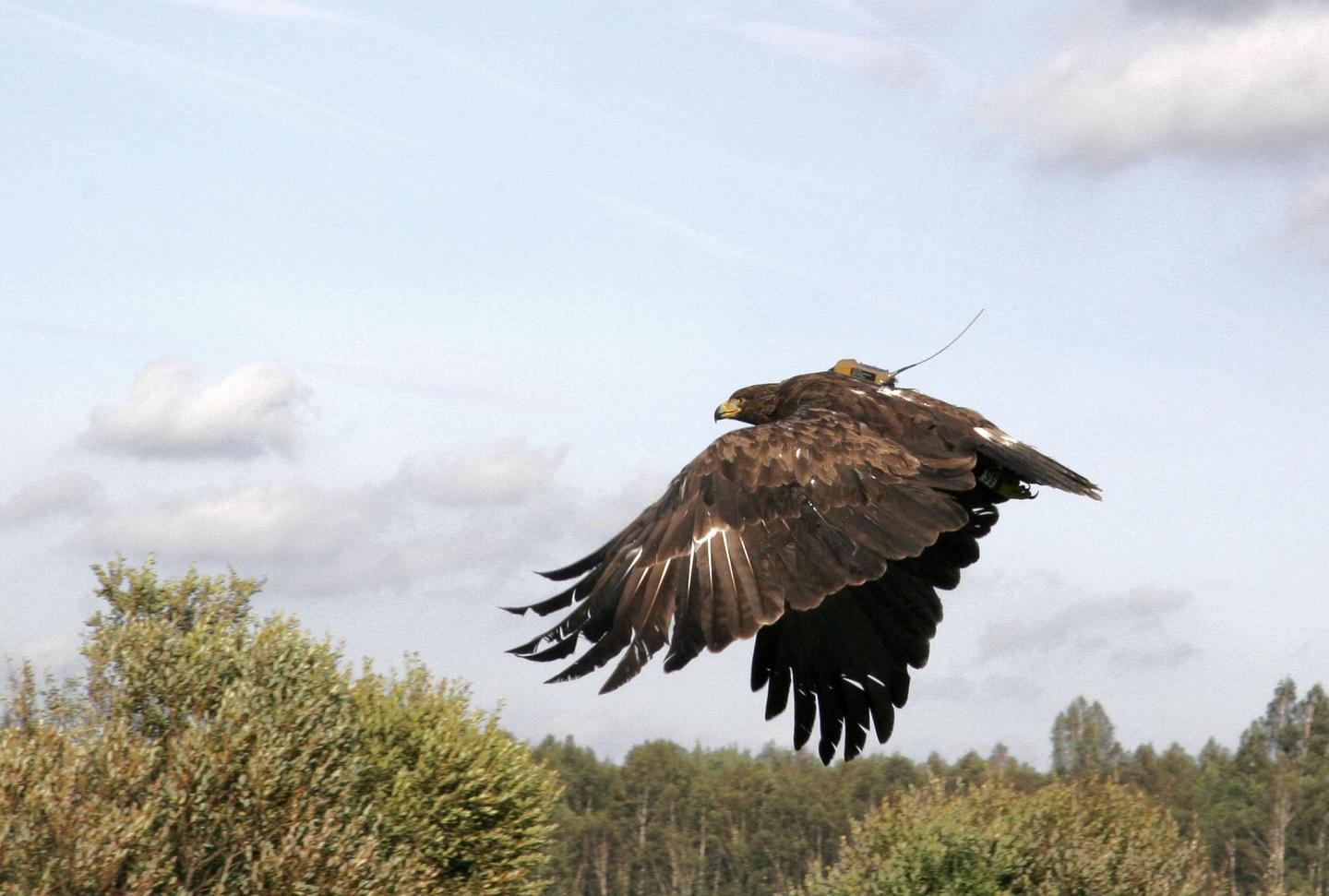
IMAGE

Credit: Urmas Sellis

Hybridization, the inter-breeding of bird species, is a widespread phenomenon, which is best illustrated in Estonia by the lesser spotted eagle and the greater spotted eagle. However, due to the fact that the migration strategies of both bird species are completely different, studying their offspring, or hybrids, helps ornithologists discover a lot about their migration secrets.

The lesser spotted eagle is an early leaving far-traveller, the greater spotted eagle is a late leaving short- and middle-distance traveller, explained Ülo Väli, senior researcher at the chair of biological diversity and nature tourism of Estonian University of Life Sciences. According to Väli, on the one hand, hybridization causes confusion among ornithologists, but on the other hand it is worrying, because the existence of the rare species, the greater spotted eagle, may be in danger. At the same time, studying of hybrids helps find answers to different ecological questions. "With their hybridization, birds offer scientists an excellent inter-breeding experiment from nature, which helps explain factors affecting the migration of birds."

Thus, for instance, it has been believed for a long time that the timing, direction and length of migration of passerines with a shorter life-span is mostly determined by genetic factors and for bigger birds with a longer life-span, it is more important to learn from their parents and others of the same species. It has only been possible so far to conduct experiments mainly with small passerines in order to check these assumptions. The research of migration of big birds with a longer life-span has been hampered by the inadequate technical capacities. In an international study managed by Ülo Väli, senior researcher at Estonian University of Life Sciences, the results of which were recently published in an article in the journal Proceedings of the Royal Society B, the migration pattern of spotted eagle hybrids or bigger birds with a longer life-span was discussed. For following the migration, GPS transmitters tracking the exact location of hybrid specimens were fitted with them in Estonia, Lithuania and Poland. The data has been gathered for more than a decade and to obtain a better overview, researchers compiled a thorough migration database.

It was found out that hybrids most frequently depart as early as lesser spotted eagles; however, they don't fly as far as them, which could have been predicted based on the important role of social factors. Instead, the hybrids rather chose to overwinter at the latitudes more typical of greater spotted eagles.

In addition, the variety of their migration routes and size of winter territories was more characteristic of the greater spotted eagle. These results show that although social and territorial factors can impact the migration strategies of birds with a longer life-span, the role of genetic factors in these species is bigger than presumed.

###

Media Contact

Risto Mets
[email protected]
372-731-3044

Avaleht

Related Journal Article

http://dx.doi.org/10.1098/rspb.2018.0855

Share12Tweet7Share2ShareShareShare1

Related Posts

Florida Cane Toad: Complex Spread and Selective Evolution

Florida Cane Toad: Complex Spread and Selective Evolution

February 7, 2026
New Study Uncovers Mechanism Behind Burn Pit Particulate Matter–Induced Lung Inflammation

New Study Uncovers Mechanism Behind Burn Pit Particulate Matter–Induced Lung Inflammation

February 6, 2026

DeepBlastoid: Advancing Automated and Efficient Evaluation of Human Blastoids with Deep Learning

February 6, 2026

Navigating the Gut: The Role of Formic Acid in the Microbiome

February 6, 2026
Please login to join discussion

POPULAR NEWS

  • Robotic Ureteral Reconstruction: A Novel Approach

    Robotic Ureteral Reconstruction: A Novel Approach

    82 shares
    Share 33 Tweet 21
  • Digital Privacy: Health Data Control in Incarceration

    63 shares
    Share 25 Tweet 16
  • Study Reveals Lipid Accumulation in ME/CFS Cells

    57 shares
    Share 23 Tweet 14
  • Breakthrough in RNA Research Accelerates Medical Innovations Timeline

    53 shares
    Share 21 Tweet 13

About

We bring you the latest biotechnology news from best research centers and universities around the world. Check our website.

Follow us

Recent News

Personalized Guide to Understanding and Reducing Chemicals

Inflammasome Protein ASC Drives Pancreatic Cancer Metabolism

Phage-Antibiotic Combo Beats Resistant Peritoneal Infection

Subscribe to Blog via Email

Enter your email address to subscribe to this blog and receive notifications of new posts by email.

Join 73 other subscribers
  • Contact Us

Bioengineer.org © Copyright 2023 All Rights Reserved.

Welcome Back!

Login to your account below

Forgotten Password?

Retrieve your password

Please enter your username or email address to reset your password.

Log In
No Result
View All Result
  • Homepages
    • Home Page 1
    • Home Page 2
  • News
  • National
  • Business
  • Health
  • Lifestyle
  • Science

Bioengineer.org © Copyright 2023 All Rights Reserved.