• HOME
  • NEWS
  • EXPLORE
    • CAREER
      • Companies
      • Jobs
    • EVENTS
    • iGEM
      • News
      • Team
    • PHOTOS
    • VIDEO
    • WIKI
  • BLOG
  • COMMUNITY
    • FACEBOOK
    • INSTAGRAM
    • TWITTER
Saturday, February 7, 2026
BIOENGINEER.ORG
No Result
View All Result
  • Login
  • HOME
  • NEWS
  • EXPLORE
    • CAREER
      • Companies
      • Jobs
        • Lecturer
        • PhD Studentship
        • Postdoc
        • Research Assistant
    • EVENTS
    • iGEM
      • News
      • Team
    • PHOTOS
    • VIDEO
    • WIKI
  • BLOG
  • COMMUNITY
    • FACEBOOK
    • INSTAGRAM
    • TWITTER
  • HOME
  • NEWS
  • EXPLORE
    • CAREER
      • Companies
      • Jobs
        • Lecturer
        • PhD Studentship
        • Postdoc
        • Research Assistant
    • EVENTS
    • iGEM
      • News
      • Team
    • PHOTOS
    • VIDEO
    • WIKI
  • BLOG
  • COMMUNITY
    • FACEBOOK
    • INSTAGRAM
    • TWITTER
No Result
View All Result
Bioengineer.org
No Result
View All Result
Home NEWS Science News Biology

Amber unveils evolution of ancient antlions

Bioengineer by Bioengineer
August 22, 2018
in Biology
Reading Time: 2 mins read
0
Share on FacebookShare on TwitterShare on LinkedinShare on RedditShare on Telegram
IMAGE

Credit: NIGPAS

Myrmeleontiformia (antlions and their relatives) are an ancient group of lacewing insects characterized by predatory larvae with unusual morphologies and behaviors.

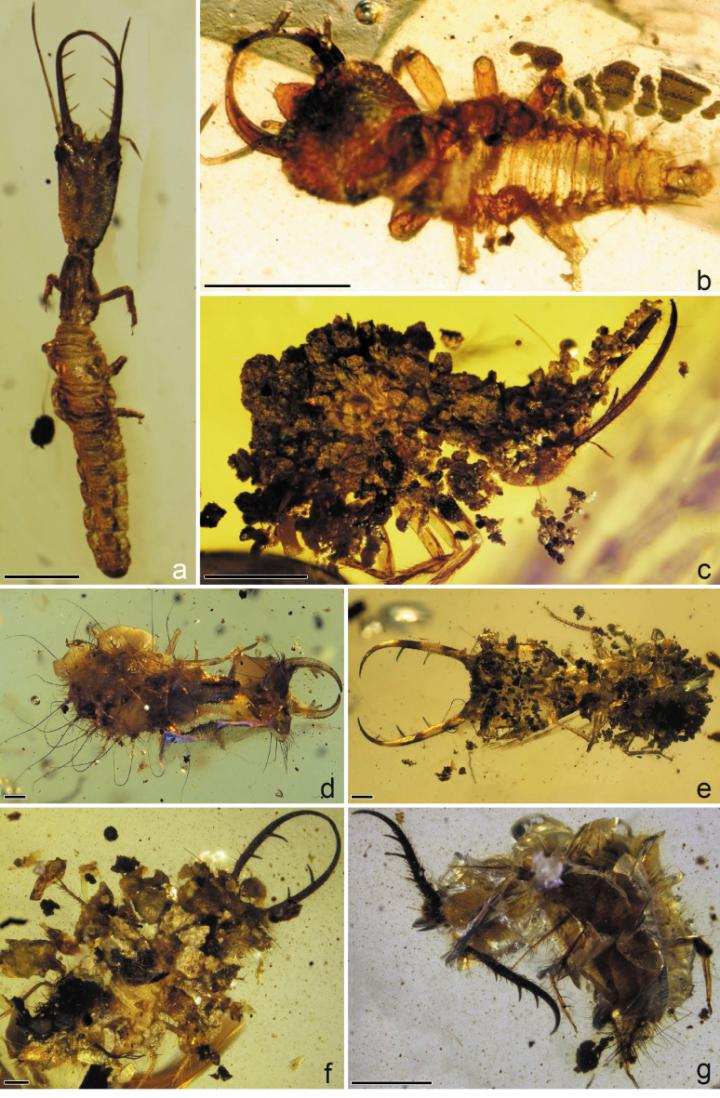
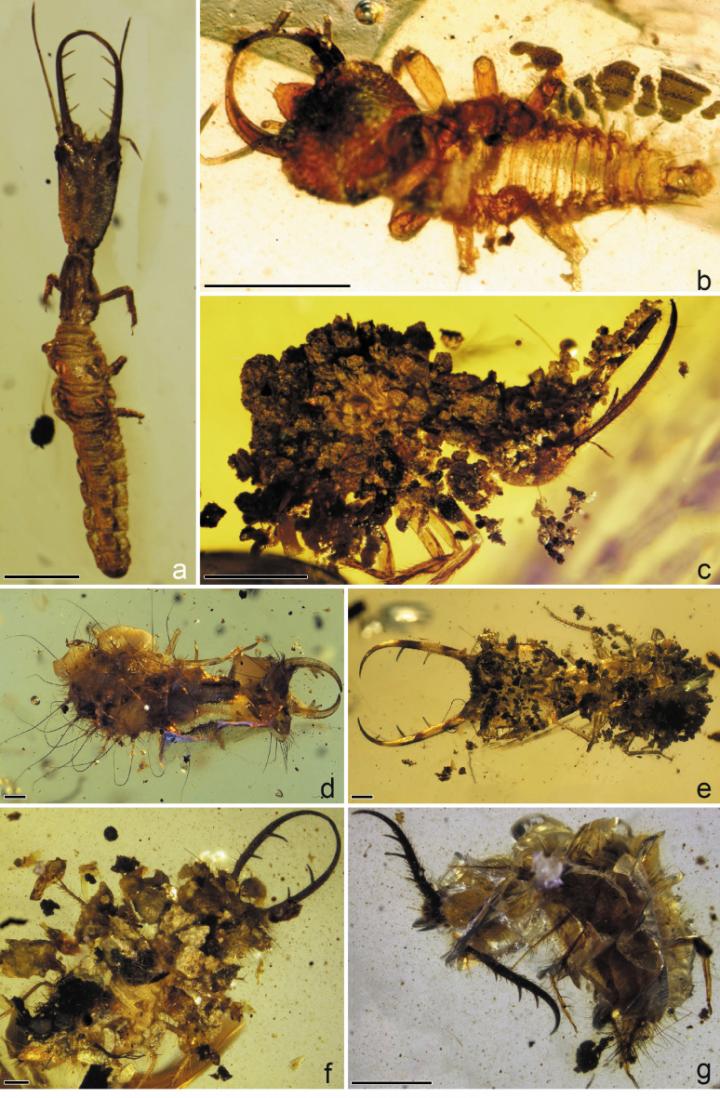
An international team led by Prof. WANG Bo from the Nanjing Institute of Geology and Palaeontology of the Chinese Academy of Sciences (NIGPAS) and two Italian researchers found fossil Myrmeleontiformia fauna from mid-Cretaceous (approximately 100 million years ago) Burmese amber. The study was published in Nature Communications on August 22, 2018.

Their findings show that Myrmeleontiformia did not gain considerable morphological novelty during the subsequent 100 million years, and their diversity seemed to result from different combinations of a limited set of character traits in a complex trade-off.

This morphological stasis helped in reconstructing behaviors not preserved by a trace in the fossil record. Inference of these behaviors shed light on the ecological niche and lifestyle of extinct Myrmeleontiformia.

Statistical correlation analysis strongly supported a correlation between a selection of morphological traits and two hunting strategies of these ambush predators – camouflaging and fossoriality – allowing us to reconstruct habits of extinct species.

The findings suggested that fossorial specializations evolved more than once across Myrmeleontiformia from arboreal ancestors. The fossorial lifestyle of antlions was certainly one of the factors leading to their success, allowing these insects to colonize and diversify in arid habitats where they survived considerable changes in terrestrial environments during the Cretaceous lineages.

The Burmese fossils showed that debris-carrying characterized this lineage for at least 100 million years. All of these camouflaging lacewings were equipped with elongate protuberances. The strong statistical correlation between the presence of these protuberances and camouflaging behavior demonstrated that this trait is an indicator of such behavior, even when the debris covering is not directly preserved in the amber piece together with the larvae.

This research also implies that camouflaging behavior arose at least three times within Myrmeleontiformia. Camouflaging and fossoriality appear widespread across the lineage, and both behaviors allowed the predatory larvae to hide from their unsuspecting prey.

###

Media Contact

CHEN Xiaozheng
[email protected]

http://english.cas.cn/

Related Journal Article

http://dx.doi.org/10.1038/s41467-018-05484-y
Share14Tweet8Share2ShareShareShare2

Related Posts

Florida Cane Toad: Complex Spread and Selective Evolution

Florida Cane Toad: Complex Spread and Selective Evolution

February 7, 2026
New Study Uncovers Mechanism Behind Burn Pit Particulate Matter–Induced Lung Inflammation

New Study Uncovers Mechanism Behind Burn Pit Particulate Matter–Induced Lung Inflammation

February 6, 2026

DeepBlastoid: Advancing Automated and Efficient Evaluation of Human Blastoids with Deep Learning

February 6, 2026

Navigating the Gut: The Role of Formic Acid in the Microbiome

February 6, 2026
Please login to join discussion

POPULAR NEWS

  • Robotic Ureteral Reconstruction: A Novel Approach

    Robotic Ureteral Reconstruction: A Novel Approach

    82 shares
    Share 33 Tweet 21
  • Digital Privacy: Health Data Control in Incarceration

    63 shares
    Share 25 Tweet 16
  • Study Reveals Lipid Accumulation in ME/CFS Cells

    57 shares
    Share 23 Tweet 14
  • Breakthrough in RNA Research Accelerates Medical Innovations Timeline

    53 shares
    Share 21 Tweet 13

About

We bring you the latest biotechnology news from best research centers and universities around the world. Check our website.

Follow us

Recent News

Barriers and Boosters of Seniors’ Physical Activity in Karachi

Evaluating Pediatric Emergency Care Quality in Ethiopia

TPMT Expression Predictions Linked to Azathioprine Side Effects

Subscribe to Blog via Email

Enter your email address to subscribe to this blog and receive notifications of new posts by email.

Join 73 other subscribers
  • Contact Us

Bioengineer.org © Copyright 2023 All Rights Reserved.

Welcome Back!

Login to your account below

Forgotten Password?

Retrieve your password

Please enter your username or email address to reset your password.

Log In
No Result
View All Result
  • Homepages
    • Home Page 1
    • Home Page 2
  • News
  • National
  • Business
  • Health
  • Lifestyle
  • Science

Bioengineer.org © Copyright 2023 All Rights Reserved.