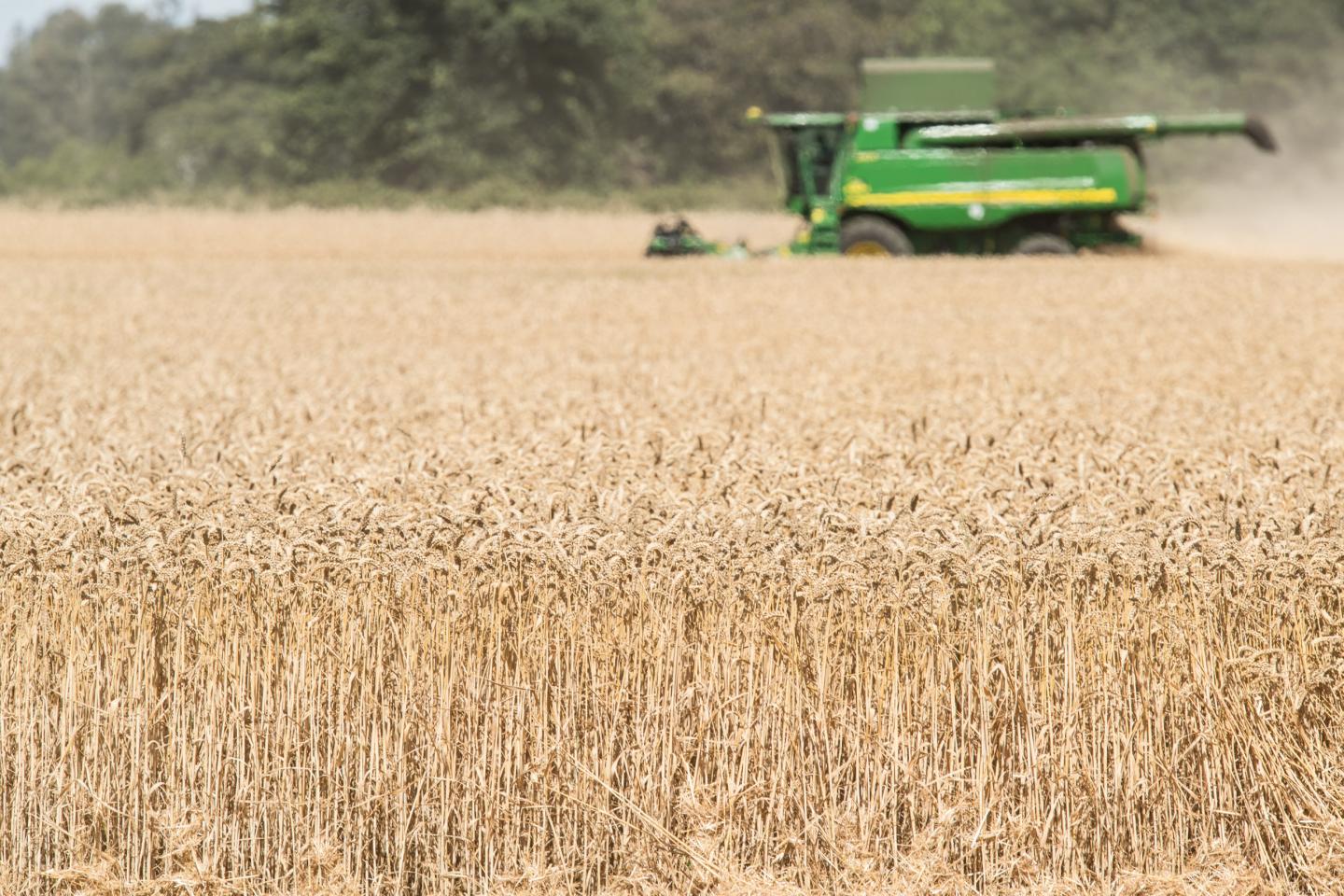
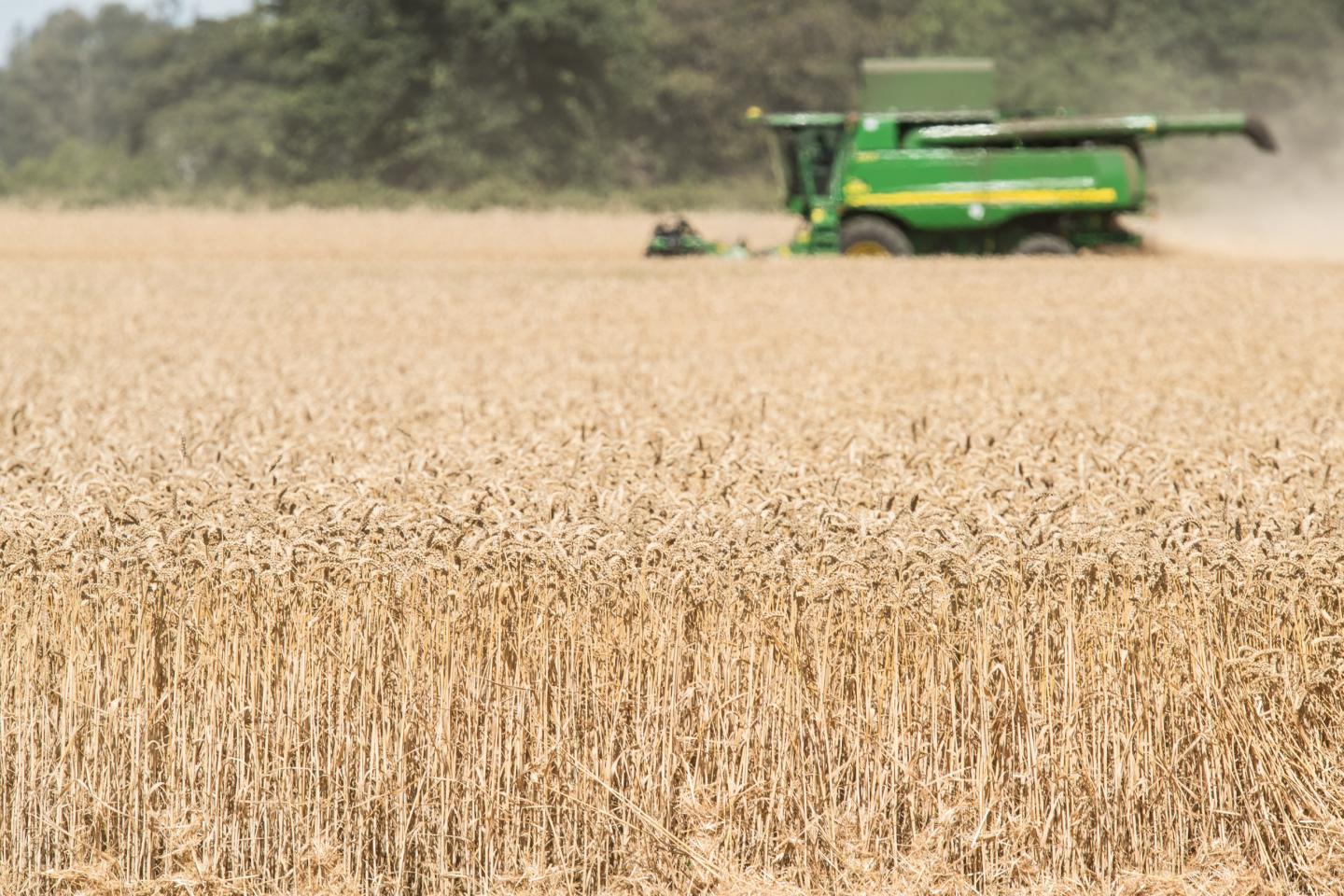
Credit: Edwin Remsberg, Remsberg Inc.
The University of Maryland as part of the International Wheat Genome Sequencing Consortium (IWGSC) published findings in Science detailing the full genome sequence of wheat, the world's most widely cultivated crop. Additionally, a second companion paper was published in the same issue of Science with UMD as a major contributor in conjunction with the John Innes Centre, using this genome sequence to examine the way genes are expressed in wheat, specifically relating to heat, drought, and disease stressors. This work will pave the way for the production of wheat varieties better adapted to climate challenges, with higher yields, enhanced nutritional quality, and improved sustainability.
The IWGSC research article – authored by more than 200 scientists from 73 research institutions in 20 countries – presents the reference genome sequence of the wheat variety Chinese Spring. The DNA sequence ordered along the 21 wheat chromosomes is the highest quality genome sequence produced to date for wheat. It is the result of 13 years of collaborative international research. UMD is one of only seven US institutions involved in the project as consortium partners.
"The wheat genome gives us a complete picture that will be the key to unlocking genes controlling important traits for crop improvement," says Dr. Vijay Tiwari, who leads the Small Grain Breeding and Genetics program in the Department of Plant Science & Landscape Architecture at UMD. "For the wheat genome, UMD specifically contributed with Radiation Hybrid mapping, a technique used to validate whole genome assembly."
A key crop for food security, wheat is the staple food of more than a third of the global human population and accounts for almost 20 percent of the total calories and protein consumed by humans worldwide, more than any other single food source. It also serves as an important source of vitamins and minerals.
To meet future demands of a projected world population of 9.6 billion by 2050, wheat production will need to increase by 60 percent. In order to preserve biodiversity, water, and nutrient resources, the majority of this increase has to be achieved through crop and trait improvement on land currently cultivated.
With the reference genome sequence now completed, breeders have new tools at their disposal to address these challenges. This will allow for rapid identification of genes and regulatory elements underlying complex agricultural traits such as crop yield, grain quality, resistance to diseases, and heat and drought stress tolerance – all integral to the production of hardier wheat varieties.
"When this discovery was made for rice and maize, rapid advances were made in those crops almost immediately after," says Tiwari.
Sequencing the wheat genome was long considered an impossible task, due to its enormous size and complexity. The wheat genome is forty times larger than the rice genome, with more than 85% of the genome composed of repetitive elements.
"The publication of the wheat reference genome is the culmination of the work of many individuals who came together under the banner of the IWGSC to do what was considered impossible," explained Kellye Eversole, Executive Director of the IWGSC. "This was very much collaborative science at its best," adds Tiwari. "Without the consortium [IWGSC], this couldn't have been accomplished in this amount of time."
The impact of the wheat reference sequence has already been significant in the scientific community. More than 100 publications referencing the sequence have been published since the resource was made available to the scientific community in January 2017, and a companion publication is also available in the same issue of Science, again with Tiwari as a major contributor. In this article, Tiwari and a collaborative team of researchers led by Professor Cristobal Uauy at the John Innes Centre in the United Kingdom used this reference genome sequence to examine how genetic information is transcribed into the way genes are expressed, or the "transcriptional landscape" of the genome.
"Together these results will provide a major boost for wheat breeding and genetic research. Now researchers will have direct access to all the genes in the genome and information about their expression patterns, and it will allow them to unravel the genetic basis of important agronomic traits," explains Tiwari.
In previous work at the John Innes Centre, a center funded by the Biotechnology and Biological Sciences Research Council (BBSRC), researchers fine-tuned a technique called speed breeding, which uses glasshouses to shorten breeding cycles. Combined with the genome resources developed in these two new papers, this will significantly shorten the time to test genetic markers for traits like drought, heat, and disease resistance, getting new varieties of wheat to the growers faster.
"We are in a better position than ever to increase yield, breed plants with higher nutritional quality, and create varieties that are adapted to climate changes thanks to the research we and the international community are publishing," says Uauy, Project Leader in Crop Genetics at the John Innes Centre. "It has been a bad year for wheat yields in Maryland, so we are excited to give growers and researchers this good news and bright hope. These landmark results and resources will allow us to address the imminent challenges of global food security in changing climatic conditions," adds Tiwari.
###
The genome sequencing Science article is entitled "Shifting the limits in wheat research and breeding using a fully annotated reference genome" and can be read here: http://science.sciencemag.org/cgi/doi/10.1126/science.aar7191. The companion article is entitled "The transcriptional landscape of polyploid wheat" and can be read here: http://science.sciencemag.org/cgi/doi/10.1126/science.aar6089.
Media Contact
Samantha Watters
[email protected]
301-405-2434
@UMDRightNow
http://www.umdrightnow.umd.edu/