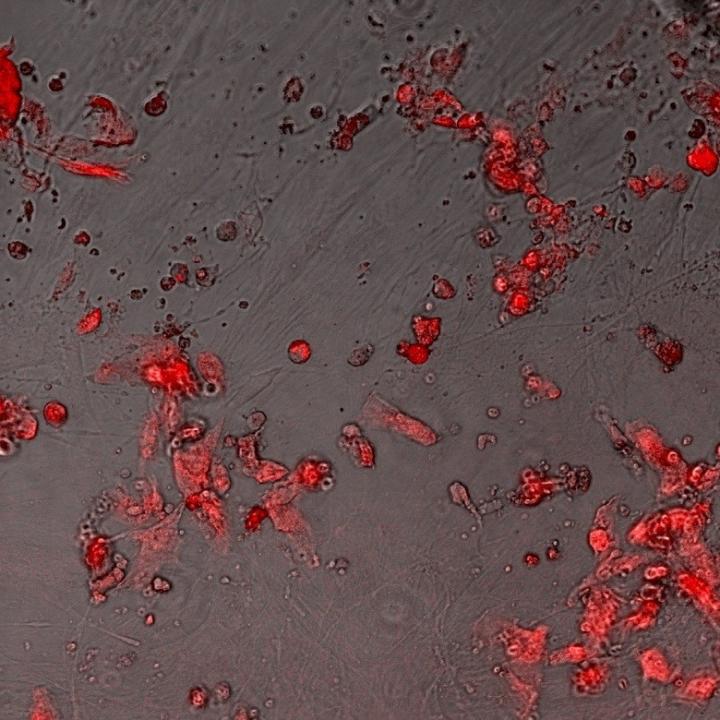
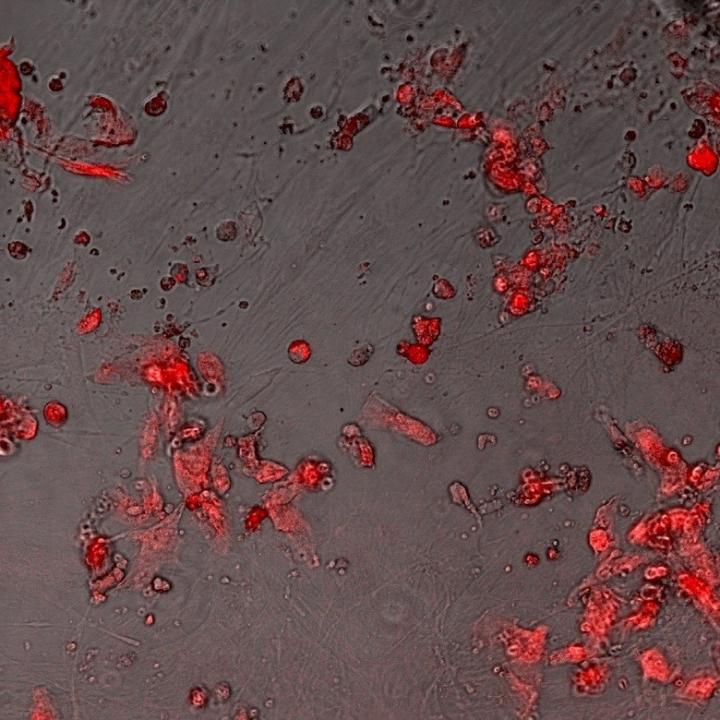
Credit: Courtesy of Egor Plotnikov.
Autophagy is a process of destruction and processing of damaged cell components by the cells themselves. It is used by a cell to clean itself of excessive organelles and sometimes for self-execution. This adaptive mechanism supports a healthy phenotype on the cellular level. Autophagy is activated in certain cases of acute kidney failure (e.g., caused by the administration of antibiotics or anti-cancer drugs), sepsis, or kidney ischemia. Scientists already know that it is the activation of autophagy that reduces kidney damage manifestation. However, while an organism is aging, the efficiency of autophagy declines as well. Though the number of lysosomes (the organelles that digest damaged cell components) is increased in old cells, they fail to perform their function. Oxygenated proteins and damaged organelles (including mitochondria that participate in the respiration and energy production) start to pile up.
PubMed, an international database of scientific articles in the field of medicine, contains over 3,000 publications about kidney aging research. However, less than 10 of them covered the efficiency of acute kidney failure therapy in the elderly. A team of scientists from Belozersky Research Institute of Physico-Chemical Biology considered kidney pathologies that accompany aging – first of all, acute kidney failure that is several times more likely to be observed in patients over 60.
"In our article we demonstrated that aging is associated with the accumulation of damaged biological structures (proteins, lipids, nucleic acids, organelles) in the kidney. The replacement of a young (healthy) phenotype with an old one takes place when a certain threshold level of such changes is reached," explained Egor Plotnikov, doctor of biological science, a principle research scientist at Belozersky Research Institute of Physicod-Chemical Biology.
Different nutrition restrictions (caloric or diet restriction) are an efficient strategy for tackling age-associated deleterious changes. It activates autophagy processes and reduces age-associated pathological changes in the kidney. Experiments have demonstrated that the most efficient approaches to this issue required lifelong diet restrictions. However, the team showed that short-term limitations in the levels of consumed food (by 30-40% kept for several weeks) may increase the resistance of kidneys to the development of acute kidney failure. Besides the systemic physiological approach to treatment, certain pharmacological drugs (such as rapamycin) may be used to imitate reduced calories intake. However, their efficiency for the treatment of kidneys in the elderly has not been confirmed.
Another approach to kidney protection is mitochondria-targeted therapy. In case of acute kidney failure, mitochondria sustain considerable damage even in the cells of young organisms, and aging itself is also associated with changes in mitochondrial functioning, thus the idea of targeting mitochondria in a way to prevent kidney damage, sounds promising. Certain chemical compounds have already proven to be efficient during experiments: for example, mitochondria-targeted antioxidants such as mitoTEMPO, SS-31 (Bendavia) peptides, as well as SkQ compounds developed at MSU.
"Unfortunately, the majority of studies of different therapeutic approaches to afford kidney protection are carried out in young animals. There are only few studies that focus on the changes in the kidneys of aged subjects, and practically no studies are covering kidney protection specifically in an aging organism. We would like to fill this gap not only by experiments on aging animals, but also by the analysis of clinical research data," commented the scientist.
Currently, the efficiency of pharmacological drugs in a clinical study is usually measured as an average meaning taken over several aged groups. More personalized approach could help discover key differences in kidney physiology of aged patients and develop drugs targeting specific signaling pathways.
###
Media Contact
Yana Khlyustova
[email protected]
http://www.msu.ru
Related Journal Article
http://dx.doi.org/10.1080/15384101.2018.1482149