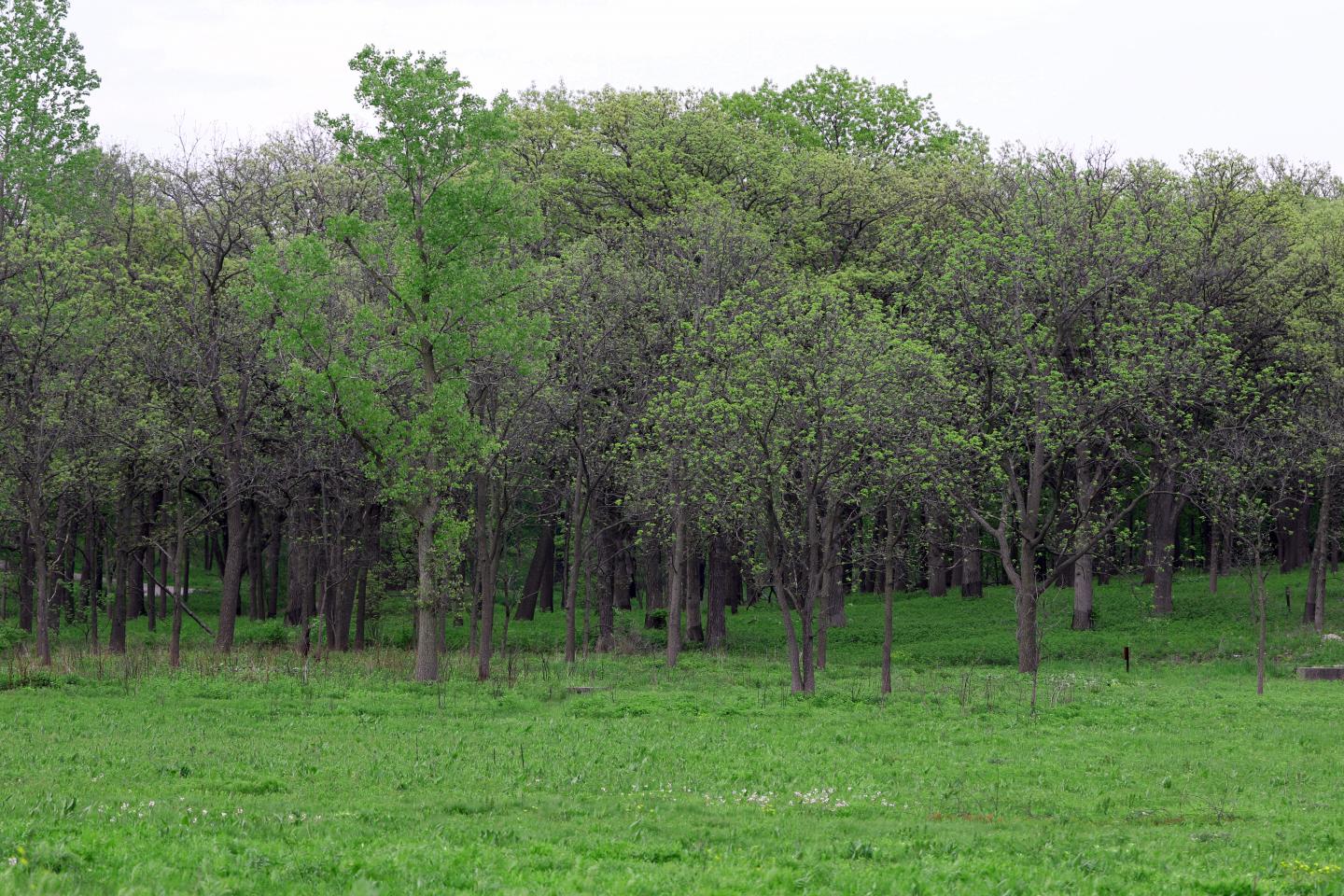
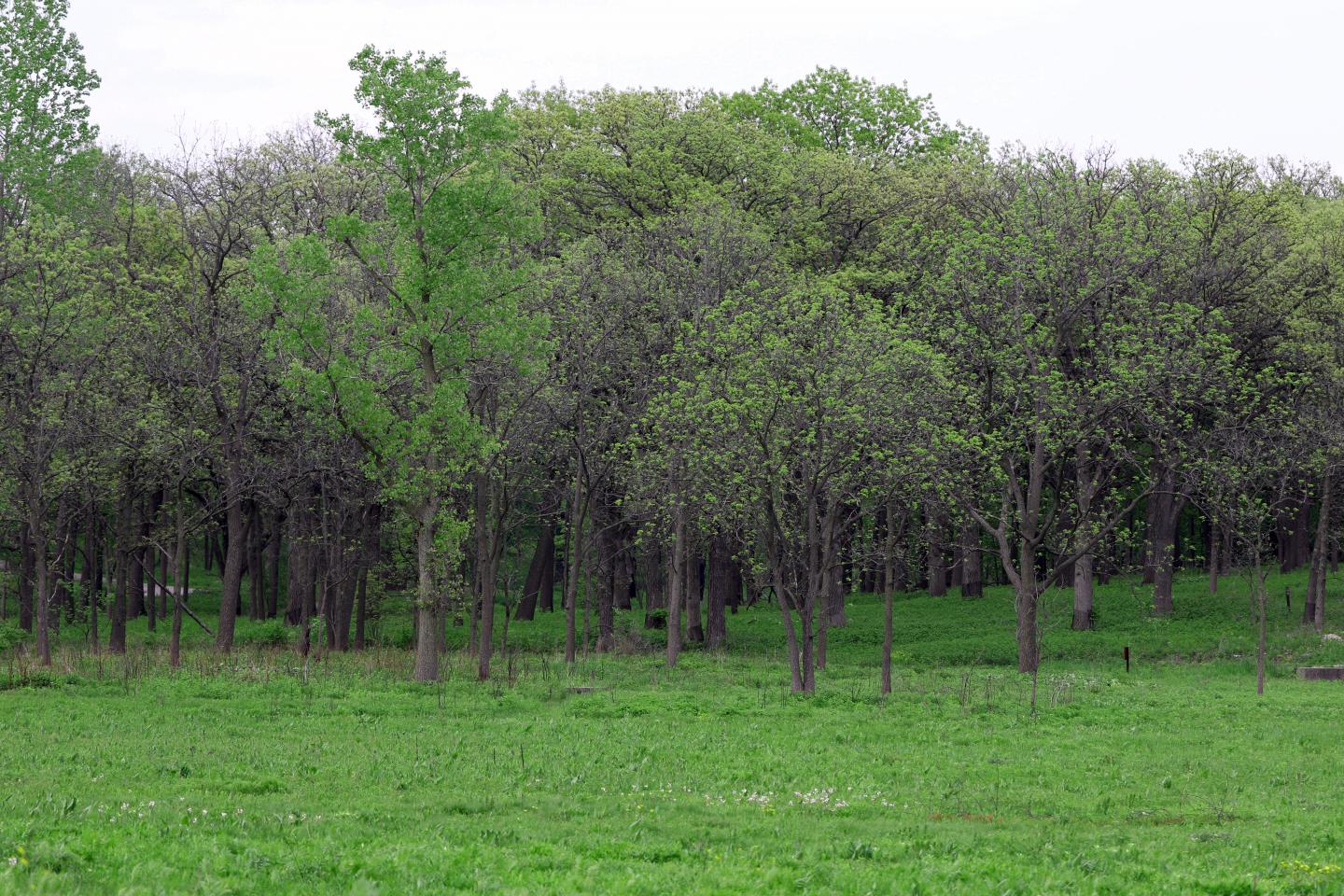
Credit: Songlin Fei.
Many studies on the impacts of global temperature rise have suggested that the range of trees will migrate poleward and upward. However, research that will be presented at the 2018 ESA Annual Meeting in August suggests that more tree species have shifted westward than poleward.
The effects of climate change on trees can be complicated – different combinations of changes in temperature and precipitation can result in different impacts, and different species can have different responses. As such, resource managers lack a comprehensive understanding of large-scale climate change impacts on forest ecosystems.
Songlin Fei, Associate Professor at the Department of Forestry and Natural Resources at Purdue University, sought to provide some understanding to this problem. Using field data across the eastern US, he analyzed 86 tree species and groups to investigate the magnitude and direction of their responses to climate change over the last three decades and to provide an understanding of any changes.
He found that 73 percent of tree species have experienced a westward shift while 62 percent have experienced a poleward shift. It appears that the shifts are largely associated with changes in moisture availability. The shifts are also associated with species that have similar traits (drought tolerance, wood density, and seed weight) and evolutionary histories, such as deciduous vs. evergreen species. The results suggest that changes in moisture availability have stronger near-term impacts on forest dynamics than do changes in temperature.
Fei's talk is part of a session that will discuss research on other large-scale climate change impacts on important forests in the eastern US, such as upland oak forests which provide a wealth of ecological and economic services including wildlife habitat, timber, and water resources. These forests have adapted to persist in fire-prone areas; human-induced fire control may change this by allowing tree species that are fire-intolerant and shade-tolerant (mesophytes) to outcompete the oaks in the absence of fire. Without fires, these mesophytes may foster their own proliferation through a variety of poorly-understood mechanisms, while increasing vulnerability of the upland oak forests.
This session includes the following selections:
- Divergence of species response to climate change — Songlin Fei, Johanna M. Desprez, Insu Jo, and Jonathan Knott, Forestry and Natural Resources, Purdue University; Kevin M. Potter, Department of Forestry and Environmental Resources, North Carolina State University; Christopher M. Oswalt, Forest Inventory & Analysis, USDA Forest Service – Southern Research Station.
- Overview of open forests and transition to closed forests — Brice B. Hanberry, Rocky Mountain Research Station, USDA Forest Service
- Mesophication, canopy disturbance, and succession in upland oak stands — Justin L. Hart, Geography, University of Alabama
- Do mesophyte canopy, bark, and leaf litter traits drive future flammability of upland oak forests? — Emily Babl, Courtney M. Siegert, John L. Willis, Heather D. Alexander, Department of Forestry, Mississippi State University; Andrew I. Berry, Bernheim Arboretum and Research Forest.
OOS 28-1 – Divergence of species response to climate change
- Thursday, August 9, 2018: 8:00 AM
- 344, New Orleans Ernest N. Morial Convention Center
- Songlin Fei, Forestry and Natural Resources, Purdue University
- Presentation abstract
- Contact: [email protected]">[email protected]
###
2018 Annual Meeting in New Orleans, Louisiana
Extreme events, ecosystem resilience and human well-being
5-10 August 2018
Ecologists from 50 U.S. states, U.S. territories, and countries around the world will converge on New Orleans, Louisiana this August for the 103rd Annual Meeting of the Ecological Society of America. Up to 4,000 attendees are expected to gather for thousands of scientific presentations on breaking research and new ecological concepts at the Ernest N. Morial Convention Center on August 5 – 10, 2018.
The Opening Plenary features Robert Twilley, executive director of the Louisiana Sea Grant College Program and distinguished professor in the Department of Oceanography and Coastal Science at Louisiana State University, who will speak about, "Ecosystem design approaches in a highly engineered landscape of the Mississippi River Delta." The event is free and open to the general public and will be live-streamed – watch it here on Sunday, August 5 at 5:00 PM CDT.
ESA invites press and institutional public information officers to attend for free. To apply, please contact ESA Public Information Manager Zoe Gentes directly at [email protected]">[email protected]. Walk-in registration will be available during the meeting.
- Annual Meeting website
- Media information
- Press releases
- Program
The Ecological Society of America (ESA), founded in 1915, is the world's largest community of professional ecologists and a trusted source of ecological knowledge, committed to advancing the understanding of life on Earth. The 9,000 member Society publishes five journals and a membership bulletin and broadly shares ecological information through policy, media outreach, and education initiatives. The Society's Annual Meeting attracts 4,000 attendees and features the most recent advances in the science of ecology. Visit the ESA website at http://www.esa.org.
Media Contact
Zoe Gentes
[email protected]
202-833-8773
@ESA_org
http://www.esa.org
Original Source
https://www.esa.org/esa/trees-travelling-west-how-climate-is-changing-our-forests/