


• HOME
  • NEWS
  • EXPLORE
    • CAREER
      • Companies
      • Jobs
    • EVENTS
    • iGEM
      • News
      • Team
    • PHOTOS
    • VIDEO
    • WIKI
  • BLOG
  • COMMUNITY
    • FACEBOOK
    • INSTAGRAM
    • TWITTER
Saturday, February 7, 2026
BIOENGINEER.ORG
No Result
View All Result
  • Login
  • HOME
  • NEWS
  • EXPLORE
    • CAREER
      • Companies
      • Jobs
        • Lecturer
        • PhD Studentship
        • Postdoc
        • Research Assistant
    • EVENTS
    • iGEM
      • News
      • Team
    • PHOTOS
    • VIDEO
    • WIKI
  • BLOG
  • COMMUNITY
    • FACEBOOK
    • INSTAGRAM
    • TWITTER
  • HOME
  • NEWS
  • EXPLORE
    • CAREER
      • Companies
      • Jobs
        • Lecturer
        • PhD Studentship
        • Postdoc
        • Research Assistant
    • EVENTS
    • iGEM
      • News
      • Team
    • PHOTOS
    • VIDEO
    • WIKI
  • BLOG
  • COMMUNITY
    • FACEBOOK
    • INSTAGRAM
    • TWITTER
No Result
View All Result
Bioengineer.org
No Result
View All Result
Home NEWS Science News Health

Genetic variation may increase risk of liver damage in patients with chronic hepatitis B

Bioengineer by Bioengineer
July 26, 2018
in Health
Reading Time: 2 mins read
0
Share on FacebookShare on TwitterShare on LinkedinShare on RedditShare on Telegram
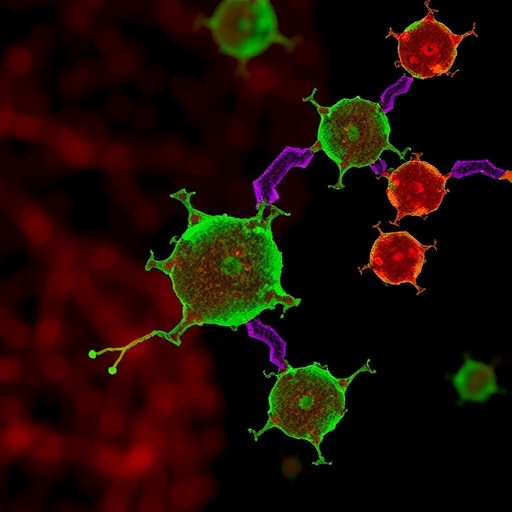
IMAGE

Credit: The Westmead Institute for Medical Research

A new study has shown that genetic variation may increase the risk of severe liver damage in Caucasians with chronic hepatitis B infection.

Researchers from the Westmead Institute for Medical Research found that Caucasian patients with a variation in their STAT4 gene were more likely to experience inflammation and severe liver fibrosis.

Dr Rasha El Sharkawy, the first author of the study, said the findings add to the growing body of evidence that demonstrates a link between genes and the progression of hepatitis B.

"The progression of liver injury in hepatitis B can vary significantly among patients, which indicates that genetic factors may play a role," Dr El Sharkawy said.

The STAT4 gene is part of the body's immune response against viruses and regulates tissue inflammation, fibrosis and anti-viral activity.

"We found that patients with the risk genetic variation had lower expression of STAT4 in their liver and immune cells, reducing their immune response against hepatitis B and their production of interferon gamma, a protein responsible for moderating fibrosis.

"This may, at least partially explain why patients with the variation experience poorer liver health," Dr El Sharkawy explained.

Approximately one third of the world's population have come into contact with hepatitis B, with 350-400 million people developing a chronic infection. If left untreated, chronic infections can lead to liver injury, liver cancer, and liver failure, with more than one million deaths attributed to cirrhosis and cancer each year.

"Not everyone who comes into contact with the virus will develop a chronic infection, but those that do, require treatment to prevent severe complications, including liver failure and damage," Dr El Sharkawy said.

Professor Jacob George and Associate Professor Mohammed Eslam, leaders of the research study, said that with further study, researchers could better understand how the STAT4 gene affects the progression of hepatitis B, so that they can prevent liver injury and failure in at-risk groups.

###

Media Contact

Alison Grinyer
[email protected]
@TheWestmead

http://www.westmeadinstitute.org.au/

Original Source

https://www.westmeadinstitute.org.au/news-and-events/2018/genetic-variation-may-increase-risk-of-liver-damag http://dx.doi.org/10.1111/apt.14866
Share12Tweet8Share2ShareShareShare2

Related Posts

Evaluating Pediatric Emergency Care Quality in Ethiopia

February 7, 2026

TPMT Expression Predictions Linked to Azathioprine Side Effects

February 7, 2026

Improving Dementia Care with Enhanced Activity Kits

February 7, 2026

Decoding Prostate Cancer Origins via snFLARE-seq, mxFRIZNGRND

February 7, 2026
Please login to join discussion

POPULAR NEWS

  • Robotic Ureteral Reconstruction: A Novel Approach

    Robotic Ureteral Reconstruction: A Novel Approach

    82 shares
    Share 33 Tweet 21
  • Digital Privacy: Health Data Control in Incarceration

    63 shares
    Share 25 Tweet 16
  • Study Reveals Lipid Accumulation in ME/CFS Cells

    57 shares
    Share 23 Tweet 14
  • Breakthrough in RNA Research Accelerates Medical Innovations Timeline

    53 shares
    Share 21 Tweet 13

About

We bring you the latest biotechnology news from best research centers and universities around the world. Check our website.

Follow us

Recent News

Evaluating Pediatric Emergency Care Quality in Ethiopia

TPMT Expression Predictions Linked to Azathioprine Side Effects

Improving Dementia Care with Enhanced Activity Kits

Subscribe to Blog via Email

Success! An email was just sent to confirm your subscription. Please find the email now and click 'Confirm' to start subscribing.

Join 73 other subscribers
  • Contact Us

Bioengineer.org © Copyright 2023 All Rights Reserved.

Welcome Back!

Login to your account below

Forgotten Password?

Retrieve your password

Please enter your username or email address to reset your password.

Log In
No Result
View All Result
  • Homepages
    • Home Page 1
    • Home Page 2
  • News
  • National
  • Business
  • Health
  • Lifestyle
  • Science

Bioengineer.org © Copyright 2023 All Rights Reserved.