• HOME
  • NEWS
  • EXPLORE
    • CAREER
      • Companies
      • Jobs
    • EVENTS
    • iGEM
      • News
      • Team
    • PHOTOS
    • VIDEO
    • WIKI
  • BLOG
  • COMMUNITY
    • FACEBOOK
    • INSTAGRAM
    • TWITTER
Saturday, November 28, 2026
BIOENGINEER.ORG
No Result
View All Result
  • Login
  • HOME
  • NEWS
  • EXPLORE
    • CAREER
      • Companies
      • Jobs
        • Lecturer
        • PhD Studentship
        • Postdoc
        • Research Assistant
    • EVENTS
    • iGEM
      • News
      • Team
    • PHOTOS
    • VIDEO
    • WIKI
  • BLOG
  • COMMUNITY
    • FACEBOOK
    • INSTAGRAM
    • TWITTER
No Result
View All Result
Bioengineer.org
No Result
View All Result
Home NEWS Science News Cancer

Starving cancer cells by blocking their metabolism

Bioengineer by Bioengineer
June 14, 2016
in Cancer
Reading Time: 3 mins read
0
Share on FacebookShare on TwitterShare on LinkedinShare on RedditShare on Telegram
IMAGE

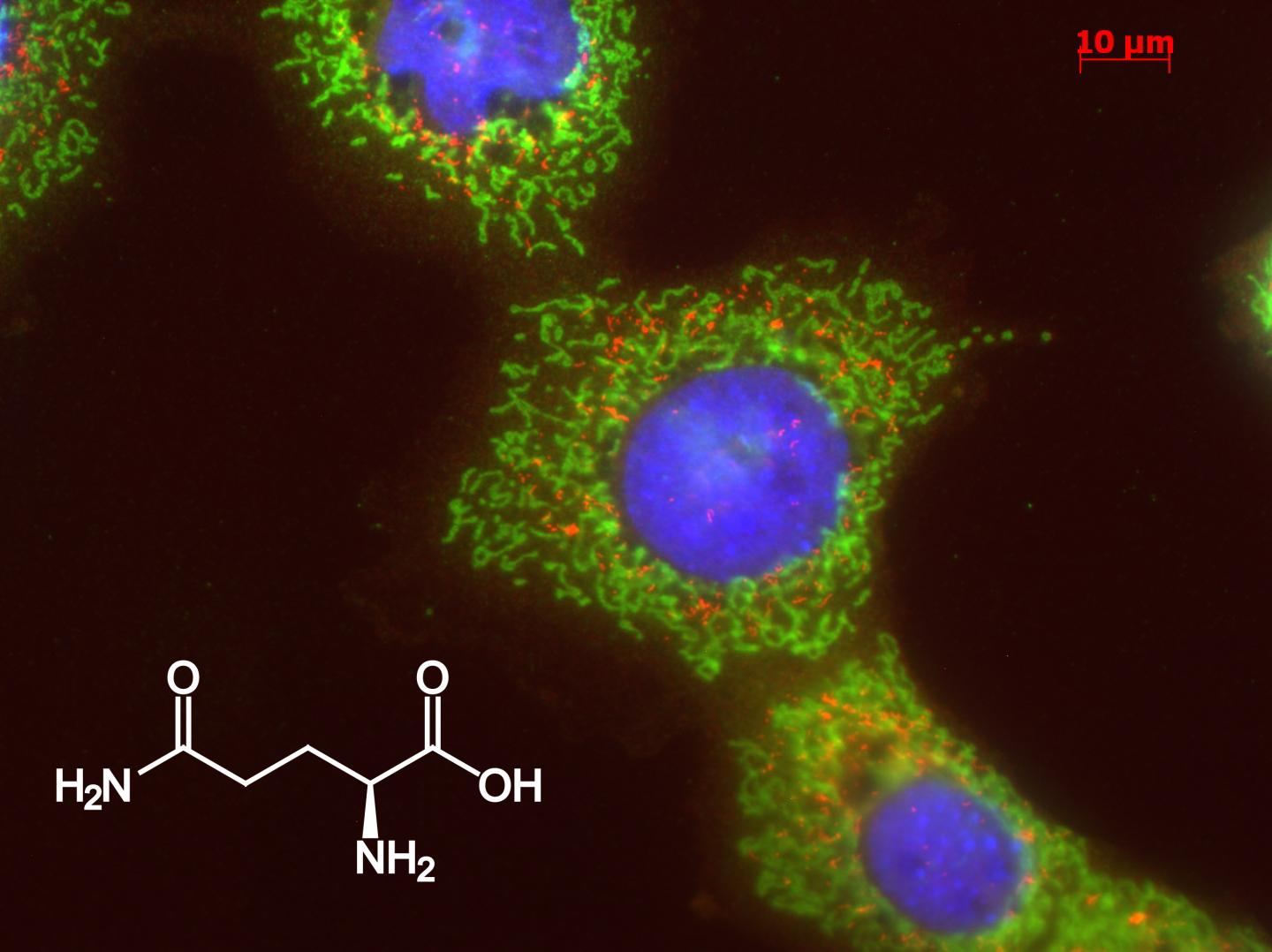
Scientists at EPFL have found a way to starve liver cancer cells by blocking a protein that is required for glutamine breakdown — while leaving normal cells intact. The discovery opens new ways to treat liver cancer.

Primary liver cancer is the second leading cause of cancer-related deaths worldwide, with current treatments being very limited. Liver cancer cells are particularly addicted to the amino acid glutamine, which fuels their proliferation. EPFL scientists have now found that a liver protein called “liver receptor homolog 1” (LRH-1) is responsible for the digestion of glutamine into smaller molecules, which are avidly consumed by liver cancer cells. Therefore, blocking LRH-1 causes cancer cells to starve and greatly reduces the development of liver cancer in mice, while preserving normal cells. The discovery is published in Genes & Development, and can introduce new drugs that target LRH-1 to effectively treat liver cancers.

LRH-1 is a receptor in the cell nucleus, where it regulates the expression of various genes. In this study, scientists from different groups at EPFL led by Kristina Schoonjans, discovered that LRH-1 coordinates several key genes that are involved in the metabolism of glutamine — an amino acid to which liver cancer cells become addicted. The researchers found that LRH-1 drives the development of liver tumors by helping cancer cells to convert glutamine into molecules that are directly needed for proliferation.

This would also mean that disrupting the function of LRH-1 in the liver of mice would protect against the development of liver cancer. That is exactly what the scientists found when they studied mice that had been genetically modified to not express LRH-1 – so called “knockout” mice. After exposing them to chemical carcinogens, the livers of knockout mice showed dramatically less development of tumors. “Shutting down this pathway by inhibiting LRH-1 abrogates the utilization of glutamine as a fuel and brings the cancerous cells in tremendous metabolic distress,” says Pan Xu, the first author of the study.

Based on the study, LRH-1 could be a new drug target to prevent the development of liver cancer. Because cancer cells, unlike normal cells, are very often addicted to glutamine, drugs that inhibit glutamine metabolism have been proposed as new highly efficient chemotherapy agents.

“Inhibiting LRH-1 can thus be an effective way to starve only liver cancer cells, while leaving normal cells intact,” says Kristina Schoonjans. Her lab is now actively trying to identify new chemotherapeutic agents to treat liver cancer by developing specific compounds that inhibit LRH-1. The researchers also hope that these findings may extend to other types of cancer, since LRH-1 is also abundant in the pancreas and ovaries.

###

This work involved a collaboration of Kristina Schoonjans’ lab with EPFL’s Institute of Bioengineering and Institute of the Physics of Biological Systems, and the University of Groningen. It was funded by EPFL, the Swiss Cancer League, the Swiss National Science Foundation, and the Novartis Consumer Health Foundation.

Reference

Xu P, Oosterveer MH, Stein S, Demagny H, Ryu D, Moullan N, Wang X, Can E, Zamboni N, Comment A, Auwerx J, Schoonjans K. LRH-1-dependent programming of mitochondrial glutamine processing drives liver cancer. Genes & Development 13 June 2016. DOI: 10.1101/gad.277483.116

Media Contact

Nik Papageorgiou
n.papageorgiou@epfl.ch
41-216-932-105
@EPFL_en

http://www.epfl.ch/index.en.html

The post Starving cancer cells by blocking their metabolism appeared first on Scienmag.
Share12Tweet8Share2ShareShareShare2

Related Posts

Targeted JAK1 Inhibition Yields Partial Response in Rare Gastrointestinal T-Cell Lymphoma

Targeted JAK1 Inhibition Yields Partial Response in Rare Gastrointestinal T-Cell Lymphoma

November 28, 2026
Hepatocyte Ambient RNA Persists in Liver Single-Cell Sequencing Despite Computational Correction

Hepatocyte Ambient RNA Persists in Liver Single-Cell Sequencing Despite Computational Correction

November 27, 2026

Review Details How LIF Cytokine Signaling Drives Divergent Cancer Trajectories

November 27, 2026

Model Trained on Language Model Evaluations Predicts Lung Cancer Radiotherapy Plan Preferences

November 27, 2026
Please login to join discussion

POPULAR NEWS

  • Nomogram Predicts Favorable Stone Clearance After Supine Mini-PCNL for Complex Stones

    Nomogram Predicts Favorable Stone Clearance After Supine Mini-PCNL for Complex Stones

    29 shares
    Share 12 Tweet 7
  • Yttrium Segregation Drives Anomalous Hardening in Magnesium Alloy During Warm Torsion

    29 shares
    Share 12 Tweet 7
  • Tibetan Antelope Colonization Factor Differences Diminish After Accounting for Sampling Region

    29 shares
    Share 12 Tweet 7
  • Brain Scans Reveal Distinct Memory Circuit Markers Across Different Antidepressant Treatments

    29 shares
    Share 12 Tweet 7

About

We bring you the latest biotechnology news from best research centers and universities around the world. Check our website.

Follow us

Recent News

Adding Pelvic Magnetic Stimulation to Biofeedback Halves Long-Term Muscle Spasm Recurrence

Four-Year University Fitness Study Reveals Early Body Mass and Interconnected Physical Capacities

Targeting Muscle Stem Cells and Extracellular Environments Highlights Pathways for Muscle Regeneration

Subscribe to Blog via Email

Enter your email address to subscribe to this blog and receive notifications of new posts by email.

Join 89 other subscribers
  • Contact Us

Bioengineer.org © Copyright 2023 All Rights Reserved.

Welcome Back!

Login to your account below

Forgotten Password?

Retrieve your password

Please enter your username or email address to reset your password.

Log In
No Result
View All Result
  • Homepages
    • Home Page 1
    • Home Page 2
  • News
  • National
  • Business
  • Health
  • Lifestyle
  • Science

Bioengineer.org © Copyright 2023 All Rights Reserved.