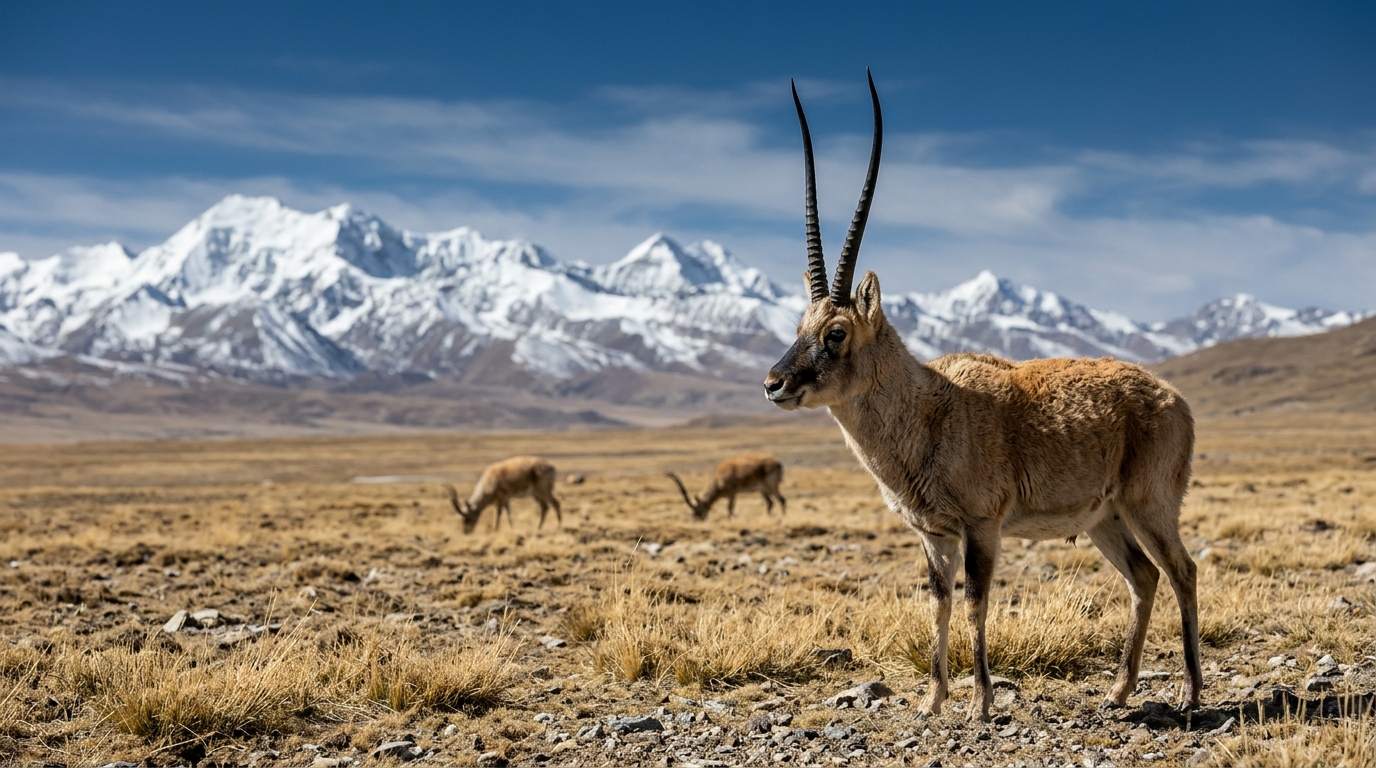
Researchers investigating the gut microbial communities of the Tibetan antelope (Pantholops hodgsonii) highlighted the importance of accounting for geographical variation when examining associations between parasite status and microbial colonization traits. The gut microbiota plays a crucial role in overall host health, with colonization factors contributing directly to successful microbial establishment and vital ecological functions. However, the specific colonization factor landscape in the Tibetan antelope, an animal species adapted to extreme environments on the high plateau, has historically remained underexplored in wildlife biology.
In this investigation, the research team thoroughly characterized the intestinal microbial communities of the antelopes and identified three distinct clusters based on colonization factor profiles. The analytical results revealed clear taxonomic differences across these groupings, as Cluster 1 was predominantly dominated by members of the phylum Bacillota. By contrast, microbial Clusters 2 and 3 were enriched in Bacteroidota.
A primary objective of the research involved examining how gut colonization factors relate to colonization by Blastocystis subtype 31 (ST31). When the researchers conducted unadjusted analyses, the raw comparisons revealed apparent differences in both colonization factor diversity and overall community composition between Blastocystis ST31-positive and ST31-negative animals.
Crucially, however, these apparent microbial distinctions did not withstand rigorous geographic controls. After the investigators accounted for sampling-region effects, the differences in colonization factor diversity and overall community composition between Blastocystis ST31-positive and ST31-negative animals were no longer statistically significant.
To further probe the predictive connection between microbial features and parasite status while controlling for geography, the authors applied a region-adjusted random forest analysis. This machine learning evaluation yielded an area under the curve (AUC) of 0.711, accompanied by a 95 percent confidence interval spanning from 0.585 to 0.838. According to the researchers, this metric reflects a modest discriminatory performance, indicating that colonization factors provide only limited classification ability when identifying Blastocystis ST31 infection status once location is taken into account.
The region-adjusted random forest model also enabled the identification and ranking of individual colonization factors based on their overall feature importance. Among the ten most important colonization factors identified by the algorithm, CF47 achieved the highest rank in feature importance. Meanwhile, CF60 ranked second in overall feature importance and displayed a notably higher region-adjusted abundance in Blastocystis ST31-positive animals, highlighting it as an individual microbial factor associated with parasite presence.
Functional annotation of these critical colonization factors provided further insight into the biological roles they may perform within the host intestine. The annotated factors were associated with multidrug efflux and transport, pyrimidine nucleotide metabolism, and putative chromate transport mechanisms. Furthermore, researchers identified the virulence-associated gene VFG049159, corresponding to clbM, within the colonization factor designated CF0_0, detailing specific molecular elements carried within the antelope intestinal microbiome.
Taken together, these findings provide valuable baseline insights into colonization factor variation in the Tibetan antelope gut microbiome while underscoring broader methodological considerations for microbial ecology. The study highlights the paramount importance of accounting for geographical and sampling-region variation when investigating statistical associations between host parasite status and microbial colonization traits in wild populations.
Subject of Research: Tibetan antelope gut microbial colonization factors and Blastocystis subtype 31 across sampling regions
Article Title: Colonization factors of Tibetan antelope (Pantholops hodgsonii) gut microbiota and their association with Blastocystis subtype 31
Article References: Liu, J., Ding, H., Nan, F.-L., Liu, R., Ma, H., Ni, H.-B., Chen, B.-N., Yao, G.-Z., Elsheikha, H. M., & Li, Y. (2026). Colonization factors of Tibetan antelope (Pantholops hodgsonii) gut microbiota and their association with Blastocystis subtype 31. Frontiers in Microbiology, 17, Article 1939443. https://doi.org/10.3389/fmicb.2026.1939443
Image Credits: AI Generated
DOI: 10.3389/fmicb.2026.1939443
Keywords: Tibetan antelope, Pantholops hodgsonii, gut microbiota, colonization factors, Blastocystis ST31, Blastocystis subtype 31, Bacillota, Bacteroidota, sampling-region effects, random forest analysis, CF47, CF60, multidrug efflux, pyrimidine nucleotide metabolism, chromate transport, clbM gene, VFG049159, microbial symbioses
News Source: Morgan Morrow. (November 27, 2026). Tibetan Antelope Colonization Factor Differences Diminish After Accounting for Sampling Region. Scienmag.