

• HOME
  • NEWS
  • EXPLORE
    • CAREER
      • Companies
      • Jobs
    • EVENTS
    • iGEM
      • News
      • Team
    • PHOTOS
    • VIDEO
    • WIKI
  • BLOG
  • COMMUNITY
    • FACEBOOK
    • INSTAGRAM
    • TWITTER
Saturday, February 7, 2026
BIOENGINEER.ORG
No Result
View All Result
  • Login
  • HOME
  • NEWS
  • EXPLORE
    • CAREER
      • Companies
      • Jobs
        • Lecturer
        • PhD Studentship
        • Postdoc
        • Research Assistant
    • EVENTS
    • iGEM
      • News
      • Team
    • PHOTOS
    • VIDEO
    • WIKI
  • BLOG
  • COMMUNITY
    • FACEBOOK
    • INSTAGRAM
    • TWITTER
  • HOME
  • NEWS
  • EXPLORE
    • CAREER
      • Companies
      • Jobs
        • Lecturer
        • PhD Studentship
        • Postdoc
        • Research Assistant
    • EVENTS
    • iGEM
      • News
      • Team
    • PHOTOS
    • VIDEO
    • WIKI
  • BLOG
  • COMMUNITY
    • FACEBOOK
    • INSTAGRAM
    • TWITTER
No Result
View All Result
Bioengineer.org
No Result
View All Result
Home NEWS Science News Biology

$1.54 million NIH grant to identify ways to improve cardiac function in heart failure

Bioengineer by Bioengineer
July 17, 2018
in Biology
Reading Time: 2 mins read
0
Share on FacebookShare on TwitterShare on LinkedinShare on RedditShare on Telegram
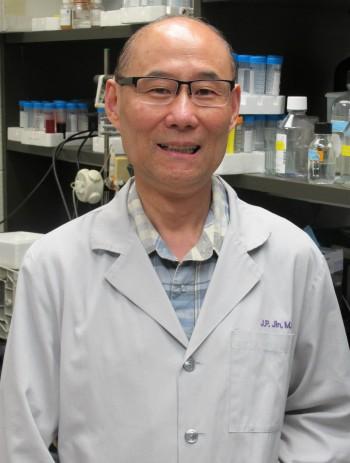
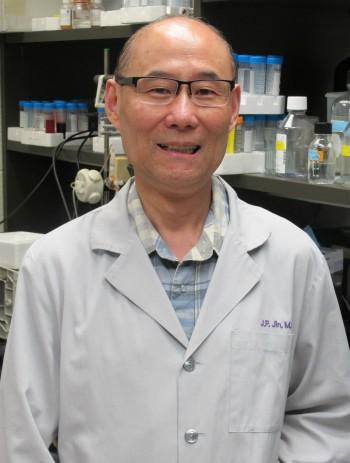
IMAGE

Credit: Julie O'Connor, Wayne State University

DETROIT – Preventing heart failure is a major challenge in the management of cardiovascular diseases. β-adrenergic blockades — or β-blockers — are medications used to treat abnormal heart rhythms to protect from a heart attack after a first heart attack has occurred. While β-blockers have proven effective in treating chronic congestive heart failure, the long-term benefit of decreasing contractile kinetics is not completely understood.

With the help of a $1.54 million grant from the National Heart, Lung and Blood Institute of the National Institutes of Health, a research team from Wayne State University will establish a targeted approach to sustain cardiac function during an energetic crisis and heart failure.

The study, "Modification of troponin T to improve cardiac function in heart failure," will use integrative research approaches to establish the underlying mechanism for the physiological modification of cardiac troponin T — proteins in the blood that are released when the heart muscle has been damaged that can differentiate between unstable angina and heart attack — with the ultimate goal of developing a new approach for the treatment of heart failure.

Led by Jian-Ping Jin, M.D., Ph.D., professor and William D. Traitel Endowed Chair of Physiology in the School of Medicine at Wayne State, the research team has focused on the area of protein structure-function relationships, particularly on protein engineering to improve muscle and heart functions.

According to Jin, the restrictive removal of a regulatory segment of cardiac troponin T occurs when the heart is under stress to selectively tune down contractile velocity of cardiac muscle and elongate the ejection time, which increases pumping volume with a minimized energetic cost. Together with its value in diagnostic measurements of cardiac function and adaptation, this novel mechanism provides a promising molecular target to develop new treatment of heart failure.

"The results from this project will establish a targeted approach to sustain cardiac function during energetic crisis and heart failure," Jin said. "With multilevel and integrative investigations, our study will lay the groundwork for translating this molecular mechanism into a new clinical treatment for heart failure."

###

The grant number for this National Institutes of Health award is HL-138007.

Wayne State University is one of the nation's pre-eminent public research universities in an urban setting. Through its multidisciplinary approach to research and education, and its ongoing collaboration with government, industry and other institutions, the university seeks to enhance economic growth and improve the quality of life in the city of Detroit, state of Michigan and throughout the world. For more information about research at Wayne State University, visit http://www.research.wayne.edu.

Media Contact

Julie O'Connor
[email protected]
313-577-8845

http://www.research.wayne.edu/about/index.php

Original Source

http://research.wayne.edu/news/154-million-nih-grant-to-wayne-state-to-identify-ways-to-improve-cardiac-function-in-heart-failure-31361

Share12Tweet8Share2ShareShareShare2

Related Posts

Florida Cane Toad: Complex Spread and Selective Evolution

Florida Cane Toad: Complex Spread and Selective Evolution

February 7, 2026
New Study Uncovers Mechanism Behind Burn Pit Particulate Matter–Induced Lung Inflammation

New Study Uncovers Mechanism Behind Burn Pit Particulate Matter–Induced Lung Inflammation

February 6, 2026

DeepBlastoid: Advancing Automated and Efficient Evaluation of Human Blastoids with Deep Learning

February 6, 2026

Navigating the Gut: The Role of Formic Acid in the Microbiome

February 6, 2026
Please login to join discussion

POPULAR NEWS

  • Robotic Ureteral Reconstruction: A Novel Approach

    Robotic Ureteral Reconstruction: A Novel Approach

    82 shares
    Share 33 Tweet 21
  • Digital Privacy: Health Data Control in Incarceration

    63 shares
    Share 25 Tweet 16
  • Study Reveals Lipid Accumulation in ME/CFS Cells

    57 shares
    Share 23 Tweet 14
  • Breakthrough in RNA Research Accelerates Medical Innovations Timeline

    53 shares
    Share 21 Tweet 13

About

We bring you the latest biotechnology news from best research centers and universities around the world. Check our website.

Follow us

Recent News

Decoding Prostate Cancer Origins via snFLARE-seq, mxFRIZNGRND

Digital Health Perspectives from Baltic Sea Experts

Florida Cane Toad: Complex Spread and Selective Evolution

Subscribe to Blog via Email

Enter your email address to subscribe to this blog and receive notifications of new posts by email.

Join 73 other subscribers
  • Contact Us

Bioengineer.org © Copyright 2023 All Rights Reserved.

Welcome Back!

Login to your account below

Forgotten Password?

Retrieve your password

Please enter your username or email address to reset your password.

Log In
No Result
View All Result
  • Homepages
    • Home Page 1
    • Home Page 2
  • News
  • National
  • Business
  • Health
  • Lifestyle
  • Science

Bioengineer.org © Copyright 2023 All Rights Reserved.
