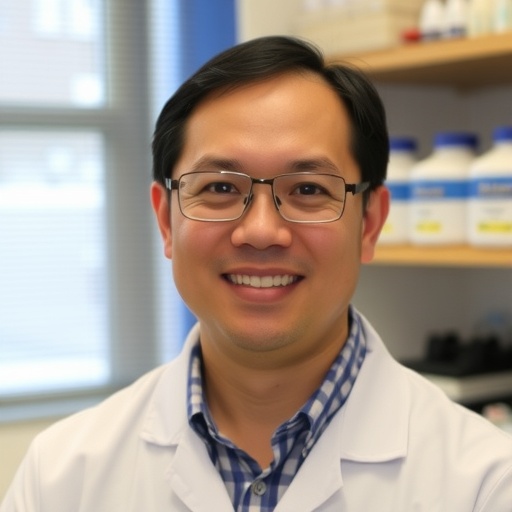
Fetal gene therapy prevents fatal neurodegenerative disease.
A fatal neurodegenerative condition known as Gaucher disease can be prevented in mice following fetal gene therapy, finds a new study led by UCL, the KK Women's and Children's Hospital and National University Health System in Singapore.
The study, published today in Nature Medicine, highlights the potential of fetal gene therapy to prevent and cure neonatal lethal neurodegenerative diseases in humans in utero.
Gaucher disease is an irreversible, inherited genetic metabolic disorder that results from not having enough glucocerebrosidase (GCase) – an enzyme that breaks down fatty chemicals called glucocerebrosides (GBA). Because the body cannot break down this chemical, the fat-laden Gaucher cells build up in the spleen, liver, bone marrow, and nervous system, causing bone disease, anaemia, fatigue, eye problems, seizures, and brain damage.
Mutations in the GBA gene, which encodes the GCase enzyme that is deficient in Gaucher disease, are also a risk factor for Parkinson's disease."Although the symptoms of some mild forms of Gaucher disease can be treated postnatally, more severe forms that cause early-onset, irreversible neurodegeneration are currently untreatable and are often fatal in infants. Being able to provide therapy at the earliest possible opportunity is vital in treating the brain which has a limited capacity to regenerate," explained senior author, Dr Ahad Rahim (UCL School of Pharmacy).
Scientists used a viral vector to deliver genetic material into the brains of fetal mice carrying neuropathic Gaucher disease, caused by mutations in GBA. Mice who received the gene therapy exhibited less brain degeneration and survived considerably longer than untreated mice.
"We found that the mice who received an injection of adeno-associated virus (AAV) vector were more able to break down fatty chemicals and re-express the gene encoding an enzyme that is deficient in Gaucher disease," said corresponding author, Dr Simon Waddingdon (UCL Institute for Women's Health).
"The mice who received the injection in utero, lived for up to at least 18 weeks after birth compared to 15 days in untreated mice and had no signs of neurodegeneration and were fertile and fully mobile. Neonatal intervention also rescued mice but less effectively."
Given the promising results shown in mice, the team from Singapore performed the test in non-human primates (NHP) at the early stages of pregnancy. This is the gestation when a clinical diagnosis of genetic conditions can be made, and when the immune system is more responsive to gene therapy. The research involved the use of NHPs due to their similarity to humans in the development of the central nervous system, and other organs, allowing for an accurate model to be achieved in fetal gene transfer.
The team showed that the delivery of viral vectors to the developing brain is feasible using an established clinical approach that resulted in the distribution of the transgene to the developing brain.
"Macaques and humans share a very similar neurological, immunological and physiological developmental time-line in the womb, making them accurate models for pre-clinical investigations before clinical trials can proceed. We have used a clinically relevant method to deliver the GBA gene using AAV vectors to the brain efficiently.
"This new approach will bring hope, not only for Gaucher disease, but also for other inborn errors of metabolism that can potentially be treated using fetal gene therapy," said Associate Professor Jerry Chan, Senior Consultant, Department of Reproductive Medicine, KK Women's and Children's Hospital.
The team, which also involved scientists from King's College London, Imperial College London, the University of Oxford and an international team of researchers, are now engaged with Apollo Therapeutics in developing gene therapy for Gaucher disease.
Dan Brown, Chairman of the Gauchers Association added, "The Association has been involved as part of this project from a very early stage providing the initial grant to which allowed them to begin their research and are delighted to hear of the promising results published today."
Notes to editors:
Media contact
For more information or to speak to the researchers involved:
Rowan Walker, UCL Media Relations. T: +44 (0) 20 3108 8515 / +44 (0) 77, E: 07769 141006 rowan.walker @ucl.ac.uk
Angeline Chen, Corporate Communications, KK Women's and Children's Hospital T: +65 6394 2321; [email protected]
Giulia Massaro, Citra N. Z. Mattar, Andrew M. S. Wong, Ernestas Sirka, Suzanne M. K. Buckley, Bronwen R. Herbert, Stefan Karlsson, Dany P. Perocheau, Derek Burke, Simon Heales, Angela Richard-Londt, Sebastian Brandner, Mylene Huebecker. David A. Priestman, Frances M. Platt, Kevin Mills, Arijit Biswas, Jonathan D. Cooper, Jerry K. Y. Chan, Seng H. Cheng, Simon N. Waddington and Ahad A. Rahim, Fetal gene therapy for neurodegenerative disease of infants will be published online in Nature Medicine on Monday 16 July and is under strict embargo until 1600 BST/11.00 EST.
The DOI for the paper will be: 10.1038/s41591-018-0106-7
About UCL (University College London)
UCL was founded in 1826. We were the first English university established after Oxford and Cambridge, the first to open up university education to those previously excluded from it, and the first to provide systematic teaching of law, architecture and medicine. We are among the world's top universities, as reflected by performance in a range of international rankings and tables. UCL currently has over 39,000 students from 150 countries and over 12,500 staff. http://www.ucl.ac.uk | Follow us on Twitter @uclnews | Watch our YouTube channel YouTube.com/UCLTV
About KK Women's and Children's Hospital
KK Women's and Children's Hospital (KKH) is a recognised leader and Singapore's largest tertiary referral centre for Obstetrics, Gynaecology, Paediatrics and Neonatology. Founded in 1858, the 160-year-old academic medical institution leads in patient-centred management of high risk conditions in women and children. More than 500 specialists adopt a compassionate, multi-disciplinary and holistic approach to treatment, and harness medical innovations and technology to deliver the best medical care possible. Accredited as an Academic Medical Centre, KKH is a major teaching hospital for all three medical schools in Singapore, Duke-NUS Medical School, Yong Loo Lin School of Medicine and Lee Kong Chian School of Medicine. The 830-bed hospital also runs the largest specialist training programme for Obstetrics and Gynaecology and Paediatrics in the country. Both programmes are accredited by the Accreditation Council for Graduate Medical Education International (ACGME-I), and are highly rated for the high quality of clinical teaching and the commitment to translational research.
For more information, please visit http://www.kkh.com.sg.
###
Media Contact
Angeline Chen
[email protected]
65-639-42321
http://www.singhealth.com.sg/
http://dx.doi.org/10.1038/s41591-018-0106-7