

• HOME
  • NEWS
  • EXPLORE
    • CAREER
      • Companies
      • Jobs
    • EVENTS
    • iGEM
      • News
      • Team
    • PHOTOS
    • VIDEO
    • WIKI
  • BLOG
  • COMMUNITY
    • FACEBOOK
    • INSTAGRAM
    • TWITTER
Saturday, February 7, 2026
BIOENGINEER.ORG
No Result
View All Result
  • Login
  • HOME
  • NEWS
  • EXPLORE
    • CAREER
      • Companies
      • Jobs
        • Lecturer
        • PhD Studentship
        • Postdoc
        • Research Assistant
    • EVENTS
    • iGEM
      • News
      • Team
    • PHOTOS
    • VIDEO
    • WIKI
  • BLOG
  • COMMUNITY
    • FACEBOOK
    • INSTAGRAM
    • TWITTER
  • HOME
  • NEWS
  • EXPLORE
    • CAREER
      • Companies
      • Jobs
        • Lecturer
        • PhD Studentship
        • Postdoc
        • Research Assistant
    • EVENTS
    • iGEM
      • News
      • Team
    • PHOTOS
    • VIDEO
    • WIKI
  • BLOG
  • COMMUNITY
    • FACEBOOK
    • INSTAGRAM
    • TWITTER
No Result
View All Result
Bioengineer.org
No Result
View All Result
Home NEWS Science News Cancer

New mutation-testing technology has potential to guide targeted lung and colorectal cancer therapies

Bioengineer by Bioengineer
June 8, 2016
in Cancer
Reading Time: 2 mins read
0
Share on FacebookShare on TwitterShare on LinkedinShare on RedditShare on Telegram
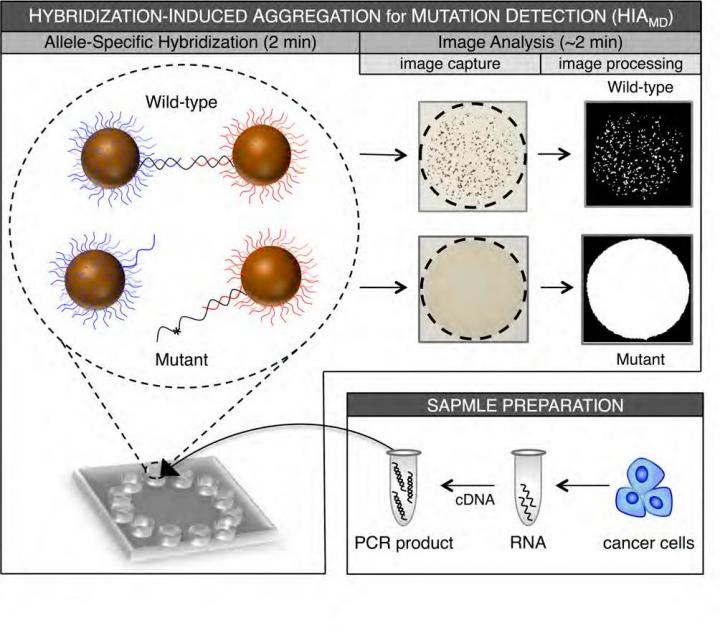
IMAGE

Philadelphia, PA, June 8, 2016 – A new technology suitable for practical clinical testing can detect KRAS gene mutations in lung and colorectal cancers and could thereby facilitate targeted therapies, according to a new report in The Journal of Molecular Diagnostics.

The identification and functional analysis of tumor-specific genetic alterations suggest opportunities to exploit genetic mutations as predictors of therapeutic response and guide a more effective patient treatment regime. KRAS mutations represent a powerful biomarker for predicting treatment sensitivity in patients with non-small-cell lung cancer and colorectal cancer. The protein product of the normal KRAS gene is involved primarily in regulating cell division.

“Targeted therapies are a growing trend in basic and clinical cancer research, and for good reason — the potential for improved treatment outcomes and cost savings is tremendous,” explained lead investigator Kimberly A. Kelly, PhD, of the Department of Biomedical Engineering, University of Virginia, Charlottesville, VA. “However, the effective implementation of a targeted therapeutic regime requires a practical means for preemptive molecular characterization of the cancer. In an effort to fulfill the unmet clinical demand for a methodology amenable to the requirements of routine testing, we developed a novel approach that provides simple, rapid, and inexpensive detection of point mutations.”

Conventional mutation testing technologies are not ideal for routine clinical screening of KRAS mutations because they often involve complex, time-consuming processes and/or costly instrumentation. Investigators have therefore developed and tested a new technique for lung and colorectal cancer samples that can be used in routine testing.

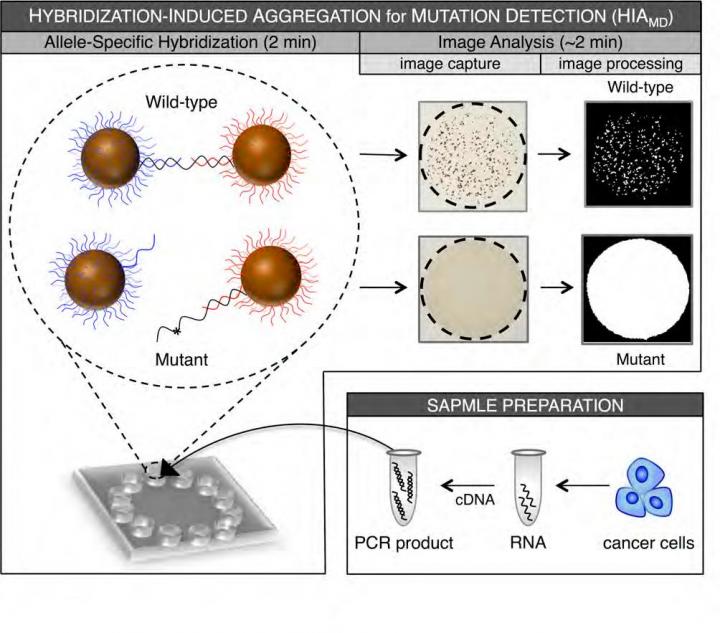
The new technique described in the study uses hybridization-induced aggregation (HIA) technology for mutation detection (HIAMD), which enables the detection of common KRAS mutations in less than 10 minutes following PCR amplification. HIA is a bead-based DNA-detection technology that is scalable for a microchip platform.

The investigators analyzed 20 lung and colorectal tumors and compared the results using this new technique with results from the more expensive and cumbersome sequencing method. The results of KRAS mutation screening using this technique were 100% in agreement with the results derived from sequencing. In addition, a sample with only 25% KRAS mutant content could be detected in a background of wild-type DNA, consistent with the detection limit reported using the sequencing method.

“These results indicate the validity of HIAMD as a mutation-testing technology suitable for practical clinical testing,” said Dr. Kelly. “Importantly, the analysis is performed in a manner that is both rapid and cost effective. The current direction of clinical oncology research suggests that a technology such as HIAMD will continue to be a highly relevant and valued analytical tool for the facilitation of individualized therapeutic strategies, and the successes here indicate the potential to apply this technology for the routine analysis of other important genetic markers.”

###

Media Contact

Eileen Leahy
[email protected]
732-238-3628
@elseviernews

https://www.elsevier.com/

The post New mutation-testing technology has potential to guide targeted lung and colorectal cancer therapies appeared first on Scienmag.


Share12Tweet8Share2ShareShareShare2

Related Posts

Deep Learning Uncovers Tetrahydrocarbazoles as Potent Broad-Spectrum Antitumor Agents with Click-Activated Targeted Cancer Therapy Approach

February 7, 2026

Newly Discovered Limonoid DHL-11 from Munronia henryi Targets IMPDH2 to Combat Triple-Negative Breast Cancer

February 7, 2026

New Discovery Reveals Why Ovarian Cancer Spreads Rapidly in the Abdomen

February 6, 2026

New Study Finds Americans Favor In-Clinic Screening Over At-Home Tests for Cervical Cancer

February 6, 2026
Please login to join discussion

POPULAR NEWS

  • Robotic Ureteral Reconstruction: A Novel Approach

    Robotic Ureteral Reconstruction: A Novel Approach

    82 shares
    Share 33 Tweet 21
  • Digital Privacy: Health Data Control in Incarceration

    63 shares
    Share 25 Tweet 16
  • Study Reveals Lipid Accumulation in ME/CFS Cells

    57 shares
    Share 23 Tweet 14
  • Breakthrough in RNA Research Accelerates Medical Innovations Timeline

    53 shares
    Share 21 Tweet 13

About

We bring you the latest biotechnology news from best research centers and universities around the world. Check our website.

Follow us

Recent News

Oxygen-Enhanced Dual-Section Microneedle Patch Improves Drug Delivery and Boosts Photodynamic and Anti-Inflammatory Treatment for Psoriasis

Scientists Identify SARS-CoV-2 PLpro and RIPK1 Inhibitors Showing Potent Synergistic Antiviral Effects in Mouse COVID-19 Model

Neg-Entropy: The Key Therapeutic Target for Chronic Diseases

Subscribe to Blog via Email

Enter your email address to subscribe to this blog and receive notifications of new posts by email.

Join 73 other subscribers
  • Contact Us

Bioengineer.org © Copyright 2023 All Rights Reserved.

Welcome Back!

Login to your account below

Forgotten Password?

Retrieve your password

Please enter your username or email address to reset your password.

Log In
No Result
View All Result
  • Homepages
    • Home Page 1
    • Home Page 2
  • News
  • National
  • Business
  • Health
  • Lifestyle
  • Science

Bioengineer.org © Copyright 2023 All Rights Reserved.
